


Author: Land8
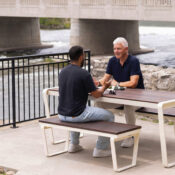

The Ogden Harvest Table by Maglin: Designing Outdoor Dining for Everyone
By Maglin
The Ogden Harvest Table from Maglin lets designers choose the seating, the materials, and the length, one section at a time.
Some of the best conversations happen over lunch outside. A riverside patio, a wrap in wax paper, sunglasses set down and forgotten on the table. Nobody remembers the furniture afterward, but it helped decide who could sit down, how close they sat, and how long they stayed.
That’s the quiet job of an outdoor table. The Ogden Harvest Table was designed to do it well, and to adapt to the people who pull up a seat.
Every seat at the table
A shared table is only communal if everyone can pull up to it. With the Ogden Harvest Table, seating can be configured section by section. Pair a bench on one side with chairs on the other, run benches along both sides, or leave a section open so a wheelchair user can roll directly up to the table.
That flexibility matters. Accessible seating at an outdoor table is often placed at the end, making it technically available but socially separate. An open section along the side brings a wheelchair user into the same conversation as everyone else.
Chairs offer similar flexibility for older adults, people with mobility considerations, or anyone who prefers a chair to a bench. Maglin’s ADA and USAB guideline documentation is available to support specification.
Material is part of the experience
Every Ogden Harvest Table shares the same frame: a single band of powder-coated steel that folds over the end of the tabletop and tapers to the ground, echoed at a smaller scale in the benches. What sits on that frame is up to the designer.
Thermally Modified Ash and Oak, heat-treated for improved stability and weather resistance, bring warmth to parks, campuses, and waterfronts. The natural grain remains visible, creating a surface that feels at home in a landscape.
Available in a range of colors, HDPE brings a more playful note to schools, play areas, community spaces, and anywhere a little color belongs. It’s also low maintenance.
Perforated Steel, powder-coated to match the frame or create contrast, gives the table a lighter visual presence than a solid surface. Its subtle pattern catches the light and casts delicate shadows, while also allowing for water drainage from the surface.
The frame can be powder-coated in finishes from Maglin’s Gloss, Matte and Fine Textured collections, giving designers another way to connect the table to the larger site palette.
Sized to the site
The Ogden Harvest Table is built in 4- and 6-foot sections, with up to 10 sections joining together in a single run. One section can fit a smaller gathering space or the edge of a café; a longer run can anchor a plaza, courtyard, or community space.
Because seating and material options can be configured across each section, the table can grow to suit the site while maintaining a consistent visual language.
Build it section by section
In the Maglin Product Builder, designers can configure the Ogden Harvest Table one section at a time, choosing the length, seating arrangement, tabletop material, and finish.
It’s a simple way to design a table around the people who will use it and make room for everyone. Explore the Ogden Harvest Table and build your configuration in the Maglin Product Builder.
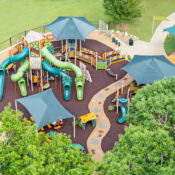

How Parks Improve Community Health: Why They Are Critical Infrastructure
By Sarah Lisiecki, Communications & Education Manager, BCI Burke
Parks improve community health by encouraging physical activity, supporting mental well-being, reducing social isolation, and creating opportunities for people to connect with nature and one another. Thoughtfully designed parks improve quality of life and help people of all ages and abilities build healthier, more connected communities. These and more are reasons why communities are recognizing parks as essential infrastructure.
Here are four ways thoughtful park design helps build healthier communities:
1. Parks Make Movement Feel Natural
Regular physical activity is essential to lifelong health, yet many people struggle to incorporate intentional exercise into their routines. Parks can help address this by creating accessible opportunities for movement through everyday experiences like walking, climbing, socializing, exploring, and active play.
Children don’t see play as exercise because to them, it’s ALL child-directed fun. They think about reaching the top of a playground tower, racing on a zip ride, or discovering a new way to play in an under-platform space. Adults often experience parks in similar ways, taking a walk while their children play, meeting friends along a trail, or participating in outdoor fitness circuits or obstacle courses.
The most fun and effective parks foster natural movement by designing environments that encourage exploration, activity, and connection for all ages. Through thoughtful design, these spaces invite people to move in ways that feel intuitive and enjoyable, not like something they have to do, but rather an activity that brings joy to their day.
2. Parks Strengthen Mental Well-Being
The benefits of parks extend beyond physical activity and into other areas of wellness. Research continues to demonstrate the positive relationship between access to nature and reduced stress, improved mood, and greater overall well-being.
Parks and other outdoor spaces also create opportunities for something increasingly rare: awe. Psychologist Dr. Dacher Keltner’s research shows that experiences of awe, whether inspired by nature, music, art, or connection, quiet our focus on ourselves and help us feel part of something larger. In a world where so much of our attention is directed inward, these moments of wonder restore perspective, strengthen emotional well-being, and deepen our sense of connection.
Play is part of what makes awe happen. A child reaching the top of a climber for the first time, the rhythmic, calming movement of a swing, or laughter shared between friends as they make music together. These varied experiences build confidence, encourage creativity, support emotional regulation, and help us live healthier by creating opportunities for joy, discovery, and belonging.
Outdoor spaces designed for everyone recognize that well-being looks different for different people and offer spaces where people of diverse abilities, backgrounds, and preferences can move, explore, recharge, and experience things that bring joy and satisfaction to their lives.
3. Parks Build Social Health
One of the greatest challenges facing communities today is not only physical inactivity, but social isolation and loneliness. Thoughtfully designed parks and outdoor spaces help address both by creating welcoming, low-pressure environments where people naturally come together.
Parks create opportunities for connection. Playgrounds, trails, outdoor learning environments, fitness areas, and shared green spaces create natural opportunities for connection. Together, they bring people into welcoming settings where relationships develop and shared experiences strengthen community. By welcoming people of all ages, abilities and backgrounds, parks help build the social connections that contribute to healthier, more resilient communities.
Sociologist Eric Klinenberg explores this idea in his book Palaces for the People, describing parks, libraries and other shared public spaces as essential social infrastructure; the places that naturally foster relationships, build trust and help communities thrive. Thoughtfully designed parks do this every day by creating places where people can gather, interact and connect through fun, shared interests and movement.
Playgrounds are an important part of that experience. When children play together, they develop cooperation, empathy and communication skills. As they return again and again, it feels more and more like a natural community.
This is why parks are more than places to play. They are places where relationships grow, communities grow stronger, and people of all ages feel connected — to each other, themselves, and the outdoors.
4. Parks Create Places Where Everyone Belongs
No two people experience an outdoor space in exactly the same way. Some are drawn to adventure and movement, while others seek a place to connect with friends, enjoy nature, make music, or relax. Thoughtfully designed parks and recreation spaces honor these differences by offering meaningful choices through a variety of play experiences, movement opportunities, gathering areas, and places to recharge, inviting people of different ages, abilities, interests, and comfort levels to experience the space in ways that feel right for them.
This is the essence of universal design. Rather than creating separate experiences for different people, universal design creates shared experiences that welcome the widest range of abilities, preferences and play styles. By offering choice, flexibility and multiple ways to participate, thoughtfully designed parks help people feel comfortable, confident and connected to themselves, their community and the space.
When parks embrace universal design, they become welcoming environments where everyone can move, explore, connect and belong. The result is a healthier, more vibrant community where everyone feels welcome, valued and included.
Thoughtfully designed parks do more for the communities they serve. They provide places to get outside for fun and recreation and create essential community infrastructure that supports healthier, more connected lives. Through universal design, parks welcome people of all ages, abilities, and backgrounds, creating opportunities to move, explore, connect, and belong. When communities invest in parks, they invest in critical infrastructure that enhances the well-being of the people who live there.

Land8x8 Lightning Talk: Landscape Architecture as Disruptor for Corporate Change
Landscape architects are valued for transforming the land. But a recent Land8x8 Lightning Talk by Landon Bell, RLA, ASLA, shows how landscape architects can transform the ways that corporations build safe, healthy, environmentally sustainable spaces for their workers, too.
For those who wear contact lenses, Alcon Laboratories may be a familiar name; it is a global supplier of saline solution. The company does it all from its 164-acre campus in Fort Worth, housing everything from executive offices to manufacturing and shipping facilities.
But Alcon’s big global reach comes with a significant ecological footprint. Built in the 1940s, it expanded over the years. By the beginning of this decade, its landscape showed signs of wear and tear as the climate changed, the campus drew criticism from the local media for using too much water, and workers feared for their safety in dark parking lots after hours. Then, COVID-19 hit, and Alcon needed to keep its workers healthy as they returned to campus after quarantine.
Bell explains how Alcon brought in a team of landscape architects to help the company’s campus work for all its workers. They listened, observed, and held town halls with employees throughout the company so every team’s needs were considered in the new site plans.
Tune in to learn how landscape architects used data and sustainability principles while engaging diverse stakeholders to help Alcon build a healthier, safer working environment while reducing its campus’s water footprint by 30%.


Why get licensed? The case for landscape architecture licensure
By Alyssa Torrance, CLARB
If you’re weighing whether to pursue licensure, the decision often comes down to a single question: Is it worth the time and cost? The data and the career outcomes say yes.
Licensure is legally required to practice and use the title “landscape architect” in all 50 states and many Canadian provinces. Without it, you can’t stamp drawings, lead a private practice, or call yourself a landscape architect, no matter how much education or experience you have.
But the case for licensure goes well beyond legal permission. Here’s what it actually does for you:
- It pays. Licensed landscape architects earn more than their non-licensed peers. Research from the Alliance for Responsible Professional Licensing found that licensure has an outsized impact on closing pay gaps, with a 6% earnings boost for women and an 8% boost for professionals of color. In a profession built on equity and access, that data matters.
- It opens doors. Licensure unlocks independent practice, entrepreneurship, and leadership roles you simply can’t access otherwise. It’s the credential that empowers you to start a firm, work as an independent consultant, and mentor the next generation of practitioners.
- It builds trust. Clients, collaborators, and the public rely on licensure as a signal of competence and accountability. It puts you on equal footing with architects and engineers in collaborative projects, and it tells the public that the person designing their park, plaza, or stormwater system has met a recognized standard.
- It moves with you. Career paths rarely stay in one state or province anymore. We built the CLARB Record to follow you across jurisdictions, consolidating your education, experience, exam results, and licensure history into one verified file. That means less redundant paperwork every time your career takes you somewhere new.
If you haven’t started the process yet or want to get back on track, your next step is easy: create a free CLARB account and begin building your CLARB Record. From there, our team can help you map out exam registration, requirements by jurisdiction, and a realistic timeline.
Licensure isn’t just a line on your resume. It’s an investment in your earning potential, your independence, and the kind of trust that shapes a career.
We’re here to help
Our Support Team offers personalized guidance for your unique professional journey. We’re available to answer your questions Monday–Friday, 9 a.m.–5 p.m., at 571-432-0332 or info@clarb.org.
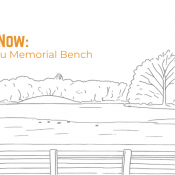

Remembering Kongjian Yu: A Permanent Memorial Bench in Central Park
By Ethan Wu
On September 23, 2025, landscape architecture lost one of its most consequential voices. Kongjian Yu, FASLA, died at age 62 in a small plane crash in Brazil’s Pantanal wetlands, where he was working with filmmakers on Planeta Esponja (Planet Sponge), a documentary exploring the ideas that had defined much of his life’s work.
Yu spent his career asking a deceptively simple question: What if cities stopped treating water as an adversary?
As founder of Turenscape and professor at Peking University, he advanced the idea of the “sponge city”—an approach that uses wetlands, parks, permeable surfaces, and other forms of ecological infrastructure to absorb, store, cleanse, and slowly release stormwater. His work connected flood protection with biodiversity and human well-being, while insisting that landscape architecture could be not merely decorative, but essential infrastructure.
Nearly one year after his death, a group of landscape architects, designers, colleagues, and friends is working with the Central Park Conservancy to create a permanent memorial bench in his honor.
The location feels particularly fitting. The bench will sit beside the Harlem Meer, at the northeast corner of Central Park, where water, vegetation, public life, and the changing seasons meet. In a small way, the setting echoes the principles Yu spent decades advancing: landscapes that welcome water rather than resist it, and public spaces where ecological function and everyday human experience are inseparable.
Once dedicated, the bench will remain part of Central Park and be maintained by the Central Park Conservancy—a permanent place to remember Prof. Yu and to introduce future generations to the ideas he championed.
The campaign seeks to raise $20,000 for the memorial. More than $6,000 has already been contributed by individuals, and the organizers hope to complete fundraising by September 20, ahead of the first anniversary of Yu’s passing on September 23. Donations are made directly through the Central Park Conservancy and are tax-deductible.
This bench is modest in scale compared with the landscapes Yu imagined and built. But perhaps that is part of its meaning: a place to sit beside the water, observe the living landscape, and remember a landscape architect who taught the profession to see both differently.
Support the Kongjian Yu Memorial Bench.
We have also set up an email list for anyone who would like to receive occasional updates from the team about fundraising progress, the memorial bench, and the dedication. If you or your colleagues would like to stay informed, please join here.


Party With Us at ASLA 2026!
Coming to Los Angeles for ASLA 2026? Stay for the Wrap Party! Land8 is proud to announce that we’re partnering with the American Society of Landscape Architects to host the Wrap Party for ASLA 2026.
Join us at The Belasco in downtown Los Angeles on Friday, September 18 from 6:00 to 10:00 p.m. Connect with old friends; make new ones; hear some great music; and raise a glass to the ideas, collaborations, and community from an inspiring week in Los Angeles.
Who: You! (and several hundred other landscape architects, designers, and fans)
What: ASLA/LAND8 Wrap Party
Where: The Belasco, 1050 S. Hill Street, Los Angeles
When: Friday, September 18 from 6 p.m. to 10 p.m.
Tickets: Get ‘em here.
Land8x8 Lightning Talk: The Texas Crossroads– Olmsted and ’48
1848 was a momentous year in the Americas and Europe. Abolitionist movements gained traction in North America while revolutions swept across Germany, France, and other European states, and women agitated for the right to vote in the U.S. 1848 was a pivotal year for Frederick Law Olmstead, too.
A recent Land8x8 Lightning Talk by Dr. Austin Allen, Associate Professor of Practice in the School of Architecture, University of Texas at Arlington, highlights a lesser-known chapter of the legendary landscape architect’s story—one shaped by global upheaval and a life-changing journey through Europe and the American South. Allen shows how for Olmsted, landscape architecture didn’t emerge from aesthetics alone. It grew out of conflict, movement, and larger societal questions about who shapes the land, and who gets to prosper from it.
From Birkhead Park in England to rural towns in Texas, Olmsted chronicled everything he saw, gaining inspiration for his theories linking public spaces to democracy. In building parks, Olmsted also built a movement celebrating shared spaces and giving people across all classes, genders, and races equal access to public lands.
Tune in to learn more about how Olmsted’s travels in 1848 would seed his revolutionary approach to landscape architecture and give root to his iconic landscapes.


Residential Design Trends 2026: Take the Industry Survey
Residential Design Trends 2026: Your Feedback Counts!
From native planting and sustainable materials to outdoor kitchens, AI-assisted workflows, and climate-resilient landscapes, the practice of residential landscape architecture is always in flux. Landscape designers know what’s coming next. Your experience drafting site plans, selecting materials, and talking to clients can show current challenges and future opportunities in the industry.
Take our short Residential Design Trends survey and help us create a snapshot of residential landscape design today.


AI in Landscape Architecture
How the Profession is Navigating the Robot Revolution
Artificial intelligence (AI) has officially entered the landscape architecture studio. As a rendering tool, a writing and research assistant, and a spreadsheet wizard, it’s quickly becoming part of everyday practice. Like most technological shifts in design, reactions are mixed. For many landscape architects, AI offers real benefits. The question is how it’s implemented.
The Practical Benefits of AI in Landscape Architecture
Tasks that once consumed hours — drafting outlines, organizing specifications, generating concept imagery, formatting proposals, or assembling preliminary planting studies — can happen in minutes. For small firms, especially, that efficiency matters.
Some practitioners are experimenting with AI to help analyze tree canopy data, accelerate site research, or generate early-stage planting palettes tailored to climate and nursery availability. Others are using it for visualization workflows, allowing teams to quickly test moods, materials, or spatial concepts before investing significant production time.
But many firms are discovering that AI may be most useful for something less glamorous: reducing “operational drag.” Proposal writing, scheduling, fee generation, timesheets, and repetitive administrative tasks all consume valuable hours that could otherwise be spent designing. In theory, AI can help reclaim some of that time.
The Drawbacks
Landscape architecture isn’t just image-making. It’s systems thinking, technical coordination, and understanding grading, stormwater, permitting, planting performance, accessibility, maintenance, and long-term ecological impacts. AI can imitate confidence without always understanding those critical factors.
Many designers already see clients arrive with AI-generated “master plans” that look convincing at first glance but collapse under scrutiny: missing code requirements, impossible grading, invasive species, and zero awareness of hydrology, maintenance, or permitting realities. The images may be polished; the thinking sometimes isn’t.
That creates a new challenge: landscape architects may soon spend more time explaining why AI-generated solutions don’t work. There’s also growing concern about what AI might do to the creative process itself. Landscape architecture has always depended on observation, curiosity, iteration, and time spent engaging with the physical world. Some educators worry students may rely too heavily on instant outputs instead of developing the slower skills that build design judgment.
Good landscape architecture rarely comes from speed alone. The best ideas often emerge from wandering a site, sketching concepts, sitting with ambiguity, listening to communities, and observing the natural environment. AI can accelerate production, but it cannot replicate lived experience or intuition rooted in ecological understanding. One panelist in a recent ASLA discussion on the topic described this tension as “nature intelligence” versus artificial intelligence — a reminder that landscapes are complex living systems shaped by processes much older, wiser, and more nuanced than any dataset.
Still, some acknowledge that AI may simply represent the next technological shift in a profession that has already adapted to CAD, BIM, Photoshop, Google Earth, and countless other digital tools. Landscape architects once pinned magazine clippings to studio walls for inspiration. Today, they generate references in seconds. The tools evolve, but the critical thinking remains the same.
Environmental Contradictions and Legal Risks
Landscape architects spend their careers advocating for resilience, conservation, and climate-conscious design. Meanwhile, AI infrastructure depends on data centers that consume enormous amounts of electricity and water while generating heat, noise, and waste. U.S. communities are already questioning large-scale data centers because of land use and resource demands. For a profession grounded in environmental ethics, that tension is impossible to ignore.
Some practitioners argue that landscape architects should critique these developments and help shape them. Data centers are arriving whether the profession likes it or not. The bigger question is whether landscape architects are involved early enough in site selection, zoning, policy, and environmental regulation to influence how these projects affect communities and ecosystems.
Landscape architects champion sustainability while embracing tools powered by resource-intensive infrastructure, but the profession must ask tougher questions about transparency, accountability, and long-term consequences. The legal side remains murky, too. Questions around intellectual property, ownership of AI-generated work, client confidentiality, and liability are evolving faster than professional standards. Designers uploading project information into free AI platforms may not fully understand where that data goes or how it gets used.
The Future of AI in Landscape Architecture
Most realistically, AI will likely become another layer in the design process — useful, imperfect, occasionally dazzling, and always needing human oversight. Landscape architects work at the intersection of systems, ethics, the environment, and human experience. Those skills are more valuable in a world increasingly driven by automation and speed.
AI can create quicker workflows. But it cannot walk a site, understand cultural memory, build trust with a community, or sense the emotional power of a landscape. The future of landscape architecture isn’t AI versus humans; it’s humans deciding what parts of design should never be trusted entirely to robots.
What role do you think AI should play in landscape architecture? Enter the chat on the LAND8 app.

The Recreation Boom Is Real; the Missing Piece Is Getting Around Without a Car
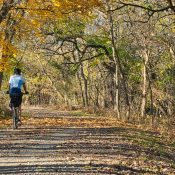
Rural towns are making a strategic pivot: build an outdoor recreation economy that can steady local livelihoods when extractive industries swing from boom to bust. In Utah, places like Vernal and Richfield are investing in new experiences—mountain bike and off-highway vehicle networks, events, and destination anchors like the Ashley Gorge Via Ferrata—to bring visitors in and keep dollars circulating closer to home.
The national context is just as striking: outdoor recreation contributed $1.3 trillion to U.S. GDP in 2024 and supported 5.2 million jobs. But economically healthy communities need more than recreation. People want to move around safely and efficiently once they arrive. The outdoor economy is about destinations—and active transportation. Rather than encouraging a car-centric approach to navigating between attractions, planners should embrace a multi-modal vision that includes biking and walking.
Trailheads Create Interest, Networks Sustain
A new climbing experience or park can put a spot on the map. The question is what happens after the ribbon cutting. If the only viable way to get around is driving from one lot to another, towns end up with:
- Main streets that feel like high-speed corridors
- Visitors who “drive through” rather than “stay and spend”
- Families who won’t let their kids bike to the park—or the ice cream shop
- Workers who can’t safely reach shifts without a vehicle
- Event days that become traffic-management exercises instead of community celebrations.
The economic leakage is predictable: people play and rest near towns, then roll right past them. The fix is clear—safe, connected walking and biking infrastructure that sustainably links the outdoor experience to the local economy.
A Path Forward
Akron, Ohio, offers a useful model. The new Summit Lake NorthShore Park includes amenities to attract visitors—a covered pavilion, boathouse, free kayak and canoe rentals, a fishing pier, an accessible launch, waterfront seating, and gathering spaces. What makes the investment work as more than a standalone attraction is the network around it. A paved 2.25-mile trail around Summit Lake, completed in 2023, connects the neighborhood’s east and west sides and links directly to the 93-mile Ohio & Erie Canal Towpath Trail.
That is the difference between a destination and a system. The park creates interest; the trail network helps residents and visitors circulate, connect, and experience more of the community without getting back in the car every time.
Why Now?
Federal transportation law that boosted many community-scale projects is set to expire September 30, and the next reauthorization is taking shape right now. If transportation policy snaps back to a highways-only baseline, communities and those who design them will have fewer tools to build the safer, lower-cost connections that make that growth work.
Act Now: Build Lures with Links
If your community is investing in outdoor recreation to stabilize the local economy, treat connectivity as core infrastructure.
- Protect dedicated funding for walking, biking, and trails in the next surface transportation bill and in state/local programs. Add your voice to ASLA’s petition.
- Design for “park once” towns. Make it easy to arrive, leave the car, and circulate safely between lodging, food, shops, civic spaces, and recreation access.
- Prioritize the conflict points. Focus on crossings, speed management, and the stretches where highways double as Main Street.
- Bring landscape architects in early (with planners and engineers). They can help translate recreation goals into buildable networks, aligning trails with downtown, shaping trailheads that don’t overwhelm the community, integrating shade and stormwater, and packaging projects so they’re fundable and maintainable.
Outdoor recreation is booming. The towns that truly benefit won’t just build great places to go. They’ll build safe, connected ways to travel them—and fuel Main Street.

Reflecting Pool Protests
What changes on the National Mall say about preservation vs renovation
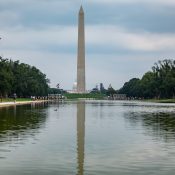
The Reflecting Pool “is one of the most iconic structures in the United States, and is an integral part of ‘one of the important axes in the nation, one that aligns several key national symbols including the U.S. Capitol Building, the Washington Monument, the World War II Memorial, and the Lincoln Memorial,‘” according to a complaint filed by The Cultural Landscape Foundation (TCLF).
TCLF has sued the U.S. Department of the Interior, claiming the current application of blue paint to the basin of the Reflecting Pool is being done in violation of federal law. The Reflecting Pool holds profound historic significance, serving as the staging area for marches on Washington, the Pentagon, and many inaugurations.
Today, the pool is a cherished public space, where Washingtonians bike, walk, and live. They mingle with tourists as practical infrastructure and cultural heritage intersect. The pool reflects, frames, and connects. That’s why, in part, the recent renovation is controversial.
According to recent pieces in The New York Times, the Trump administration awarded a no-bid contract to Atlantic Industrial Coatings to resurface the Reflecting Pool and apply a blue waterproof coating. They initially said the work would cost about $1.8 million. Days later, the projected cost rose to $13.1 million. The administration said the increase reflected plans to accelerate the job ahead of the nation’s 250th birthday this year. Officials also used an emergency rationale to bypass competitive bidding, saying delay could cause “serious injury” to the government, though that explanation has remained vague, as summarized by Raw Story.
For landscape architects and preservation advocates, the concern is not simply cost, or even color. It is what this episode reveals about how public landscapes are appreciated and preserved.
As reported by NPR, TCLF’s Charles Birnbaum warned that the pool should not be viewed in isolation, but as part of the overall design of the National Mall. That distinction matters. In landscape architecture, context is not decorative; it means something.
Too often, a high-profile landscape is treated as a cosmetic problem: scrub, seal, brighten, move on. But the Reflecting Pool is a historic work of civic design, one whose meaning depends on proportion, materials, and intent. A landscape like this cannot be reduced to whether it looks cleaner on camera or brighter for a national celebration.
To be fair, the Reflecting Pool has had real maintenance issues for years. Leakage, algae, and filtration problems are real concerns. Public officials are right to want the space to function well, especially at a site visited by millions. Cheap fixes are tempting, but speed and visibility are not necessarily stewardship.
This story exposes a familiar tension in public landscape work: the difference between managing a space and understanding it. A pool contractor knows coatings, waterproofing, and schedules. A preservationist asks different questions: What’s the visual intent of the original design? How do materials alter the spatial experience? What happens when a reflective ground plane becomes a designed color field? What kind of pool is this?


How to Hack the ASLA 2026 Education Schedule for Real-World ROI
Let’s be honest: At a conference as big as ASLA, the “analysis paralysis” is real. Between the field sessions, the EXPO floor, and a massive list of education sessions, it’s easy to end up with a schedule that looks more like a random collection of cool topics than a strategic plan for your career.
But if you want to turn your time in Los Angeles this September into a practice upgrade you can use on Monday, you have to go in with a “Monday morning” mindset. Whether you’re an early-career landscape architect, a seasoned firm owner, or an allied pro (looking at you, architects, arborists, and contractors), here is how to hack the conference’s education sessions to get the most value for your specific vibe.
1) The “Early-Career Accelerator” Track
If you’re in your first few years, the best value isn’t just “inspiration”—it’s the stuff they didn’t teach you in studio. Look for sessions that pull back the curtain on how a project (and a career) actually moves.
- WED-C07: The PM Playbook. Project management isn’t just for senior staff; it’s how you protect your design intent. Learn how to lead across scales.
- WED-C08: Start with Yes. Adaptability is a superpower in a small firm. This session is perfect for emerging leaders who want to learn how to turn small opportunities into major career wins.
- L.A.R.E. Prep (Ticketed). If licensure is the goal, these are non-negotiable for building confidence and a study network.
2) The “Collaboration & Constructability” Track (For Allied Pros + Design-Build Experts)
Are you an architect, arborist, or landscaper? Or a landscape architect who’s tired of “interdisciplinary” being just a buzzword? These sessions focus on the handshake between disciplines.
- WED-B10: Bridging the Gap Between Arborists and Landscape Architects. Finally! A session that talks about aligning standards, so your trees actually thrive.
- WED-A05: Design Without Boundaries. A must-see for architects and fabricators. It digs into the overlap of landscape architecture and architecture with a focus on making and buildability.
- WED-A10: Getting Specific About Specifications. Contractors and design-build teams: this is your session. It’s all about the contract documents that make or break a project’s execution.
3) The “Performance & Resilience” Track (For Public + Campus Practice)
If you’re working for a city, a university, or a large public-sector client, you need metrics. You aren’t just designing a “nice park”—you’re designing infrastructure that must perform.
- THUR-A04: Take Action or Suffer. This bridges the gap between high-level heat research and actual design policy.
- WED-C04: Tracking Whole Life Carbon. If your clients are asking for carbon reporting (or if you want to lead that conversation), don’t miss this.
- WED-A11: Great Lakes Resilience. Great for campus and public-sector teams looking for a prototype of how to move from a “resilience concept” to a built reality.
4) The “Firm Leadership” Track (For the Small-to-Mid-Sized Studio)
Running a firm is a design project in and of itself. If you’re managing people and profit, prioritize the sessions that help you design a better business.
- WED-B08: Designing the Balance Sheet. Master the financial leadership side of practice. Knowing your numbers is how you fund your design vision.
- WED-A08: Designing Your Exit. Thinking about succession? This is a blueprint for small firm longevity.
How to Make it Stick
The 75-minute sessions are included in your full registration, so you don’t need to sign up in advance—but they are first-come, first-served.
The Golden Rule: Leave every session with exactly one “Monday Move”—a specific tool or tactic, a clear phrase to use with a client, or a new person to email. That one move is what pays for the trip.
Start mapping out your own “value track” at aslaconference.com. See you in Los Angeles!