


Blog


Can Copenhagen Become The Best Cycling City in The World?
The Ambitious Cykelslangen by DISSING+WEITLING enables Copenhagen’s vision to become the best cycling city in the world by the end of 2015. Copenhagen is now home to a 235-meter-long orange snake that meanders 5.5 meters high above sea level from Havneholmen through the mall Fisketorvet, ending at Kalvebod Brygge. This “snake” is actually a ramp and a bridge, called the “Cykelslangen — The Bicycle Snake,” that provides more than 12,000 bicyclists with a safe route through this busy district every day. The architecture firm DISSING+WEITLING was asked to design a ramp to replace a nearby staircase. Instead of just designing a simple ramp, they went a step further and designed a bridge. The result is a destination and focal point that can be seen for miles from the air and has als...Read More
Five Fun Backyard Vertical Gardening Ideas
One of the many reasons why I love vertical gardens so much is that they range so dramatically in complexity, materiality and in price. Do-It-Yourself (DIY) or backyard Vertical Gardening has become very popular in recent years. Whether you have a whole backyard at your disposal, a balcony, or just a nice sunny wall inside or outside of your home, you can easily create your own vertical garden using upcycled materials. There are many examples of backyard vertical gardening online, so the following list is a small collection of my personal favourites: 1. The Recycled Pallet Garden Recycled Pallet Gardens Image via 6footsally My humble foray into vertical gardening began with this first project, so it is very near and dear to my heart. The pallet garden is a fairly simple way to create a lar...Read More


A Loose Guide to Vertical Garden Maintenance
Maintenance is one of the most important aspects of making sure your landscape project survives- both literally and figuratively! When designing green walls, one key consideration is how a maintenance team is going to reach all of the parts of the garden. Many standard maintenance procedures for vertical gardens are the same as for any piece of landscape architecture, but there are a few things that may catch you off guard… Green Wall on Le Pont Juvénal, Août 2008. Image © Patrick Blanc Many vertical gardens are maintained by someone other than the building owner. Various vertical garden distributors offer maintenance packages that cover differing amounts of time. If a maintenance contract is signed, it is very important that the duration and scope of the work is well defined. Many v...Read More
My Top Vertical Garden Designers and Researchers
Recently many designers, artists, horticulturalists and biologists have been busy designing and building vertical gardens across the world. Throughout the research I have undertaken for my design practicum (thesis) in Landscape Architecture, I have formed a preference for certain designers. Below are some of my personal favourites. Green Wall at The Oasis d’Aboukir, one year after installation. Image © Patrick Blanc Of course, at the top of the list is Patrick Blanc, famed biologist and vertical garden genius. I enjoy his work a lot, not only because of the aesthetic beauty that his projects have brought to a variety of cities worldwide, but also because of his humble beginnings. Ok, it might also have a bit to do with the fact that he dies his hair green, too, cause how cool is that...Read More
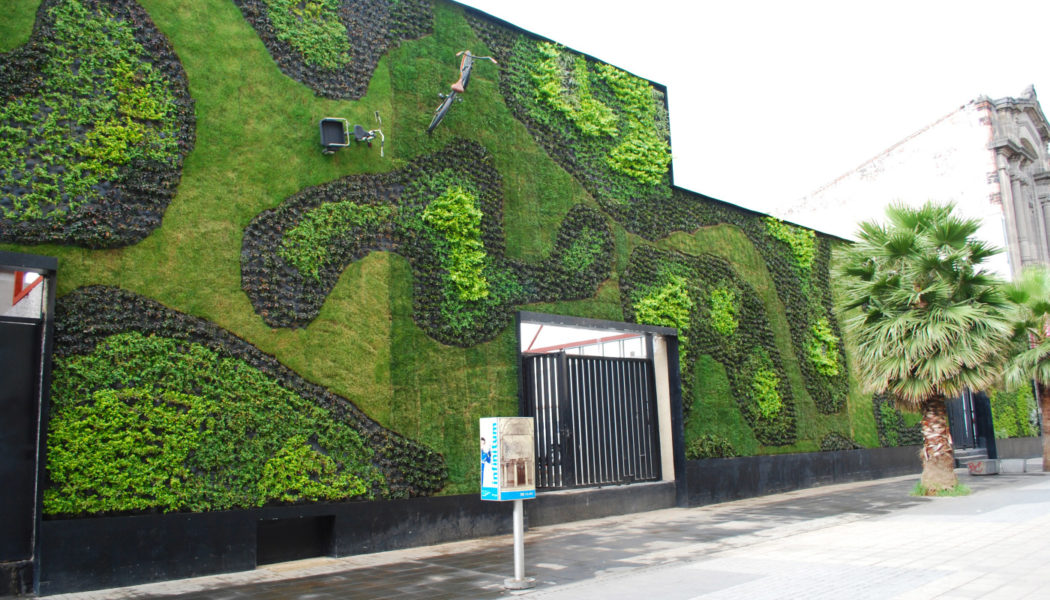

Seven Innovative Vertical Gardens that Think Outside the Planter
Green Wall with bikes at the Universidad del Claustro de Sor Juana, Mexico City. Image via Wikipedia Vertical gardening is currently very trendy in landscape architecture and interior design. With trendiness, sometimes comes stagnation in design. Perhaps due to a lack of codes and guidelines in many cities, vertical gardening remains a flexible umbrella term for a variety of designs. This post will explore some of the world’s more innovative vertical garden designs. The following projects show the concept of vertical gardening pushed to the extreme in terms of engineering, materiality and concept. Often design offices are competing for the ‘biggest,’ ‘best,’ and ‘most diverse’ projects, but this list is here to show you that sometimes it is more fun to break out of the proverbial ‘bo...Read More
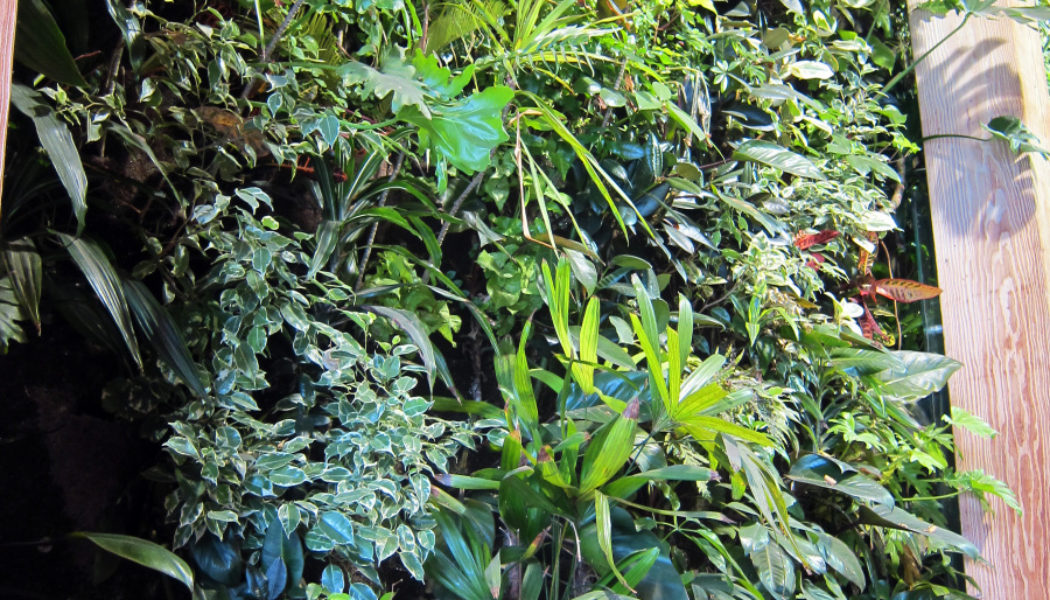

5 Benefits of Biofilters in Vertical Garden Systems
Robertson Building Biofilter by Nedlaw. Image © Tamara Urben-Imbeault Biofilters are a relatively new and innovative technology in the world of vertical gardens that combine the fields of landscape architecture, building architecture and horticultural science. A biofilter is broadly defined as a hydroponic vertical garden that has been designed to pull air through the growing medium to filter it. (See the previous post “A History of Vertical Gardens from Simple Vines to Hydroponic Systems” for more information about different types of vertical gardens). By passing through the felt growing medium, microbes on the plant roots can filter out up to 85% of the harmful Volatile Organic Compounds (VOCs) from of the air. These gardens can be independent of, or built into, a building’s HVAC system...Read More
Cliffs: Mother Nature’s Vertical Garden
As Landscape Architects, we often look to naturally occurring plant communities for inspiration and precedent for our designs. Vertical gardens are no exception to this rule. Since committing to the topic of vertical gardens for my design thesis, I have been actively reading about, and seeking out, different cliffs. The following is a mix of things I’ve read in various academic sources, and things that I have personally observed during site visits. Cliff Ecology 101. Image by Tamara Urben-Imbeault Cliffs host a very unique type of ecology. Studies in the Niagara Escarpment of Canada have found that the cliff-dwelling forests in that region are some of the oldest living ecosystems in North America, with occurrences of Eastern White Cedar (Thuja occidentalis) up to 1,320 years old. The...Read More
Integrated Water Strategies: Thinking outside the pipe
The era of taking water for granted is over. The water strategies in this video integrate: the built world & the natural environment; people & the broader community of living things; and ecological science with traditional planning & design disciplines. Something is happening in the design community. People are beginning to tap into the promise of new, creative ways to handle our need for water. Let me know your thoughts in the comments below. Amy Nelson Communications Dir., Gobbledigook Slayer at Biohabitats


Geocaching: Treasure Hunting For BIG Kids!
Exploring the landscape in the 21st Century There are many ways to get out into the landscape and explore new places. Geocaching is an exciting and innovative way of exploring the landscape in search of hidden objects called caches. How does geocaching work? Geocaching relies on either a GPS unit or a GPS enabled device such as a smart phone. An object is hidden in the landscape or urban streetscape with a GPS sending device or tag. The person or people participating then have to find this cache using their device. The first to find the object wins. Geocaching can also be done non-competitively by simply looking for the objects at your own pace. WATCH: What is Geocaching? There are many apps you can download on Apple, Android and Windows platforms for using on your smart phone, so it’s a v...Read More


Amazing Kinetic Sculptures That Could Hypnotize You
A Review of Anthony Howe’s Outdoor Kinetic Sculptures. When Anthony Howe imagines his next masterpiece, he thinks about it in terms of shape, as other artists do. But his creative mind also works with an unexpected factor that absolutely makes the difference: the idea of movement. From the most subtle to the most obvious way, everything around us is involved in processes that bring change and dynamic patterns. Why shouldn’t sculptures have a little of that lively touch? In designing his bold creatures over the past 25 years, Howe seems to have sensed how essential movement is for our visual experience. In fact, his sculptures attract our senses in a powerful way as soon as we lay eyes on them. Amazing Kinetic Sculptures The Challenge of Playing with Nature Movement makes sense of the...Read More


Creating Incredibly Diverse Public Spaces
What should public space be? How should it function, and what should it look like? These are some of the major challenges facing a landscape architect approaching a new public space project. Everyone has their own opinion, and they’re entitled to it but I don’t believe there is currently a right answer. Instead, it would increasingly seem that public spaces can no longer simply be ‘attractive’ or serve a single function such as providing office workers with somewhere to eat lunch. Instead they must also be: sustainable; low-cost; environmentally friendly; safe; accessible to all; inclusive of all user groups; increase biodiversity; aid rainwater drainage; provide social, economic and environmental benefits, et cetera, et cetera… But how, if at all possible, can we tick all of t...Read More


Biomimicry: What is it and What Does it Mean For Landscape Architects?
Biomimicry or biomimetics refers to the direct study of nature, its organisms, ecosystems, and processes to inspire solutions to anthropogenic problems. It is based on the Darwinian principle of evolution through natural selection -the basic premise that species survive because they are well adapted to their environment. Traditionally, when researching for a product, designers will look at what products have gone before. Building on the successes of the previous models, designers then add new innovations to hopefully make a better product. This is commonly known as research and development or ‘R&D’ for short. In biomimetics designers look to how nature has solved problems. This is then studied and copied. This method of copying nature takes full advantage of the 3.5 billion...Read More