


How Rike Park Merged a Historical Space With a Modern One


How Rike Park Merged a Historical Space With a Modern One
Article by Paula Uzarek Rike Park, by CMD Ingenieros, Tbilisi, Georgia. Is there a recipe to join two different districts, a historical and a modern one? A recently opened area, one of the most modern parks in Georgia, gives the answer to these questions and enlists the essential elements of a public park. The first ingredient of every urban space is location. Placement of Rike Park in proximity of Tbilisi Old Town is undoubtedly opportune. The office of the Presidential administration and ancient Narikala Fortress situated at the opposite side, overlook the whole scene. Rike Park What about the access? There are at least three ways. The most common one is to cross the Peace Bridge. The modern construction joins the eastern and the western banks of Mtkvari River. There is also another way ...Read More

LAN’s Top Announcements for 2015/16
Announcements composed by Brett Lezon A round-up of Landscape Architects Network’s 2015/16 announcements. From reaching the coveted mark of 1 million Facebook fans to the launch of our VIP club, 2015 was a year chock-full of uncharted territory for Landscape Architects Network (LAN). However, before we proceed, this would not be possible without the support of our passionate fans from across the globe and of our devoted partners! We would like to thank Adam Christopher, Building Trust International, Fire Pit Art, The Global Grid, Minimis, Permaloc, and Zinco for all of the tremendous assistance over the past year! Inside This Years BIG Announcements: Writer of the Year Top 10 Landscape Architecture Projects of 2015 Article of the Year LAN Page of the Year The New Landscape Architectu...Read More


Is This What Every Major Park in The World Needs?
Article by Paula Uzarek Water Playground, by RS+, in Tychy, Poland. Playgrounds are a topic inseparable from landscape design. How do landscape architects create them? It is important to include colors, shapes, fun and safety in a form adjusted to the space that designer has at their disposal. Yet motives and themes echoed over and over again are imprinted in our minds, making the existence of innovative designing processes almost impossible. When correlating minimalism and the quiet harmony of nature with a colorful, energetic playground, the task seems to be unrealistic. Fortunately, landscape architects move beyond the typical schemes. The water Playground in Tychy is an excellent example of inspiring and intelligent play area design and the first such project in Poland. Tychy, Water Pl...Read More


5 Odd Things You Should Know Before Taking a Dip in King’s Cross Pond
Article by Win Phyo King’s Cross Pond Club, by Ooze Architects, in London, UK. Welcome to King’s Cross Pond Club – a natural swimming pool born from the collaboration between Netherlands-based Ooze Architects and Slovenian artist Marjetica Potrc. This alliance has resulted in a unique practical swimming facility that is also a beautiful landscape feature. It is situated in the heart of King’s Cross regeneration area and as you might have guessed already, it is not your typical swimming pool. Now, there are many other peculiar things associated with this pool that break down habits of stereotyping and will possibly make you reconsider the notions of what constitutes an artistic design project. The King’s Cross Pond Club 1. It is in the Middle of a Construction Site The area nort...Read More
Top 10 Stories in the World of Landscape Architecture
News report by Brett Lezon 21-December-2015 The Latest News in Landscape Architecture 2015 is sponsored by ZinCo – Life on Green Roofs – Ecological and Economical Green Roofs, worldwide. In this week’s Latest News in Landscape Architecture we feature several pedestrian-friendly concepts from Dallas to New York, highlight a newly proposed public pier in Traverse City, and announce a collection of principles useful for landscape architects of all ages. 10 of the Best Stories in This Week’s Latest News in Landscape Architecture: Arup Releases Report Envisioning a Greener Madrid Traverse City Public Pier > A New Iconic Destination for the Great Lakes Uptown’s Crescent Is Getting a Makeover, Emphasizing Openness A Winter Installation of 30 Giant Seesaws in Montreal What If We Turned New York...Read More


5 Reasons Why Planting Fruit Trees Along Sidewalks is a Terrible Idea
Article by Taylor Stapleton We take a look at 5 Reasons Why Planting Fruit Trees Along Sidewalks is a Terrible Idea. Landscape architecture has often been touted as a profession that can solve urban problems, but sometimes we get a little ahead of ourselves. Recently going viral is the idea to replace street trees in our cities with fruit trees, providing food for the homeless during the summer and fall. While a nice thought in theory, this would actually be a terrible idea, and here is why: 1. Will enough fruit even get picked? It is very likely that a majority of the fruit would go unpicked. What isn’t picked would spoil and fall to the sidewalk below, creating a mess that would stink and attract insects such as wasps. The sidewalks would become slippery, creating a health and safety iss...Read More

Look What This Competition Did For This Austrian Street
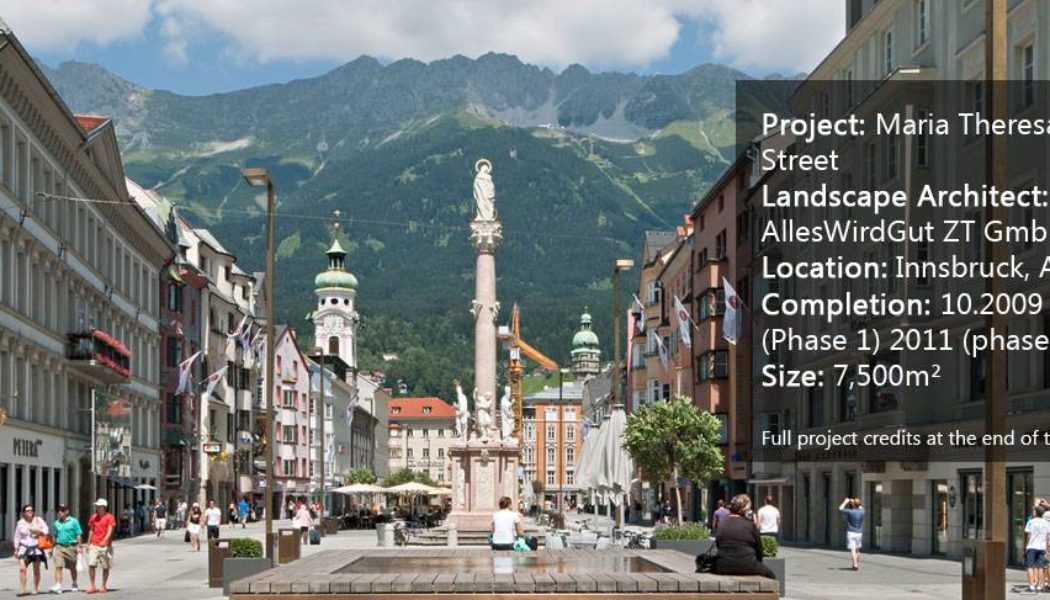
Article by Rose Buchanan Maria Theresa Street, by Alleswirdgut, in Innsbruck, Austria. The traditional shopping street is a fantastic notion of bright shop windows, bustling pedestrians, and the buzzing activity of traffic. The reality, however, is often not so pleasant. There is nowhere to sit, one can barely look into a shop without being shoved by passersby, and the desire to quickly look into the shop across the road is met with treacherous traffic crossings. Maria Theresa Street in Innsbruck, Austria, was no exception to this, and while the beautiful buildings and tourist attractions such as the Golden Roof created a spectacular urban street, it was not user-friendly. In 2006, the city realized the need to revive the street, and launched a competition to design an attractive public “l...Read More

Top 10 Landscape Architecture Projects 2015
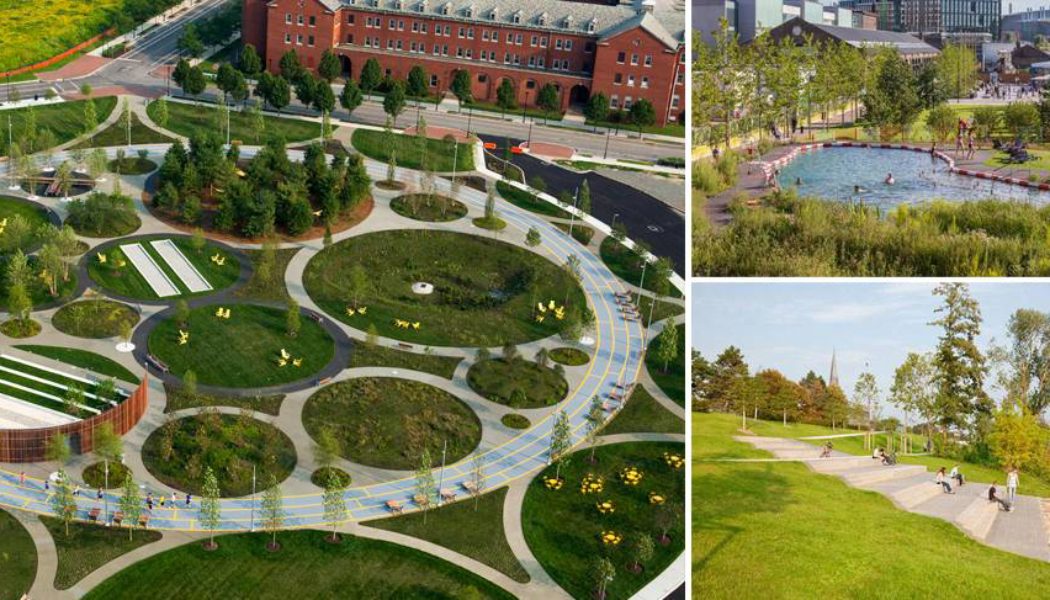
Article by Erin Tharp We searched the world for our “Top 10 Landscape Architecture Projects 2015”. This past year has been marked by some extremely innovative and forward thinking projects in landscape architecture. When selecting the top ten for 2015 we looked for projects that were not only sustainable but also projects that gave something back to the communities where they were built and are being used and loved by the people. All of the projects were completed in some form during the past year. Landscape Architecture Projects of 2015 10. Crescent Park – New Orleans, LA by Hargreaves Associates, completed July 2015 Due to regulations and ownership, the city of New Orleans found itself with a 1.4-mile long piece of riverfront land and nothing to do with it. Hargreaves l...Read More


The Magic Green Carpet That Will Bring Out The Art Critic In You
Article by Win Phyo Green Varnish, by Nomad Studio, in St. Louis, USA It is not unusual for art and landscape design to cross paths. Many artworks convey a powerful message in an abstract manner that can create a conflict of opinion, a source of discussion or a new perception. Landscape design can be used as a tool, or as a canvas, to deliver a message of some kind that can, in many ways, enhance the design. So, how would an example of art and landscape design translate in reality? Green Varnish by Nomad Studio is a site-specific green space, which is part an art installation and part social interpretation that has breathed new life into the 200m2 courtyard in Contemporary Art Museum (CAM), St. Louis. In fact, it is alive. Like turning a new page in a book, the living green carpet installa...Read More


Top 10 Sketches From Around the World – Sketchy Saturday No.043
This week’s Sketchy Saturday Top 10. Sketchy Saturday is back for another week of awesome Sketchy Saturday talent, highlighting the best sketches of the growing LAN community (Currently 1,185,018 fans on Facebook) up 20,287 fans since our last Sketchy Saturday edition. Incredible 🙂 This edition took several weeks to compile as we had a lot of sorting through to do and of course, waiting on people to send us back their descriptions slows down the process, but it is a process worth waiting on, as we get a variety of opinions directly from the people who created the works, making each one of our Sketchy Saturday editions unique and worth reading for insights. Take a look at this week’s highlights and who knows perhaps you’ll be featured in the next one. Enjoy this week’s Sketchy S...Read More

The Rooftop Park at Saint John’s Bulwark
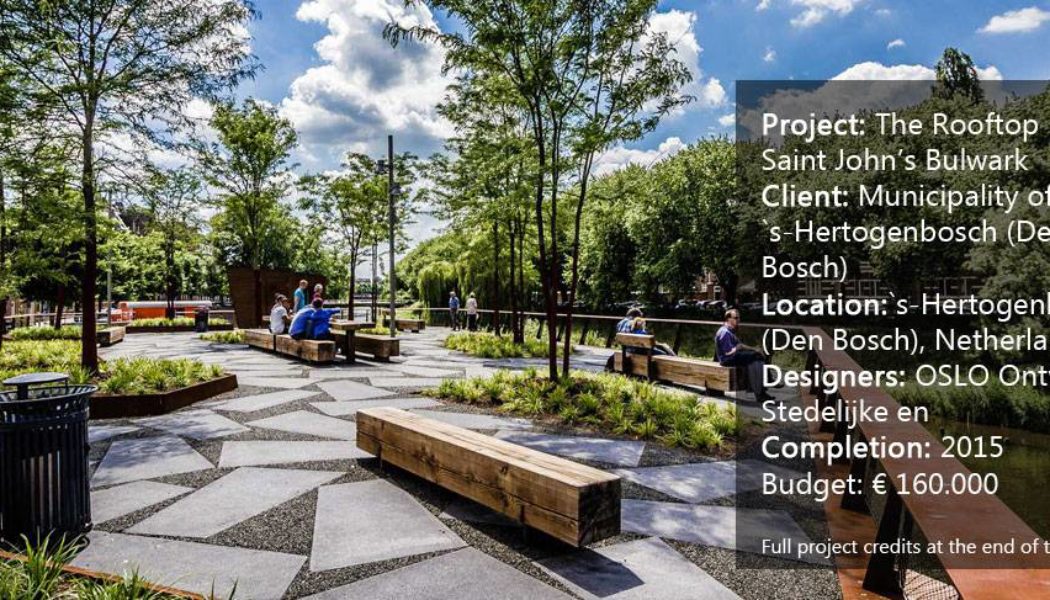
Article by Erin Tharp The Rooftop Park at Saint John’s Bulwark, by OSLO Ontwerp Stedelijke en Landschappelijke Omgeving, in `s-Hertogenbosch (Den Bosch), Netherlands. In 1999, the town council of the city of s-`Hertogenbosch began restoring the fortifications that surround the old town as a means to address flooding from the surrounding rivers. The town is home to 6.5km of walls, originally built to defend the city from invading enemy armies. A Brief History of the Site By 1995 most of these walls were in disrepair and had become inaccessible to inhabitants and visitors. In addition, the city was experiencing extreme flooding from the waters of the Aa and the Dommel rivers. Saint John’s Bulwark is one of 83 projects that make up this vast restoration. Originally, this bulwark was an import...Read More


How to Embrace Seasonal Change to Create an Outstanding Landscape
Article by Ruth Coman YUL Condominium & YUL Sales Office, by NIPpaysage, Montreal (Quebec), Canada Citizens have a year-round interest in landscape and nature. This issue raises the question of how a design can give a proper answer to their enthusiasm. The surrounding natural landscape has to fulfill everyday needs like recreation and relaxation throughout the whole year for city dwellers. Residential and private ‘green spaces’, especially, have to be versatile and must not become boring. Recognizing this issue, NIPpaysage landscape architects chose to create a four-season design for the future inhabitants of YUL Condominium. YUL Condominium & YUL Sales Office YUL provides the ultimate in luxurious urban living in Montreal. Between stylish condominiums, limited-edition penthouses, ...Read More