


Blog


Private Estate Reveals State of The Art Underground Car Park
Heemstede Hageveld Estate designed by Hosper Built in 1923 and originally used as a Catholic seminary, the Hageveld in Heemstede had seen better days. In 1968, the rear building, the Achterhuis, was turned into Hageveld Atheneum College, but the front, the Voorhuis, remained largely unused and, by 1997, was deemed unfeasible by the diocese of Haarlam, NL. The owner of the estate felt that its beauty was still there, but both the Voorhuis and the landscape had been neglected through the years and were in desperate need of work. The goal was to transform the Voorhuis into high-end apartments, the Achterhuis into student dormitories, and to expand sporting areas for the school, all while maintaining the historical integrity of the estate. Dutch firm Hosper was asked to create an urban and mas...Read More


Lessons Learned From Landscape Architecture Firm Visits
View from Laurie Olin’s Office Visiting various different landscape architecture offices is a great way to understand each firm’s different niche and specialization. Firms vary in many different aspects: project focus (public or private), rendering styles (hand or digital graphics), office environment (a small office or one that takes up an entire building), and so on. It can be hard to grasp these differences when usually all you have to go by is their completed work. That’s why, as I’ve stated before, a landscape architecture office visit is so important. By getting the foot in the door to one of your favorite firms, you can start to get a sense of whether or not you are the right fit for their team. It provides the opportunity to ask questions and get answers on ...Read More


Major Redevelopment of New Holland Island
Redevelopment of New Holland Island, St. Petersburg by West 8 On June 9, New Holland Development announced that they, alongside West 8, are preparing a new and updated plan for the restoration and reconstruction of historic New Holland Island. Founded in 1719, the island of New Holland is one of St. Petersburg, Russia’s most important monuments. New Holland has a reputation as an island of inventors and scientists, as it was planned and developed by leading architects and engineers. The island has been home to warehouses and administrative spaces for the Russian Navy, a facility for ship builders, a laboratory for science and technology, a naval prison, and one of the first radio stations in the country. “The introduction of the Summer at New Holland program in 2011-2013, highlighted...Read More
Hand Drawing Tutorial: Analytical Section Drawing
Drawing can be a powerful tool for analyzing an object. We draw what we perceive and not what is actually there. Therefore our drawing always contains our thoughts, knowledge and ideas. Today I will talk about a useful way of drawing for recording and analyzing landscapes. It’s called analytical section drawing. It is similar to geographical illustration – it gives us information about a part of the Earth’s surface. We start off with a bird’s eye view of the landscape. It’s important to choose an area that tells us a lot about the structure of the landscape. In the drawing in the video it’s a valley with a river running through it in the middle. On one side, we have terraced landscape with crop fields and a settlement, on the other there are vineyards on...Read More

Permeable Paving: The Essential Guide
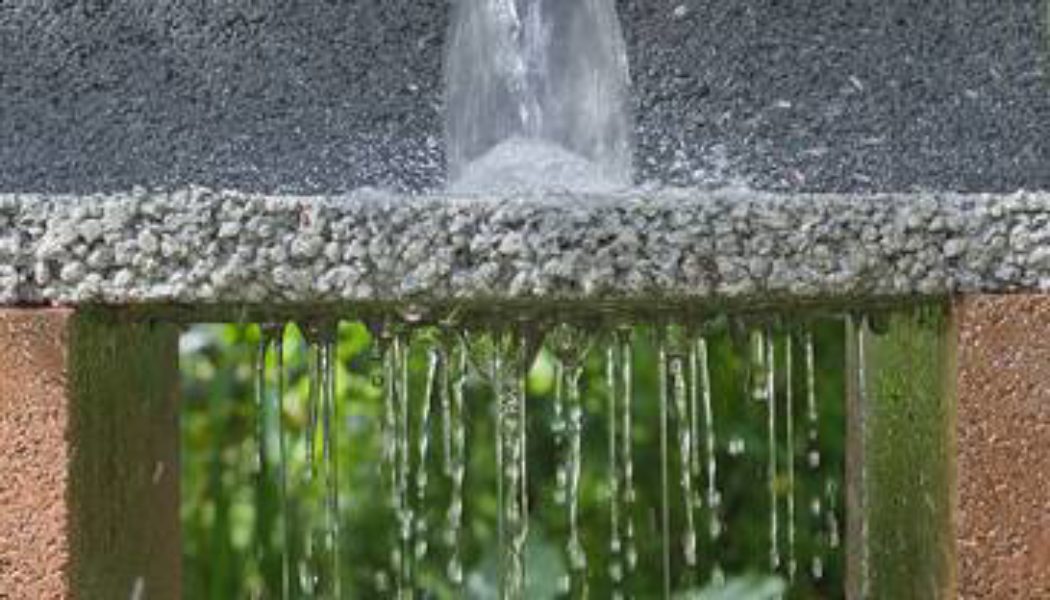
A landscape architect’s dream come true – modern permeable surfaces – are finally here to stay. In recent years they have steadily become more and more popular. Concern for the environment, especially water resources, has massively contributed to their popularity and promotion. Different types of permeable surfaces have actually been known for generations. Turf, gravel, or simply soil are all allowing the water to penetrate through them into the underlying soil. However simple and cheap, those surfaces are not suitable for use on paths and roads with higher traffic volume due to their lack of durability. They are also not stable enough, making them harder to use, especially for people with special needs – the elderly, wheelchair users, parents with prams or simply women i...Read More

5 Mistakes You Should Avoid When Designing Your Portfolio
While students and fresh graduates in most professions take pride in the grades they have earned and academic papers they have written, designers have a whole different story. Unless you are pursuing higher education, grades don’t really matter that much. Professionals are instead interested in seeing a visual outcome of your studio work in the four or five years you spent in university. In that timeframe, designing a decent portfolio is probably the most important step before embarking on the hunt for jobs or internships. LAN decided to compile a list of the most common mistakes landscape architects might commit while preparing their portfolio. Designing Your Portfolio 5. Inconsistency Perhaps every project you have worked on will have a different font and layout. That should not, however...Read More


Sketchy Saturday | 023
It’s always so interesting to hear the thoughts of the people who compose the work that gets displayed in our top Sketchy Saturday feature each week. Each featured image is so much more than a sketch, it often has a story behind it, capturing a moment in the artist’s life, reminding them of how they use to think as well as acting as a token throughout course of their lives. Along with a high standard , we always look for the unusual, the personal and the imaginative when we choose our top 10 and certainly I think you’ll agree that this week’s top 10 have all of that and more. 10. Swayam Prakash Mohanty “I had made this sketch last month during my summer course “Shared Grounds” in Revdanda, Maharashtra. It represents my impression of the region and ...Read More

Filmtastic Fridays – Frederick Law Olmsted: Designing America
All of us know Frederick Law Olmsted as the founder of landscape architecture–but what most don’t know are the fascinating details of his background and the roles that sheer luck and happenstance played in steering him towards developing a lasting legacy. His story and his works will be celebrated tonight in a documentary aired by the American broadcast television network Public Broadcasting Service (PBS). Titled “Frederick Law Olmsted: Designing America,” this much-anticipated film will follow his story from his early start in journalism to his work at Central Park and beyond. From the description: “To Olmsted, a park was both a work of art and a necessity for urban life. Olmsted’s efforts to preserve nature created an “environmental ethic” decades before th...Read More


10 Ways to Design Climate Sensitive Cities
Climate and city are interdependent: The climate determines how the city is used by its inhabitants; in turn, the way the city is used by the inhabitants influences its climate. High temperatures demand cooling, cooling requires energy, energy emits pollution, and pollution leads to an increase in temperature. Sounds a bit confusing, we know, but can you see how everything is connected? There are, however, simple strategies to prevent overheating of cities, as well as to reduce urban carbon dioxide emissions. Stick to these easy-to-follow steps for healthier and more sustainable cities: 1. Implement urban parks and green areas When air flows through a vegetated area, the plants reduce temperature and increase humidity through a process called evapotranspiration. Due to differences in press...Read More


The Floating Pool – A Revolution in Public Space
+ Pool by Play Lab: The floating pool that’s more than just a pool. Living in New York City is probably one of the most amazing urban experiences anyone could imagine. There are hundreds of thousands of artificial places for people and plenty of natural river water surrounding them. Wouldn’t it be great if the Hudson River were swimmable? Why can’t it be possible? The design firms PlayLab and Family think it’s time to see the water around the city with new eyes and add one more exciting experience to its attractions: a very special floating pool. As New Yorkers and designers, Dong-Ping Wong (from Family) and Archie Lee Coates IV and Jeffrey Franklin (from PlayLab) asked themselves some questions during a really hot summer in 2010. Swimming in New York City’s n...Read More


Awesome Displays of Temporary Land Art
Artist Andres Amador shows us the art of letting go through his awesome displays of temporary land art. Andres Amador is a man who adds new layers of meaning to the artistic and creative process. The San Francisco-based Earthscape artist creates magical artwork on the sandy beaches of his home city, knowing full well that all of his efforts will begin to be wiped out within seconds of their creation. With the rake as his tool and the beach as his ready-made blank canvas, Amador moves his body in harmony to the lines he is carving. He drags the rake by his side, and the sound of the tide surging in and out is a constant reminder that time is ticking. Time and impermanence are constant themes in Amador’s artwork. His designs wash away almost as soon as they take form. In the end, a photogra...Read More

Cantilever Pool with the WOW Factor!
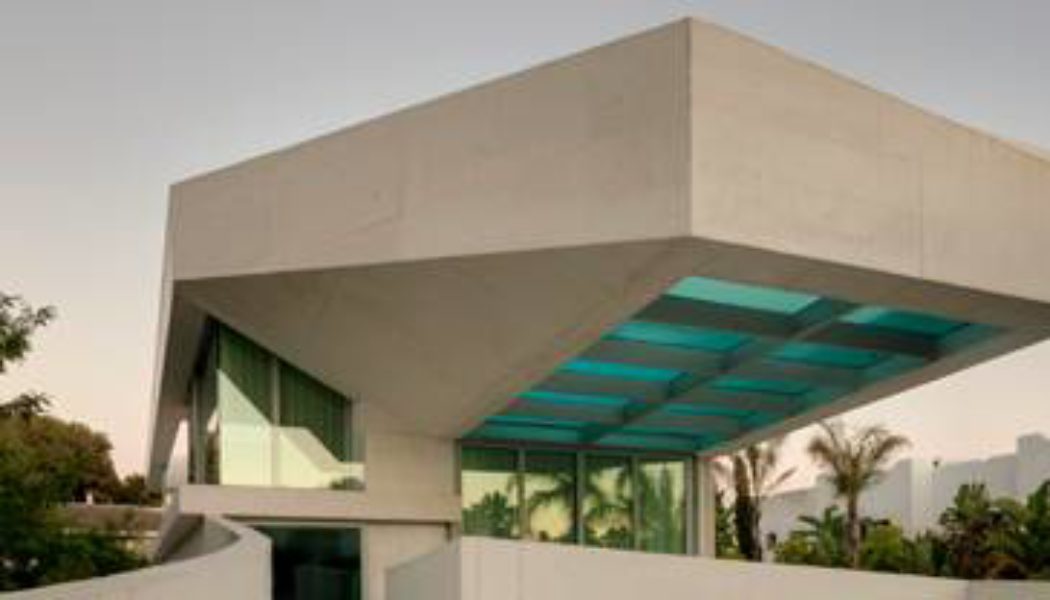
The Jellyfish House by Wiel Arets Architects Boasts Stunning cantilever pool. Pools are pleasant components that enrich buildings by offering leisure, physical activity, and a place to socialize. In this sophisticated beach house, designed by the European architecture firm Wiel Arets Architects and completed in 2013, the pool was created to work beyond conventional use. The proximity of the Mediterranean Sea, the amazing landscape view, and the abundance of sunlight in the Los Monteros region of Marbella, in the south of Spain, provided an inspirational environment to create this outdoor pool that excels in both design and construction techniques. Aiming to overcome the barrier formed by neighboring construction between the beach and the site, the architects came up with a design that prov...Read More