


Author: Land8

Why Landscape Architects Should Champion Nature Play in Design
By Leah Romero with Dr. Suzanne Quinn
Across parks, schools, and neighborhoods, communities are asking for outdoor spaces that do more than satisfy a minimum standard. They want places that enrich daily life, support well-being, and reflect sustainable values. More and more municipalities are now requesting or even requiring that every new playground or park include elements of nature play, reflecting a growing recognition of its benefits for children and communities.
But what is nature play? While it does not yet have an official definition, at KOMPAN, we think of it as an approach to play space design that merges best practices and standards from traditional play environments with the psychological and developmental benefits of immersion in the natural world.
For landscape architects, this is an opportunity to lead. Nature play isn’t just a design option; it’s a professional responsibility. Research shows that spending time in nature is associated with a host of beneficial physiological, psychological, social, and developmental outcomes. By integrating natural elements into play environments, we can deliver spaces that spark children’s creativity, strengthen their health, and foster deeper community connections. Nature play represents the kind of forward-looking design leadership that clients increasingly expect, and communities truly need.
As landscape architects, we are uniquely positioned to guide clients toward choices that balance creativity, sustainability, and community impact. Nature play demonstrates the value of that leadership. It shifts the conversation from purchasing equipment to creating meaningful, site-specific experiences that serve both children and the broader public. By championing nature play, we model evidence-based practice, elevate the profession’s role in shaping healthier communities, and show clients how design can deliver long-term social and ecological benefits.
Play is more than recreation; it is an adaptive survival behavior. Nature play environments provide additional child development opportunities, such as loose parts play and fine motor skill development, that are difficult to provide with manufactured elements. Naturalized playgrounds and hands-on experiences with nature support children’s growth and development across all domains. Equally important, time in natural settings reduces stress, supports mental health, and nurtures social interaction. Unstructured time in nature, time that is not work-based, is essential for healthy child development. Many children are drawn to the natural environment as it provides endless opportunities for adventure, exploration, and wonder. This fascination can support ecological behaviors that are essential to nurture in the coming generations.
It is sometimes assumed that simply using native materials provides the benefits of nature play. However, creating play equipment from non-standard elements poses safety risks not sanctioned by American playground safety standards, and native materials alone do not guarantee the same developmental outcomes. A more effective approach is to use manufactured play equipment thoughtfully integrated into natural and naturalized areas. This taps into the full potential of both manufactured and nature-based play. When considered early in the design process, equipment choices can be woven seamlessly into the surrounding landscape. Thoughtful integration allows manufactured elements to complement natural features, creating play environments that are both safe and inspiring. This kind of integration is exactly where landscape architects can lead.
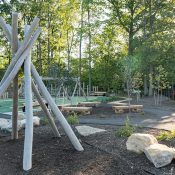
The KOMPAN Play Institute, in partnership with the City of Kettering, Ohio, examined the use of a newly designed nature park and playground by interviewing and observing adult and child playground patrons. The naturalized playground is designed with the topography of the park space, with embankment slides and zip lines that support play at the different elevations. A generous number of swings are placed throughout the playground space, and much of the equipment in the space is made of Robinia hard wood (Black Locust). Park patrons explained that the environment was both thrilling and relaxing and gave them a pleasant experience compared to the often excited or chaotic environment of a traditional playground on a smaller footprint.
Nature play is also about equity. For many historically disenfranchised communities, the local playground may be the only accessible place to experience nature. By integrating plants, especially native species, into play environments, landscape architects can provide vital exposure to green space while also restoring pre-colonial ecologies. Native plantings not only support children’s sensory exploration but also create habitats that invite wildlife interactions, which can support children’s healthy growth, development, and knowledge. These encounters inspire lasting environmental awareness. In the Anthropocene, even small design choices, such as planting a single native tree or shrub, carry outsized importance. Our duty as designers is not only to shape play but also to repair and sustain the land we steward, ensuring that every community has the chance to benefit from meaningful connections with nature.
For landscape architects, nature play is an invitation to lead with purpose. By bringing clients into conversation about how play environments can nurture children and strengthen communities, we demonstrate the highest value of our profession. The spaces we design today will shape how future generations learn, grow, and connect to the natural world. Nature play is not just a playground. It’s a vision for happier and healthier communities.

Eight Reasons Why LABash 2026 Left Us Buzzing
LABash 2026 recently convened at The Ohio State University (TOSU). This year’s theme, “Cross-Pollinate,” reflected what materialized in real life—landscape architects exchanging ideas, listening as much as they talked, and experiencing the city of Columbus and The Ohio State University as living classrooms for their craft.
Here are 8 highlights from the event:
1. Celebrating creativity: 1,000 Trees Gallery + The Ramp Up Awards
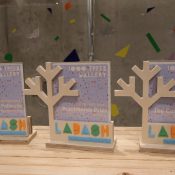
Leading up to the conference, event organizers invited participants, students, artists, and other landscape architecture enthusiasts to build a “forest unlike any other.” The 1,000 Trees Gallery consisted of crafted model trees, each made by a different artist, which all came together as a shared installation. The exhibit reminded us that our field is built from individual perspectives and the fact that materials grow stronger when they work together.
And then there’s the Ramp Up Awards. In partnership with The Knowlton School, LABash challenged TOSU students to display their favorite project proposals, redesigns, and other work. The LABash crowd voted over the course of the conference, and the winners were announced on the final day.
This un-curated, informal event celebrated student work at Knowlton and provided a space where we could cheer one another on. Whether participants were presenting, attending, or just trying to figure out how others make their diagrams look so clean, the event had that festive, awards-night feeling of unity and community.
2. Networking (“cross-pollination”) that didn’t feel forced
Forming new connections is a big reason to attend any conference, and LABash 2026 delivered. The theme, “cross-pollination,” built positive human interaction into every aspect of the event. Participants met in sessions, at the Expo, through informal conversations over lunch, and during celebratory events to exchange wisdom, seed new projects, and form new connections. This is LABash’s superpower: it’s student-led, so it naturally prioritizes peer-to-peer connection.
3. Showing career paths beyond traditional studio jobs
A clear theme emerged throughout our conversations at LABash: Landscape architects can apply their skills to a range of roles. We saw this reflected in the educational sessions, which included topics such as planning your career with intention, navigating your first years on the job, and unexpected career paths for landscape architects.
LABash provided opportunities to learn about career possibilities that extend beyond the classic “design studio” path — work that intersects with policy, advocacy, research, fabrication, ecology, and community partnerships. For emerging professionals, it’s comforting and motivating to see how this degree can take its recipients down many paths toward seeding safe and resilient communities.
4. Student leadership!
It’s easy to forget how much effort goes into LABash until you see it in action. LABash is “led by students, for students,” and TOSU’s team met that challenge. From logistics to programming to the overall tone, you could see student leadership in action: problem-solving on the fly, welcoming attendees, and keeping the schedule moving.
We also loved seeing the TOSU team pass the Permaloc Cup to next year’s team at Arizona State University and can’t wait to see how they build on this year’s experience.
5. Wisdom from seasoned voices (without the lecture-y vibe)
“Cross-pollination” also means mixing generations. ASLA President Brad McCauley, FASLA, PLA, reminded us why landscape architects are uniquely suited to address key social and climate justice challenges. Keynote speaker, Julia Watson, author of the ground-breaking books, Lo—TEK: Design by Radical Indigenism and Lo—TEK Water: A Field Guide for TEKnolog, explained how Indigenous, nature-based approaches to landscape design can help address the consequences of our changing climate. Her speech highlighted how Indigenous innovations like floating farms, tidal fish traps, and aquifer recharge systems can help shape resilient cities and landscapes. Her message resonated. Following her session, students lined up to talk with her more.
6. Real support
The Expo floor buzzed with activity, and exhibitors provided a clear window into the profession. About 35 companies, firms, universities, and non-profits showed up to engage with students. You could see the effect in the interactions: students felt empowered to step into conversations, ask honest questions, and collect cool swag.
Day two culminated with a party hosted by Green Theory, full of camaraderie, beats, and epic bonding. The next night, Permaloc capped the whole experience off with a final celebration where a stunning sunset provided the backdrop for toasts, drinks, and dancing. It was a late night, and yes, we may have been knocking back coffee the entire next day, but it was worth it, and knowing us, we’ll do it again next year.
7. Hospitality that made the hectic feel manageable
Here’s something people don’t say enough: Conferences are expensive and tiring. So, when hospitality is done well, it matters.
LABash and TOSU clearly understood the assignment. Small touches such as food trucks, free meals, and shuttle service felt like a steady hand on our shoulder. Shout out to Buckeye Donuts! They, and the other food vendors, kept us fueled, present, and ready to go.
8. Landscape architecture in action: TOSU and Columbus as the classroom
TOSU’s campus also played an active role in the experience. From its open lawns to its tree-lined paths and evolving spaces, TOSU and LABash offered participants the opportunity to experience ideas “in a setting that embodies them.” Many field sessions, such as the excursion to the Ohio Zoo, took place off campus, letting Columbus and its public spaces serve as teachers in their own right.
The takeaway
LABash at TOSU carried a simple message: This profession is bigger than studios or job titles. The field is buzzing with experienced professionals happy to lend their advice and experiences to blooming landscape architects.
We came for the sessions, the gallery, and the Expo. We left with new connections and a clearer sense of our place in landscape architecture.

Aluminum Landscape Edging and Restraints
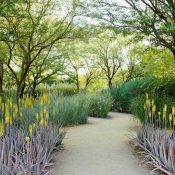
There are many choices when it comes to landscape edging, including wood, steel, concrete, and plastic how¬ever aluminum outperforms them all. Aluminum has a high strength-to-weight ratio. It is lightweight, very strong, and 100% recyclable.
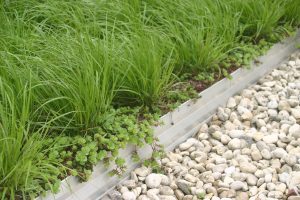
Permaloc manufactures edging and restraints utilizing non-corrosive 6063 aluminum that is a grade higher than that which is used in marine applications. The lightweight characteristics of aluminum make it a contractor’s choice as it can be cut and formed in the field, transported, and installed by one person, thereby saving labor costs that would otherwise be passed on to the end user.
As a Landscape architect, design is key. Aluminum just looks better as an architectural accent and will last the test of time.


Spring Forward: Four Must-Attend Events to Fuel Your Landscape Architecture Career
The transition from studio culture to professional practice is one of the most exhilarating—and occasionally overwhelming—chapters of a landscape architect’s career. As an emerging professional, you’re learning how to detail a bioswale or navigate an RFP—while developing your vision as a design professional. This spring, the calendar is blooming with opportunities to help you bridge that gap. Whether you are looking to ground your practice in historical precedent, master the “soft skills” of the office, or dive into the research shaping our future, these upcoming events are the perfect fuel for your professional fire.
Below is your guide to some standout gatherings to help you grow your skills, expand your network, and connect your work to larger conversations in the field.
If you’ve ever wondered where the ideas that shape your studio briefs and research projects come from, CELA is a big part of that story. The CELA Annual Conference brings together landscape architecture educators, researchers, and students from around the world to explore the latest scholarship innovations.
For emerging professionals, CELA is an invaluable window into:
- Research-driven‑ practice: Sessions often connect climate resilience, social equity, health, and technology to real-world design strategies. You’ll‑ see how today’s research becomes tomorrow’s best practices
- Academic pathways: Considering a future in teaching or a PhD? This is where you can meet potential mentors, collaborators, and future colleagues in academia
- Presentation and publishing skills: Even as a young practitioner, learning to frame a project as research—and communicate it clearly—can set you apart in competitions, RFPs, and firm marketing efforts.
If you’re able to attend, treat CELA as a laboratory for ideas. Take notes not just on what’s being presented, but on how people are framing questions, structuring arguments, and measuring impact. Those skills translate directly into stronger project narratives and clearer communication with clients.
Is your firm grappling to address recent upticks in ICE enforcement? “Life in the Time of ICE” explores the intersecting themes of immigration, climate change, and social justice—all deeply relevant to landscape architecture.
For emerging practitioners, this is a chance to:
- Expand your ethical frame: Landscape architecture is about more than planting plans and grading. It’s about who is protected, who is vulnerable, and who has access to safe, dignified public spaces
- Connect advocacy to design: Discussions of ICE, borders, and migration can feel abstract—this event can help you think about how policy and power show up in the landscapes you design
- Protect your people: Learn how firms are taking steps to protect their crews and communities from ICE activity
- Develop language for difficult conversations: Whether you’re talking with clients, communities, or colleagues, being able to speak clearly about justice and equity is an increasingly core professional skill.
It’s hard to talk about landscape architecture in the United States without mentioning the Olmsted legacy. The Olmsted Network’s event, “The Olmsted Firm in DC,” dives into the firm’s influential work in the nation’s capital and offers a richer understanding of how these landscapes came to shape civic life.
Why this matters for emerging professionals:
- Understanding precedent: Many of us reference Olmsted projects in studio and in practice. This event can give you deeper context—political, social, and spatial—that strengthens your design arguments.
- Historic landscapes as living systems: Learning about how these sites were conceived, implemented, and adapted over time can inform how you approach preservation, adaptation, and maintenance in your own work.
- Storytelling with place: Clients, communities, and decision‑makers often connect most strongly to narratives. The Olmsted firm’s work offers powerful examples of how landscapes can embody values like democracy, access, and health.
Attending a talk like this is also a reminder that you’re part of a longer professional lineage. Understanding that history can make your own contribution feel more grounded and meaningful.
Transitioning from school to practice—or from one role to another—can feel like learning a whole new language. The webinar, Starting Strong, is designed to help emerging landscape architects navigate that leap more confidently.
Hosted by ASLA President Bradley McCauley, PLA, FASLA, this conversation will bring together firm leaders and emerging professionals to explore how offices are successfully integrating recent graduates into practice. Rather than revisiting familiar critiques of education or hiring expectations, the discussion will highlight real examples of onboarding approaches that support both firm operations and early-career development.
This webinar is the first in the series Groundwork: Conversations Shaping the Profession, ASLA’s presidential forum series to convene members around timely, consequential issues impacting the profession nationwide.
Make This Season a Launchpad!
You don’t need to attend everything to benefit. Instead, think about where you are right now and pick one or two events that align with your goals:
- Want to deepen your design thinking? CELA may be your best fit
- Looking for practical career guidance? Check out Starting Strong
- Curious about legacy and precedent? Explore The Olmsted Firm in DC
- Motivated to engage with justice and climate? Join Life in the Time of ICE.
Whichever you choose, treat these events as more than one‑off experiences. Follow up with speakers who inspired you, connect with peers on LinkedIn, and reflect on how what you heard might influence your next project, portfolio move, or career decision.
This spring offers a rare combination of academic rigor, professional grounding, historical perspective, and urgent social dialogue. As an emerging landscape architect, you’re entering a profession—and stepping into a community that is actively shaping more resilient, equitable, and inspiring places. These events are your chance to be part of that work.
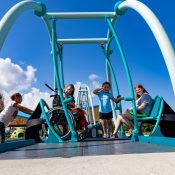

Beyond the Ramp: Designing for the Whole Play Space
By Jill Moore, inclusive play specialist, Landscape Structures Inc.
When I roll into a new park, one of the first things I notice is whether inclusion ends at the ramp or if it extends to the entire space. Too often, I see beautiful playstructures that “meet the code,” but don’t truly invite everyone to participate. As a wheelchair user, going to the playground as a child frequently meant I was relegated to the sidelines. Now, as an inclusive play specialist and an advocate within the space, I get to see firsthand the impact of creating playgrounds that go beyond minimum requirements. The law sets the floor. As designers, planners, and advocates, we can reach for the ceiling.
That perspective isn’t new at Landscape Structures. Back in 1993, our Cofounder Steve King, was appointed to the Federal Access Board’s Recreation Access Advisory Committee. That moment launched our quest to go beyond compliance and start creating play spaces that welcome everyone. From the beginning, we sought input from people with lived experiences of disability. Their insights gave us something far more valuable than well-meaning guesses: practical knowledge about how spaces feel and function.
Over the years, we’ve broadened the circle of experts who guide our work. Today, our thought leaders represent a wide range of experiences: mobility disabilities, visual and hearing disabilities, autism, ADHD, colorblindness, and medically complex diagnoses, among others. These voices include employees, therapists, parents, academics, and, most importantly, the kids who use our equipment.
Their input helps us create what’s next in inclusive play. It informs the balance between physical challenges and social opportunities. It inspires us to think intentionally about sensory play, perceived risk, and even the aesthetics of a playground so that kids of all abilities can build courage and confidence while having fun.
If you’ve spent time in the disability advocacy space, you’ve probably heard the phrase “Nothing About Us Without Us.” For playground design, it should be your guiding principle.
When designing a play space, the best way to know how the community will use the playground is to ask them. Invite kids with disabilities, their families and caregivers, and local experts such as special educators and occupational or physical therapists into the design process. Their feedback will reveal details you may never think about on your own, like how a transfer point feels for a child moving from their mobility device, or how colors might affect kids who have a visual disability.
And don’t stop after the first meeting. When you include people with disabilities throughout the project, you’ll ensure their needs are met in everyday matters.
Once you’ve gathered input, the fun of putting those insights into action begins. An inclusive playground should offer a strategic balance of physical, sensory, cognitive, and social experiences:
- Movement: Swinging, spinning, and sliding are classic activities that help children regulate their emotions and develop balance and body awareness. The key is offering a range of options so kids can choose the thrill and sensory feedback that feels right for them.
- Social play: Select equipment that all children can use together, whether in a mobility device or walking. Not every child thrives in a big group. Provide cozy nooks for quiet play alongside larger gathering spaces for parallel or cooperative play.
- Sensory variety: Incorporate elements like sand, water, textured panels, flowers, and plants. These multisensory features help kids regulate their systems and connect with their environment.
- Variability: The strongest measurement of play value is options. Multiple ways to climb, slide, or spin mean kids can test their abilities, find success, and build new skills at their own pace.
One of my favorite things to see is how universal design enhances not just accessibility, but fun. A well-placed ramp isn’t just for wheelchairs; it’s also a runway for toddlers finding their balance or grandparents who want to stay close to their grandkids. Good design benefits everyone.
Inclusive play doesn’t end at the edge of the playground structure. The entire park matters.
Think about the journey from parking lot to play area. Are pathways wide and smooth enough for wheeled devices and strollers? Is wayfinding clear for people with visual or auditory disabilities, or those who use communication devices?
Shade is another important detail to consider. Due to level of injury or medication, people with disabilities are often at higher risk for heat-related illness, so shaded play and seating areas are essential. The same goes for restrooms. If a parent can’t find an accessible restroom with a universal changing table, their family won’t stay long—no matter how amazing the playground is.
Splash pads, picnic areas, fencing, seating, and bus drop-off zones—all of these features contribute to whether a play space feels welcoming. Inclusivity is not confined to the equipment. It’s about the entire experience of being there.
At the end of the day, inclusion is about autonomy. Kids should be able to choose how they engage with a play space. Per the social model of disability, the built environment defines who’s invited to play and how they can succeed, and every child needs the ability to engage in meaningful play. When children can say, “I want to swing fast,” or “I’d rather climb slowly,” they gain confidence and independence. And when caregivers and grandparents can join in or comfortably supervise, we’ve created a space that everyone can use together.
As designers and landscape architects, your role is to create spaces that honor those choices. That means thinking holistically, listening carefully, and designing with—not just for—the people who will use your spaces.
Our journey to inclusion wasn’t linear, and it isn’t over. We’re constantly learning and looking for more meaningful ways to design play spaces that benefit everyone. Every playground project has become an opportunity to do better and to smartly push the boundaries of what an inclusive play space can be. We learn from experts in this space every single day, and it’s exciting that inclusion is a journey that continues to evolve.
When you design with the whole play space in mind, you’re not just creating a playground. You’re creating belonging. And that’s the kind of legacy every community deserves.
Sponsored Content


News You Can Mulch
Between tending to clients and designing site plans, to keeping up with professional development trends, it’s easy to lose track of the latest industry news. That’s why we rake the internet for the freshest information relating to landscape architecture, planning, gardening, and more–all for busy landscape architects and industry partners.
Starting at Harvard and Falling for Your First Tree
At Harvard, students are gathering wisdom from surprising mentors—trees.
Why This Stairway That Would Connect SF Neighborhoods Has Been Unfinished for 10 Years
Read why residents of Dogpatch and Potrero Hill say a completed outdoor stairway would be heaven.
Here Are All 2026 Team USA Olympians With “Normal” Jobs
While we feel accomplished when we reach our daily 10,000 steps, landscape architect Dan Barefoot is aiming for athletic glory at the Winter Olympics as a member of the U.S. Skeleton team. Congratulations, Dan!
11 Home Upgrades That Will Appeal to Buyers In 2026
Designing for residents? Check out House Digest’s list of features to include in your plans in 2026. Also, don’t forget to take our Residential Design Trends Survey. ;).
12 Backyard Privacy Ideas for a Secluded Garden Oasis
After you complete the Residential Design Trends Survey, see how your choices compare to the crew at Martha Stewart.
Mackerel Cove Report Recognized
See how University of Rhode Island students are using their landscape design skills to address coastal erosion and restore local ecologies.
The Language of Landscapes
Landscapes tell stories. One landscape architect reflects on learning to “read” them.
Dimes Square Is Dead (For Now)
We love car-free urban corridors, but many have shuttered since the peak of the COVID-19 pandemic. Are NYC’s now at risk?
Sara Zewde, ASLA, on Finding Creative Inspiration from People and Place
For Black History Month, we’re appreciating how Sara Zewde uses landscape architecture to help communities strengthen their connections to their histories.
Life in the Time of ICE
Has your practice or community been affected by the increased ICE presence around the U.S.? Learn what you can do to protect yourself and your teams.


Contributors Wanted! Join the Land8 Content Team
The network for landscape architects needs you! At Land8, we have built a digital home where landscape architecture conversations flourish. As our community grows, we are looking for new voices—experts, practitioners, and visionaries—to help shape the conversation around the future of our built outdoor spaces.
Why Create for Land8?
As a contributor to Land8, you are influencing landscape architecture conversations and connecting with peers across the landscape architecture, landscaping, horticulture, and architecture fields (and beyond!). Our platform reaches thousands of professionals, students, and enthusiasts daily. Whether you are passionate about sustainable urban drainage systems, the psychology of public spaces, or the latest advancements in BIM for landscape, Land8 provides the stage for your expertise.
Creating for us has unique benefits
- Establish Thought Leadership: Position yourself as an authority in your specific niche of landscape architecture
- Network with Peers: Connect with other experts and firms who are pushing the boundaries of the field
- Showcase Innovation: Highlight unique projects, research, or technologies that deserve more industry attention.
What We Are Looking For
We are seeking contributors who can provide insights into the technical and creative aspects of the field. We are particularly interested in:
- Project Case Studies: Deep dives into the “how” and “why” behind successful (or even unsuccessful) designs, as long as they deliver lessons
- Technical Tutorials: Sharing workflows, software tips, or construction details
- Industry Trends: Commentary on climate resilience, social equity in design, and emerging materials
- Professional Practice: Advice on firm management, licensure, and the business of design.
- And more! If it’s related to landscape architecture and it’s on your mind, we’d love to hear it.
What Forms of Content do We Accept?
Landscape architects and designers work across a multitude of mediums, and so does Land8. We are seeking short blogs, serialized writing pieces, photography, sketches, and videos. We celebrate creativity in all forms; if your preferred medium hasn’t been mentioned, get in touch anyway.
How to Get Started
You don’t need to be a professional journalist to contribute to Land8; you just need a unique perspective and time to create. If you have a story to tell or a lesson to share, we want to hear from you.
To apply, please fill out the form below.


Accepting Nominations for Social Media Awards in Landscape Architecture 2025
Attention landscape architects! Are you a master of microclimates and Instagram reels? Is your social media marketing as sharp as your pruners? If so, we want to hear about it!
Land8: Landscape Architects Network is proud to announce the 8th Annual Social Media Awards in Landscape Architecture, co-presented with the American Society of Landscape Architects (ASLA). Established as an online hub for landscape architecture professionals, Land8 has evolved into a vibrant international community, bringing together practicing landscape architects, enthusiasts, and learners eager to explore the field.
At Land8, we appreciate the role that social media plays in amplifying the visibility of our profession; now we’re celebrating the industry leaders who light up our feeds. If you’re a firm, individual practitioner, or industry partner leveraging social media in creative new ways, we want to hear from you!
MEET THE PREVIOUS WINNERS
2024 | 2023 | 2022 | 2021 | 2020 | 2019 | 2018
AWARDS
Up to ten (10) awards will be given and ranked in each of the following categories:
- Landscape Architecture Firms
- Individual Landscape Architects
- Allied Partners (those supporting work promoting landscape architecture, such as nonprofits, associations, universities, or manufacturers/suppliers)
Awardees will be featured on the Land8 website and social media accounts.
CRITERIA
Land8 will judge social media accounts primarily on Promotion of Landscape Architecture, along with Visual Excellence, Influence, and Engagement over the last year. This may include popular platforms, such as Facebook, Instagram, Bluesky, TikTok, Twiiter/X, or blogs. Only public accounts will be considered.
Influence and reach are part of the selection criteria, so there is a minimum number of followers on at least one platform needed to apply:
- Firms – 1,000
- Individuals – 500
- Allied Partners – 1,000
SELF NOMINATIONS
Self-nominations are due February 10, with announcement of winners in early March. Nominations may be submitted from anywhere around the globe.
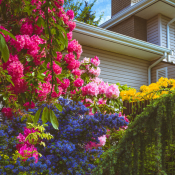

Residential Designers: What’s in Bloom for 2026?
As we welcome the new year, the crew at Land8 is reviewing our resolutions. Top among them: Connecting with our peers in the residential landscape architecture, design, architecture, horticulture fields, and beyond on their projects for the year ahead. What materials, techniques, tools, and cool gadgets do you hope to use in 2026? Weigh in below!
News You Can Mulch
Between tending to clients and designing site plans, to keeping up with professional development trends, it’s easy to lose track of the latest industry news. That’s why we rake the internet for the freshest information relating to landscape architecture, planning, gardening, and more–all for busy landscape architects and industry partners. Here’s the latest for the week of December 15, 2025.
→ Rare Talipot palm bloom continues in Rio as trees near end of life
In a park in Brazil, several decades-old trees bloom simultaneously for the first and only time.
→ The Bay Area neighborhood most vulnerable to sea level rise is also sinking: “A right now problem”
See how one California community is seeking solutions to address sea level rise.
→ Hilton Head’s oldest walls can talk, if we’re smart enough to listen
What lessons can excavated materials teach present-day designers? Historians in South Carolina dig in.
→ Cleveland Museum of Natural History Earns Global Recognition at Prix Versailles World Ceremony in Paris
Congrats to the Cleveland Museum of Natural History, whose grounds contribute to its design success.
→ Asheville will rebuild its river parks. But what might it look like?
See how landscape architects are helping reimagine a beloved network of Asheville, North Carolina, parks ravaged by storms.
→ Federal deportation campaign to have chilling effect for Chicago’s snow removal companies
Chicago landscaping companies that rely on immigrant workers struggle with labor shortages. Have you experienced similar challenges recently?
→ Landscape Architecture and Urbanism Studio Receives National Honor Award
A trip to Japan seeds new possibilities for Illinois Tech students.
What stories made you think or inspired you this week? Weigh in below or on the Land8 app. 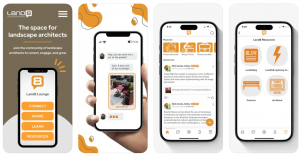


Gifts for Landscape Architects, Designers, Gardeners, and More!
The holiday season is upon us! If you’re anything like us, it likely snuck up on you…again. Do you have someone in your life who loves landscape architecture?
Whether they’re a professional designer or just a would-be gardener hoping to turn their black thumb a little greener, our friends at Landscape Architecture Magazine have your back. They asked over a dozen professional landscape architects and designers what they wished someone would gift them. See their recommendations after the jump. Then, tell us in the comments what’s on your holiday wish list!
Landscape Architecture Magazine Gift Guide



ASLA 2026 Professional and Student Awards Call for Entries
Showcase the best of landscape architecture—ASLA’s 2026 Professional and Student Awards calls for entries are open.
Professional Awards
The ASLA Professional Awards honor the best built and unbuilt work worldwide. Submit early to save with tiered pricing:
- Early Bird deadline: January 9, 2026
- ALL materials due (all professional entrants): February 6, 2026, 11:59 p.m. PST
- Recognition: Winners are celebrated at the ASLA 2026 Conference on Landscape Architecture and featured in Landscape Architecture Magazine.
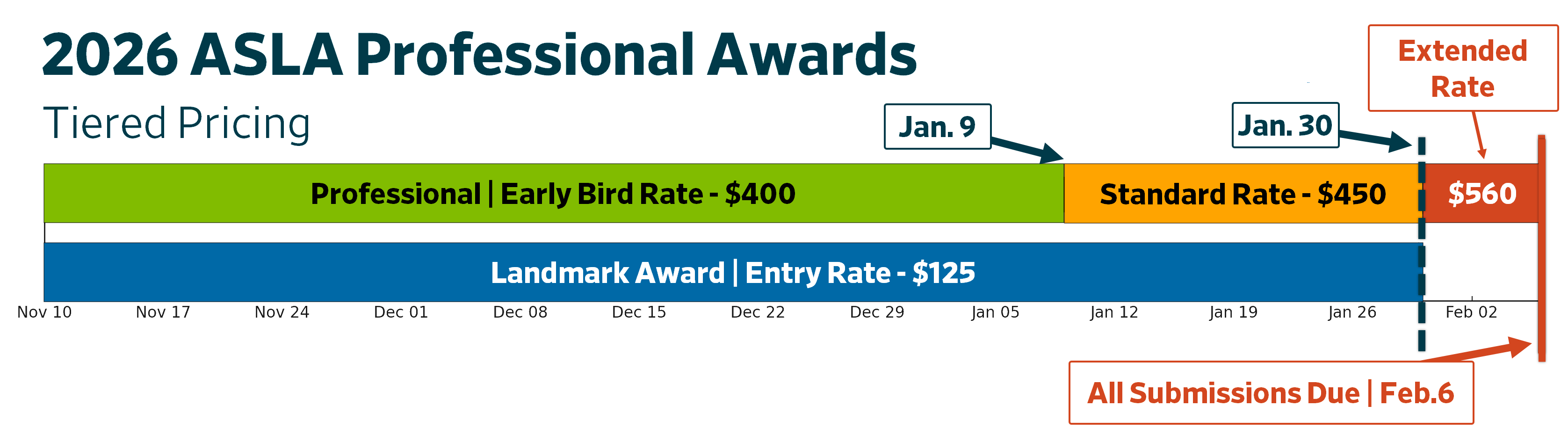
ASLA Professional Awards timeline and rates / ASLA
Professional Categories:
- General Design
- Residential Design
- Urban Design
- Analysis & Planning
- Communications
- Research
- Landmark Award
- ASLA/IFLA Global Impact Award
- Community Service and other special recognitions.
Professional Awards Jury Chairs:
- General Design, Residential Design, Urban Design, Landmark Award: Adam Greenspan, FASLA — Chair; PWP Landscape Architects (Berkeley, California)
- Analysis & Planning, ASLA/IFLA Global Impact Award, Research, Communications, Landmark Award: Sierra Bainbridge, ASLA — Chair; MASS Design Group (Boston, Massachusetts).
Begin your entry and see full details: Professional Awards.
Get inspired! Meet the 2025 Professionals Awards winners.
Student Awards
The ASLA Student Awards spotlight emerging talent and ideas. This year’s cycle is earlier than in previous years, and previously completed projects are eligible.
- ALL materials due (all student entrants): February 6, 2026, 11:59 p.m. PST
- Recognition: Student awardees and their advisors are honored at the ASLA 2026 Conference on Landscape Architecture and recognized in Landscape Architecture Magazine.
Student Categories:
- General Design
- Residential Design
- Urban Design
- Analysis & Planning
- Communications
- Research
- Student Community Service
- Student Collaboration
Student Awards Jury Chairs:
- General Design, Residential Design, Urban Design, Student Collaboration: Ebru Ozer, FASLA — Chair; Florida International University (Miami, Florida)
- Analysis & Planning, Communications, Research, Student Community Service: Nina Chase, ASLA — Chair; Merritt Chase (Pittsburgh, Pennsylvania).
Start your submission: Student Awards.
Meet the 2025 Student Awards winners
Why submit an award?
- Elevate exemplary practice and research across the discipline
- Gain national recognition in the profession’s leading platforms
- Celebrate with peers, clients, and advisors at the ASLA 2026 Conference on Landscape Architecture.
Key Dates:
- Professional Early Bird deadline: January 9, 2026
- ALL materials due for both Professional and Student Awards: February 6, 2026, 11:59 p.m. PST.
Central hub for both programs: ASLA 2026 Professional & Student Awards.
- 1
- 2