


10 Great Apps for Landscape Architects – Part 2


10 Great Apps for Landscape Architects – Part 2
The second edition to our hit article featuring apps. to make your life as a landscape architect easier. We are spoiled for choice when it comes to apps — they range anywhere from recording our sleep cycle to reminding us to brush our teeth. Apps are constantly being developed to make our lives more interesting, if not easier. The apps for architecture and landscape architecture are plentiful, adapted to our habits from desk to field research and everything in between. In this article, I hope to show you some apps that made my academic life a bit easier and provided a more fascinating and different approach to projects. Apps for landscape architects 1. Photosynth Photosynth stiches together numerous images of an area and puts it into one file, creating a panoramic picture. The app ta...Read More


Meadows by Design by John Greenlee| Book Review
In today’s world, a luscious, smooth, green carpet of a lawn in every garden is a given. No one seems to think or care about the strain that such high-maintenance greenery puts on the environment. The necessary water, herbicides and pesticides, the exhaust fumes of the machinery used to cut it — it is all an enormous burden we put on the surrounding natural environment. Fortunately, we have a choice — and John Greenlee proposes an excellent solution in his book “Meadows by Design”. Overview The author of “Meadows by Design” is so enthusiastic and knowledgeable about the subject that it makes the reader want to go out and tear down their lawn right away. Greenlee’s passion for meadows shines through every page of the book. He answers all the main questions you ...Read More


8 Amazing Facts About Trees That You Didn’t Know
Here at LAN, we love trees. Just check out our hit article Top 10 Sacred Tree which highlights some of the wolrds most special tress in all of their awesomeness. The benefits of trees are widely known, but there are some amazing facts about trees that you might not know and will surely blow you mind! 8. A balance of carbon and oxygen A single 30-meter-tall mature tree can absorb as much as 22.7 kilograms (50 pounds) of carbon dioxide in a year, which over it’s lifetime is approximately the same amount as would be produced by an average car being driven 41,500 kilometers (25,787 miles). The same tree could also produce 2,721 kilograms (5,998.78 pounds) of oxygen in a year, which is enough to support at least two people. According to the University of Melbourne, because trees grow fast...Read More

Filmtastic Fridays: Landscape Architecture Internships
As a follow up to this week’s Summer 2014 Internship roundup, today’s Filmtastic Friday spotlights the landscape architecture internship experience as captured in these three short and inspiring films by Sasaki Associates, OLIN, and SWA Group. Keep reading for a glimpse into the work cultures and internship programs at these landscape architecture firms! Sasaki Associates In this video, our summer interns and former interns now on staff share what they loved about the Sasaki summer internship, and how it propelled their careers forward. Are you looking for a chance to work with a diverse, interdisciplinary team of designers and tackle some of the world’s most interesting design and planning challenges? Learn more here: sasaki.com/about-us/Internships/ Sasaki Internship ...Read More


10 Tips Every New Landscape Architecture Professional Needs To Know
Landscape architect Brodie McAllister gives us his thoughts on what new landscape architecture professionals need to know in the first years of their career: At university, you have to balance deadlines for design and written work with a social life and the pressures of funding your place. You are challenged to let your imagination “fly” then pulled back to Earth with the consideration of practical details. This, to an extent, prepares you for the workplace after you graduate. However, nothing prepares you for work quite like “work”. What should you know or do, beyond what tutors have probably told you, to succeed in those first couple of years? It can be a bit of a hard landing when you finally get a job — there may be initial feelings of elation as you are released into the “rea...Read More


Top 7 Firms Hiring Landscape Architecture Interns
Spring is just around the corner, which means that it’s time to start applying for summer landscape architecture internships! We’ve rounded up a list of seven of the best known landscape architecture firms offering paid summer landscape architecture internships for 2014. Good luck and don’t delay–some deadlines are approaching fast! 1. Sasaki Associates, Inc. Sasaki is now accepting applications for our paid 2014 summer internship program! The program kicks off with an interdisciplinary design charrette—a unique two-week project that serves as an introduction to the firm and the summer’s class of interns. Interns will then work on current Sasaki projects alongside our architects, landscape architects, planners, urban designers, strategists, civil engineers, and g...Read More


Reverse Graffiti – Activism, Art or Vandalism?
Also known as clean graffiti, reverse graffiti is essentially the act of removing dirt or dust from dirty surfaces in order to form an image or text. This act can be done from using your own little finger to write ‘clean me’ on that van you can see, to a using a cloth on a wall, or in some cases a high power washer for those works on a grander scale. Reverse graffiti, operates within what most people call ‘a legal grey area.’ That is to say, the act of cleaning something isn’t illegal but that it results in creating an image on someone else’s property means it may be seen as trespassing. Moreover, whilst cleaning walls is not illegal, using this method as a form of advertising may be. Recently reverse graffiti has been commandeered by the advertising industry. In most places you must have ...Read More

How to Transform SketchUp models into Digital Hybrid Watercolor Renderings
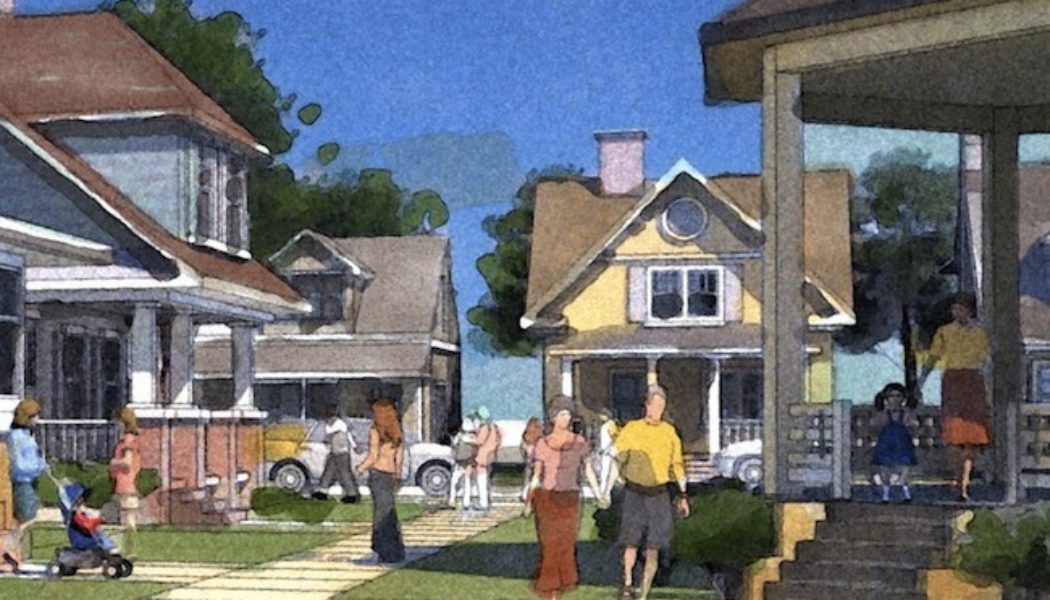
In 2011, I developed the Digital SketchUp Watercolor – an amazing hybrid visualization technique for transforming a Google SketchUp model view into a digital watercolor. The idea involves a combination of digital image manipulation and traditional hand coloring with markers. For anyone who enjoys modeling in SketchUp, this process enables you to create beautiful renderings that have a “hand crafted” character resembling an actual watercolor painting. My “step-by-step” explanation below will show you the process and just how easy it is to do! Step 1: Google SketchUp Model I assembled this scene from a set of houses downloaded from 3D Warehouse and populated the model with 2D and 3D people and landscape components. I adjusted the sun intensity and direction to create the foreground tr...Read More


5 Common Habits of Successful Landscape Architecture Students
Studying landscape architecture is hard. The old adage of ‘work smart, not hard’ is very enticing. Whilst there’s no escaping hard work on a landscape architecture course, you can make sure you’re working smart! Here we take a look at the five most common habits of successful landscape architecture students. 5. Bouncing off your classmate At the beginning of our undergraduate course one of our lecturers shared this pearl of wisdom with our class “you are each other’s greatest resource”. The most successful students know who has experience working in construction or whose plant knowledge is particularly good. Rather than spend ages searching the internet for answers these successful students ask the right person, who usually knows the answer and can point to a useful...Read More


Crimes Against Horticulture: Interview with Billy Goodnick
In this interview, LAN talks with Billy Goodnick, founder of Crimes Against Horticulture and author of the book “Yards”. We discuss CAH’s origins, mission, role, importance, reception … and … testicle-shaped hedges. We even have Billy answer that one divisive question: Who is the biggest perpetrator of Crimes Against Horticulture — the landscaper or the designer? How did Crimes Against Horticulture come about? “I was writing for EDHAT and was part of the Santa Barbara Beautiful Awards (a competition for the most beautiful gardens) and decided to take some photos that I had collected through my work and do the Santa Barbara Not So Beautiful Awards, and I had categories like the silliest place to put a Bougainvillia, and continued doing the “Not So ...Read More


A Cautionary Tale of Dredge: Dredgefest, Louisiana 2014
On January 17, roughly twenty people congregated on a levy just south of downtown New Orleans. With many sporting heavy rimmed glasses and dark attire, the group was mostly landscape architects with a smattering of scientists and engineers. They were struggling to launch a kite with a small digital camera attached in an attempt to aerially map the adjacent wetland restoration project. Yet despite their efforts, the group eventually yielded to the almost still air and retired to the smooth concrete slope of Bayou Saint John. This was the first stop on the Mississippi River field trip of Dredgefest, Louisiana, a weeklong event held in New Orleans and Baton Rouge exploring all things related to sedimentation and erosion. Organized by the Dredge Research Collaborative – a group of landscape ar...Read More


10 Things You Must Know If You Want to Study Landscape Architecture
Trying to figure out your calling can be a tricky thing. This is especially true if you are interested in landscape architecture, an interdisciplinary field with open-ended opportunities. If you are thinking about studying landscape architecture and you do not want your choice to be a reckless one, check out the following 10 steps that can give you a deeper understanding of the field, the qualities needed to study landscape architecture and the career prospects that await you: Study Landscape Architecture 10. Notice the spaces around you This one might seem obvious, but if you want to spend your life designing spaces, you might as well start being more attentive to the way they are shaped. Observe how people use a certain place (be it a square or a street or anything else). Try to underst...Read More