


Is Bourke Street Plaza the Gateway to Melbourne’s Revitalized Docklands?
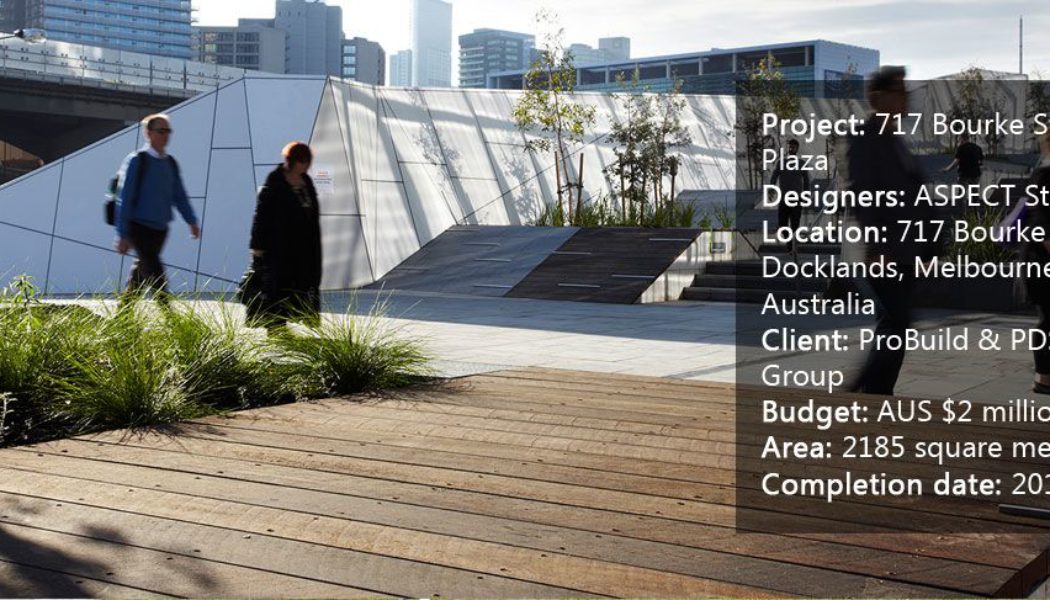

Is Bourke Street Plaza the Gateway to Melbourne’s Revitalized Docklands?
717 Bourke Street Plaza. by ASPECT Studios in 717 Bourke Street, Docklands, Melbourne, Victoria, Australia. 717 Bourke Street is a collaboration between architects at Metier3, real estate developers of PDS Group, and with landscape designers at ASPECT Studios. The design includes a 17-level office building set in an urban plaza. The site, which includes the plaza and adjacent streetscape is especially interesting, as it represents the gateway into Melbourne’s newly redeveloped Docklands neighbourhood. Previously an industrial area, the docklands precinct was an important shipping harbour up until the 1950s when it fell into disuse. With the city of Melbourne growing, it became evident that the redevelopment of these lands would be necessary to accommodate commercial and residential growth....Read More


10 Great Countries for Living and Working Abroad
One of the greatest things about landscape architecture is you can take your skills and travel with them, opening up a whole new world for living and working abroad. If you are planning on making a change in your life, there is no better time than the present to take action. In this article, you will have the opportunity to discover ten of the best countries for living and working abroad. Read the information presented for each of them and decide on your own on the most suitable destination. Remember that we are no longer tied to an individual job or country of residence; globalization has allowed us to move freely to other countries, discovering their culture and meeting new people. If you are up to the challenge, pack your bags and go! Living and Working Abroad 1. Austria In a recent sur...Read More


Grow Your Own Drugs: LAN’s Essential Guide to Ethnobotany
With lawns going out of fashion and urban agriculture making a big impression, more and more people are looking at what they can grow. Some are even looking at how to grow your own drugs. To understand the study of ethnobotany, one must first understand the meaning of the word. According to the Merriam-Webster dictionary, the word ethno means “race: people: cultural group” and the word botany is a “branch of science that deals with plant life.” So, with this in mind, one could assume that ethnobotany is the study of plants and their relationships with certain cultures. In fact, Merriam-Webster defines it as “the plant lore of indigenous cultures or the systematic study of such lore.” But how does ethnobotany relate to growing drugs? Simply put, one of the subcategories of ethnobotany is e...Read More
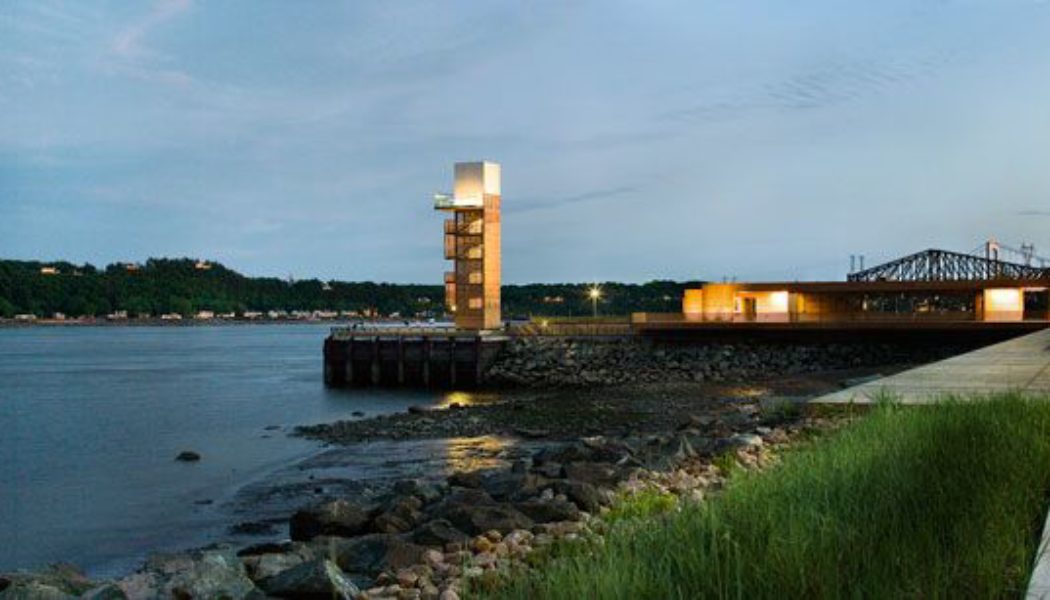

Plaza Euskadi Brilliantly Unites Old with New
Plaza Euskadi, by Balmori Associates and Lantec, in Bilbao, Spain. Not so long ago, the name “Bilbao” would have had little meaning to most people. But if you mention the name now, the response will be something like “oh that’s where the shiny curvy building is”. Yes, the city has been put on the cultural and tourist map by an extremely extroverted building, the Guggenheim Bilbao, by Frank Gehry. But before you landscape architects stop reading you should know that architecture is not the only outrageous and exciting aspect of Bilbao – its landscape architecture is pretty fantastic too! In fact, landscape design is the key element that has enabled the old city to connect to the new in a manner which is fun, beautiful and very green. There are three parts to the new landscape interven...Read More


10 Top FREE Design Software Trials to Download Today
With so many software design programs on the market that claim to be the best, it may seem like mission impossible to choose one. If you are searching for some of the best free design software trials to download, look no further than this handy list that we have composed for you. There is an age-old adage that says, “a picture is worth a thousand words”. This is a sure fact, especially when you are a landscape architect and you want to illustrate an idea for your project. Indeed, with software design programs revolutionizing the landscape architectural world, you now have the ability to present a model of what your project might possibly look like, using some impressive conceptual 3D modeling landscape design and 2D graphic drawing software. Whatever happened to the old pen a paper? Of cou...Read More


How Zollhallen Plaza is Ready for a 100-Year Flood
Zollhallen Plaza, Atelier Dreiseitl, Freiburg, Germany. It is undeniable that the relationship between water and our urban areas needs to be given a higher priority to provide integrated solutions for flood risk management, sustainable water use and supply, and the improvement of water quality in our treasured watercourses. Planners and designers should take more account of what we call “water-sensitive urban design”. But what exactly is water-sensitive urban design? A water-sensitive urban design is a land planning and engineering design approach. It takes the urban water cycle, including storm water, groundwater and wastewater management and water supply into urban design. Mitigating on environmental degradation and improving aesthetic and recreational appeal. Zollhallen Plaza The proof ...Read More


Interview with Landscape Photographer Erica Thum
LAN’s Erin Tharp interviewed landscape photographer, Erica Thum, gaining insights and expert tips on the topic of landscape photography. Once a design is installed, the next step is getting the right photos of the project to show off all its best features. This can sometimes be a challenge, especially if your photography skills are limited to the latest app on a smartphone. Landscape designer and freelance photographer Erica Thum is here to share her insights into how to really sell a project with amazing photos — with a real camera, not just a phone. Landscape Photographer Erica Thum LAN: Where do you find your inspiration for your photographs? Thum: I’ve been a photographer since I was about 10 years old, so photography has always just been part of who I am. Photography is ho...Read More


5 Top Health Benefits of Landscape Architecture
Have you ever wondered about the health benefits of landscape architecture? And not just in a general sense but in specific ways, that can truly enhance the lives of individuals. People enjoy being in nature for multiple reasons: to work out, to escape from the stress of everyday life, or to simply breathe fresh air. Others head to the mountains or the woods to find a cure for what ails them and to reap the health benefits of spending time in the great outdoors. Whatever your goal, it is evident that spending time in nature is beneficial to both your mental and physical health. While some of these benefits are well known — such as interacting with nature to reduce obesity and stress — other benefits are still hidden from public knowledge and are being studied by the scientific...Read More
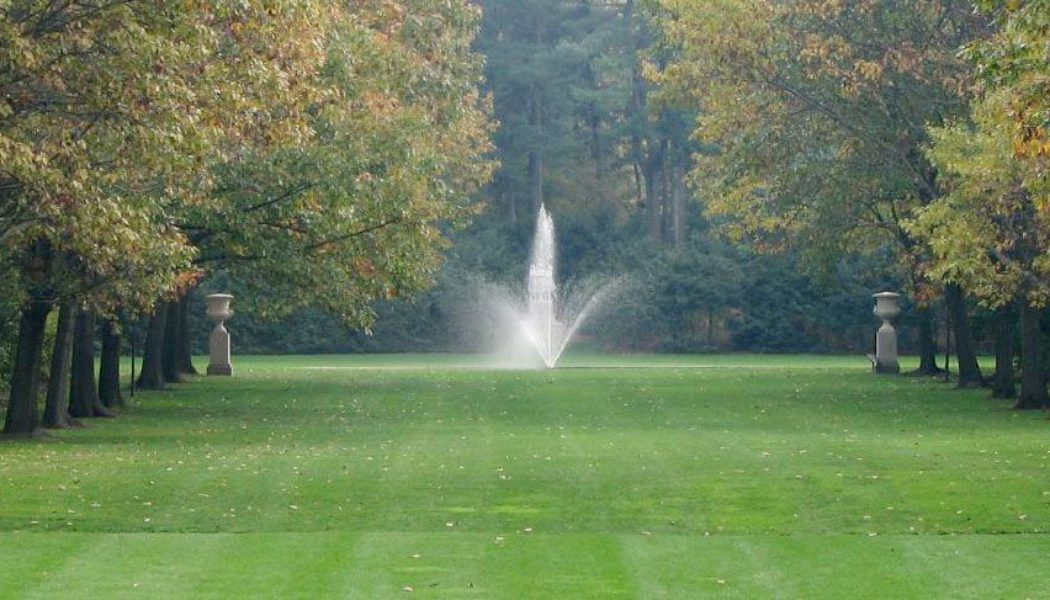

8 Reasons to Stop Designing Lawns — and 2 Reasons to Keep Designing Them
Are you taking lawns for granted? Do you just implement them from an esthetic point of view with no regard to the environmental aspects of it? In this article, we take a deeper look as to what designing lawns really means. Turf grass is perhaps the most prevalent plant used in Western public and residential space alike. It’s always in a designer’s back pocket as a quick way to create multi-use space. But good designers think about the long-term effects of their projects, and traditional lawns can be a bad idea. Their maintenance sucks resources, helps decimate ecosystems, and wastes money. Here are some reasons to stop designing lawns: 1. Turfgrass is the most irrigated crop in the United States According to a 2005 NASA Study, irrigated turf grass accounts for three times more ...Read More


The Value of Advancing Technology for Landscape Architects
Have you ever wondered about technology for landscape architects? In this article, we take a closer look at some of the advances in technology that landscape architects can look forward to. As technological development continues to progress at an unprecedented rate, it is becoming more and more exciting to witness what new developments are next to emerge. In the world of landscape architecture, technology is always developing for the convenience of the designer and, more importantly, for the benefit of the user. We are now seeing more modern and sophisticated tools that only seemed feasible in science fiction 40 years ago. We must pay attention to the likes of 3D printers, as they provide accuracy and productivity that cannot be matched by older methods. These printers are now creating hou...Read More

5 Easy Steps to Mess Up Your AutoCAD Drawing … and Make it Look Better
5 Easy Steps to Mess Up Your AutoCAD Drawing … and Make it Look Better from our resident AutoCAD expert UrbanLISP to make your work in AutoCAD more efficient. With landscape architecture, we try to shape and organize spaces with trees, plants, water. In other words, we work with nature. When developing a plan in AutoCAD, we work with a computer — just about the opposite of nature. How do we make something look like nature with something that is the opposite? Well, we can randomize! In a previous article, you can read how to do this in sections. In each of the following steps, we use a tool to approach a natural look with trees by randomizing in plan view. WATCH: 5 Easy Steps to Mess Up Your AutoCAD Drawing … and Make it Look Better We start with a drawing with tree blocks. There are ...Read More
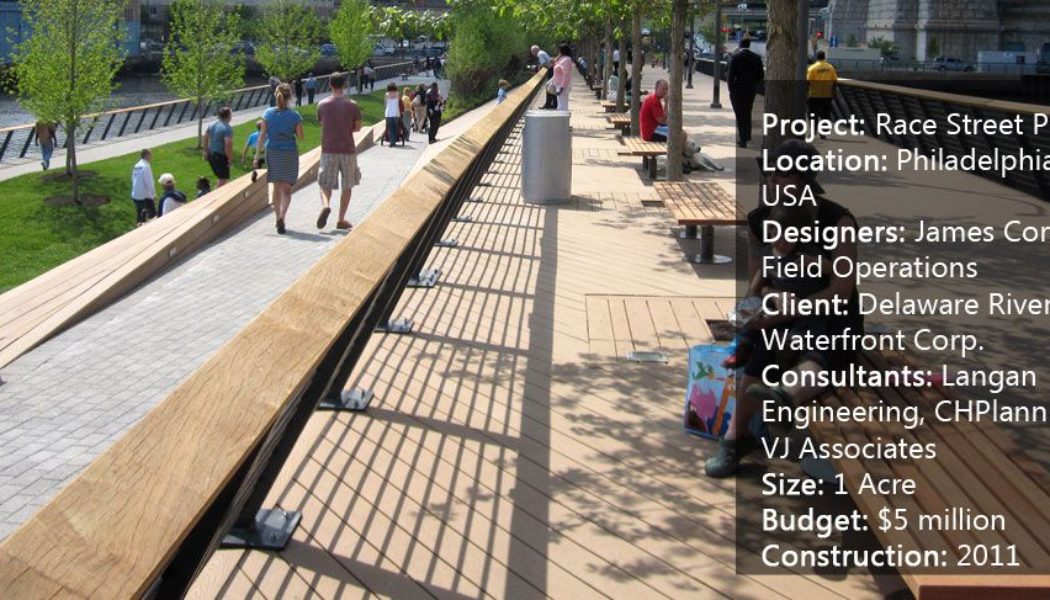

Race Street Pier Becomes a Vivid and Exciting Place
Race Street Pier, by James Corner Field Operations, in Philadelphia, Pa., USA. “Pier” (as per Merriam-Webster Dictionary) means “A structure (as a breakwater) extending into navigable water for use as a landing place or promenade or to protect or form a harbor”. Well, it appears that thanks to Field Operations’ design, “pier” also means an exciting and vivid public space! Race Street Pier is part of an ambitious plan regarding the Central Delaware River in Philadelphia, Pa. The organization responsible for the development of the area is Delaware River Waterfront (DRWC). Race Street Pier The original Race Street Pier began construction in 1896, with a large two-level building. The building’s lower level was used for shipping and the upper level for recreation. This double function continues...Read More