


Blog


LARE: Choosing a State for Your First Landscape Architecture License
ASLA and CLARB have aggregated data on all states and provinces regarding education and experience requirements needed in order to sit for the LARE. The North American map provided by CLARB, shows the information for the states or provinces you are considering getting licensed in. (Note to CLARB: Please add state and province labels to your map like we talked about on the phone today.) For those of us who live and work in one state and have no plans to relocate, we generally seek licensure in that state, although District of Columbia practitioners must still seek licensure in a neighboring state, until DC completes its licensure rule-making process. ASLA has advised candidates to sit for the LARE as soon as possible, register for the exam in a state with fewer work experience requirements ...Read More
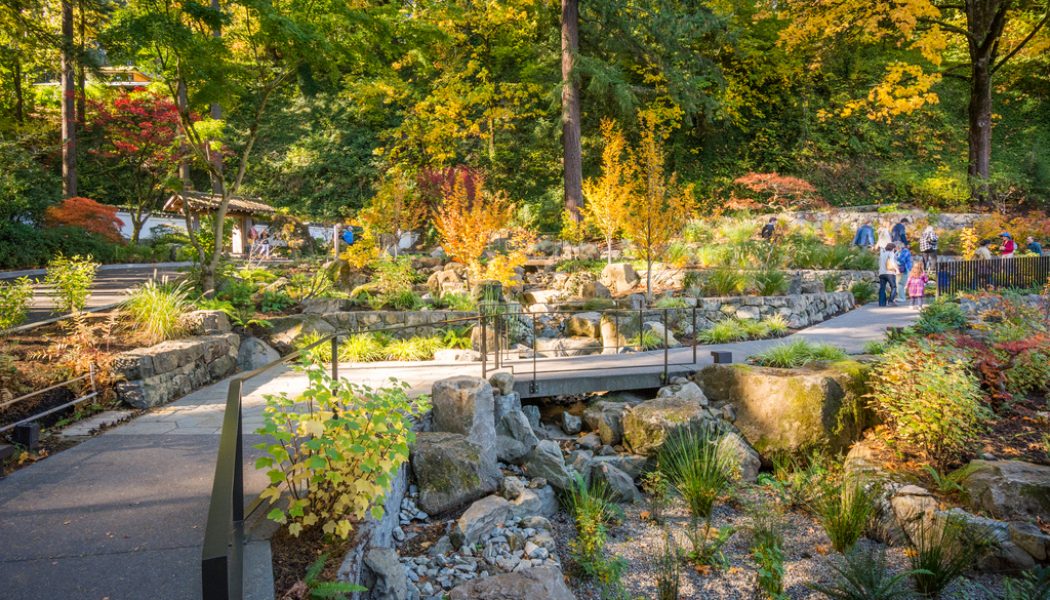

Listening to Nature – and Each Other
Landscape architects — like many designers — regularly engage with what are commonly called ‘wicked’ problems. Wicked not in the sense of evil, but in the other definition: a problem that is difficult or thorny due to incomplete, contradictory, and constantly changing information, and requirements that are hard to recognize. Urban overcrowding, climate change, economic disparity, and inequity in green space access – wicked problems, all. As designers, we hope and expect to not only be able to conquer wicked problems, but also manage to create works of sublime beauty that are a pleasure for people to occupy and use. Ian McHarg’s influential 1969 Design With Nature focused attention on the then relatively-new idea that we shape the earth best when we plan and design with careful...Read More
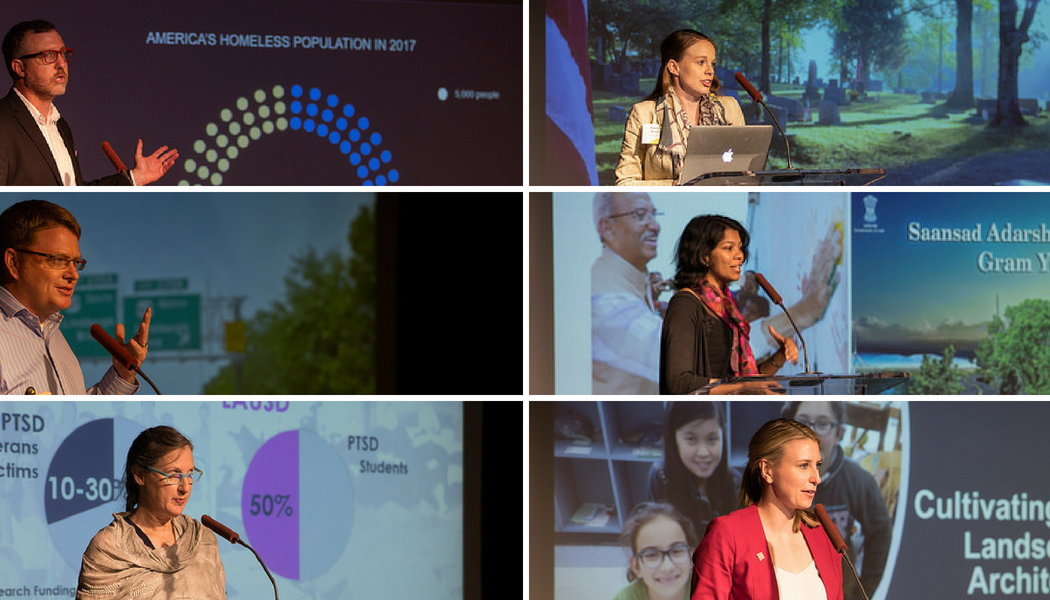

LAF Fellows Merge Research with Practice at Inaugural Symposium
Landscape architecture is often touted as a broad-ranging interdisciplinary field, uniquely poised to problem solve the complex and pressing issues of the 21st century. At the first annual Landscape Architecture Foundation Innovation and Leadership Symposium, the breadth of the profession and idealism toward its future was very much on display. LAF established the Fellowship for Innovation and Leadership in 2016 to “foster transformational leadership capacity and support innovations to advance the field of landscape architecture”. As the culmination of the yearlong fellowship, the six inaugural Fellows gave presentations on their projects to an audience of about 200 people in Washington, DC. Videos will be released in the near future. Tackling complex issues and transformational leadership...Read More
![Deep Collaboration: Ecology, Research, Design [Video]](https://land8.com/wp-content/uploads/2018/05/stephanie-carlisle-1050x600.png)
![Deep Collaboration: Ecology, Research, Design [Video]](https://land8.com/wp-content/uploads/2018/05/stephanie-carlisle-80x80.png)
Deep Collaboration: Ecology, Research, Design [Video]
In the face of climate change, urbanization, and social unrest, landscape architects are being asked to do more. No longer can a landscape architecture project simply be beautiful; it must also remedy environmental degradation, address social inequity, support economic development, strengthen communities, and so much more. As the complexity of challenges grow, the importance for a collaborative design process – one that invites new disciplines and diverse perspectives – becomes evident. As an urban ecologist and architect, Stephanie Carlisle advocates for this new way of working – believing that a deeper connection between urban ecologists and designers will result in the creation of better cities and a transformational impact. During the Land8x8 Lightning Talks, Stephanie revealed the syn...Read More


Philadelphia Visions and Los Angeles Dreams: ASLA Annual Meeting + EXPO
What some of us wouldn’t give for a few rays of that Los Angeles sunshine again… Because we are coming up on the midpoint between ASLA conferences, I thought it would be a good time to take a look back at the highlights of the big gathering under the bright lights in LA as well as gaze forward to a trip to the city of brotherly love for this year’s installment of the American Society of Landscape Architects’ Annual Meeting + EXPO in Philadelphia. As a quick primer, the ASLA Annual Meeting is the largest gathering or landscape architects in the world and happens every year in October. Last year’s event had over 6,300 attendees and 380 EXPO exhibitors. Through the lens of 2017’s theme “Common Ground,” over 140 educational sessions and many fiel...Read More


Landscape Architecture Children’s Book
Multidisciplinary design firm Bolton & Menk came about the idea of a children’s book when the firm was brainstorming ways to partner with communities that were hosting the Smithsonian Waterways Traveling Exhibit. The firm had completed a number of water improvement projects with a handful of the host communities and thought a children’s book about the water cycle (Walter the Raindrop) would be fun to develop and hand out in conjunction with children’s activities being offered in one of the communities. The idea grew from there as the design firm began to approach staff within its various work groups. Two more books were authored by staff within the landscape architecture and civil engineering groups. The purpose of the project has evolved into a much larger idea – to develop a se...Read More
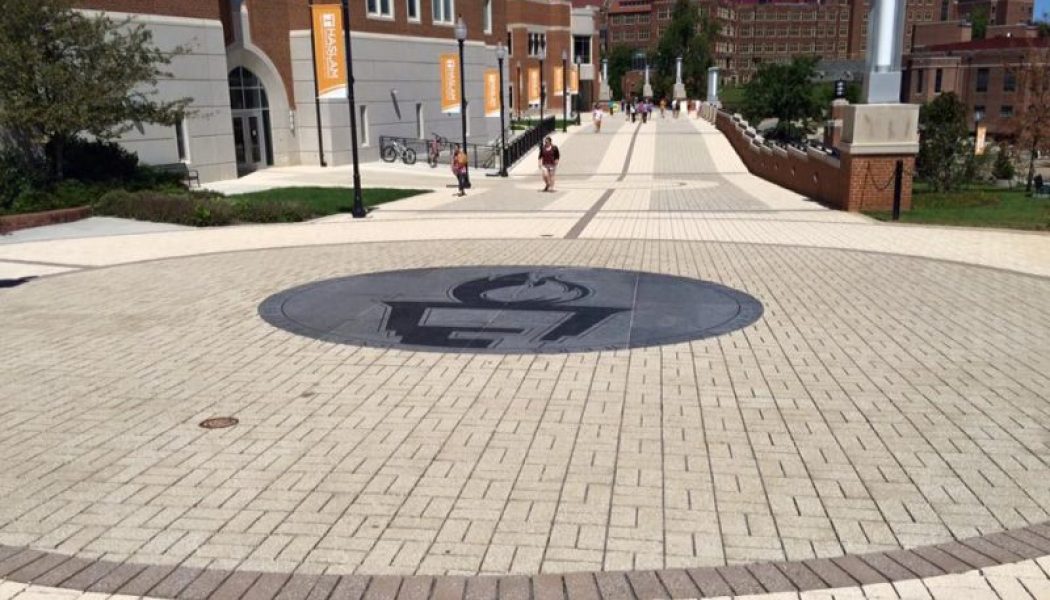

Paveshare.org Now on Land8!
PaveShare.org open-education curriculum for landscape architecture students and educators is now available through the Land8: Landscape Architects Network. PaveShare.org, a free ICPI resource, links to self-guided presentations with interactive animations and a studio project library on segmental concrete pavement design and construction. Educators can supplement existing curriculum with resources from PaveShare.org and encourage students to add to a living library by uploading their completed projects to the site. Students and educators can also explore pattern design and structural principles or utilize a curriculum path. “Segmental concrete pavement systems provide landscape architects with a proven, flexible, and durable method that also allows tremendous design freedom,” said Kendall ...Read More
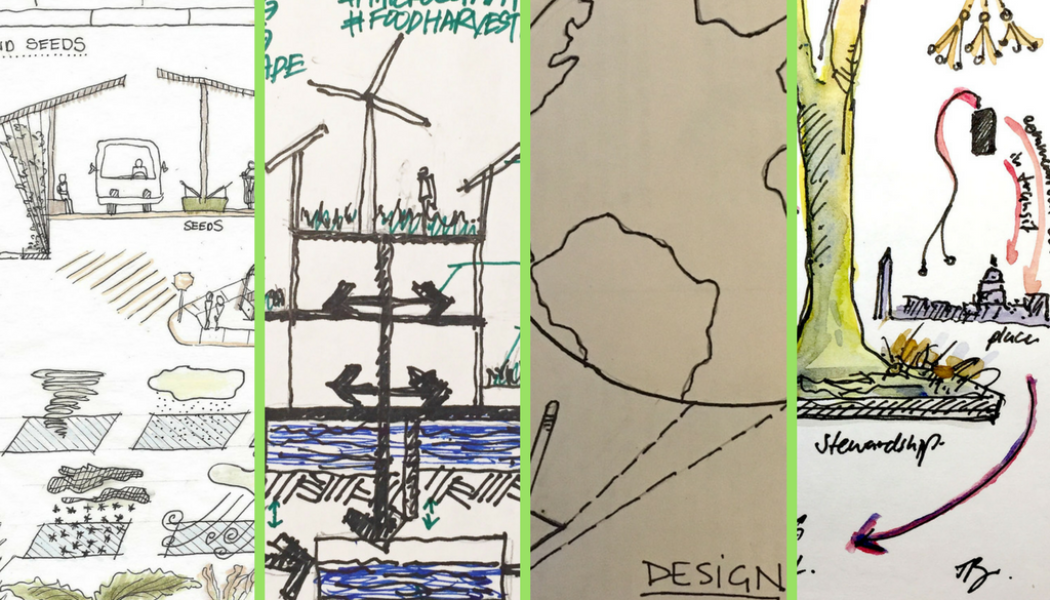

3rd Annual ANOVA Grant for Emerging Professionals
Anova Furnishings’ Grant Competition is back again this year, offering emerging professionals the opportunity to attend the 2018 ASLA Annual Meeting and EXPO in Philadelphia. Centered around a different topic each year, the competition invites participants to submit a short essay and a quick napkin sketch between April 13 to May 14, 2018 for the chance to win a $2,000 grant toward conference expenses. A panel of three practicing Landscape Architects will select the 21 best responses to be awarded the grant. To get the inside-scoop on what the jurors are looking for, I interviewed two of this year’s jurors, Stephanie Rolley, Professor and Department Head of LARCP at Kansas State University, and Annette Wilkus, Partner at SiteWorks. Here’s what they had to say. Interviews have been edi...Read More
![Workaround [Video]](https://land8.com/wp-content/uploads/2018/03/richard-jones-land8x8-1050x600.png)
![Workaround [Video]](https://land8.com/wp-content/uploads/2018/03/richard-jones-land8x8-80x80.png)
Workaround [Video]
In the spring of 2015, tension and unrest erupted in Baltimore, bringing the issues of racism and inequality to the center of national media attention. Since then, these disparities have only become more prevalent as the voices of unrest grow louder – including in Ferguson, MO, Charleston, SC, and Charlottesville, VA to name only a few. These events have been a call to action for many, leaving many to consider how they can bring about change in our social system. While such issues may at first seem to be beyond the reach of design professionals, Richard Jones, President of Baltimore-based design firm Mahan Rykiel Associates (MRA), believes that it is necessary for the profession to address inequality so that we may better meet the needs of those we serve. During his presentation at Land8x8...Read More
![Transitioning to Information Modeling Workflows [WEBINAR]](https://land8.com/wp-content/uploads/2018/03/vw-land8-1050x600.png)
![Transitioning to Information Modeling Workflows [WEBINAR]](https://land8.com/wp-content/uploads/2018/03/vw-land8-80x80.png)
Transitioning to Information Modeling Workflows [WEBINAR]
With the growing pressures of tight budgets, quick project delivery, and the increasing need to integrate with Building Information Modeling (BIM) workflows, landscape architects need to work smarter, not harder. Discover the Benefits of BIM for Landscapes One key way to do this is to adopt a site information modeling workflow into your practice. Site information modeling incorporates 3D modeling and BIM tools, such as smart objects, into the design process. This allows you to use data to increase your efficiency and make informed decisions. For example, with site information modeling, you can analyze your design for boundaries, area, volume, slope, cut/fill, and other data, such as water flow and sun/shade. You can document existing structures, plant materials, and site conditions and int...Read More
![Beyond Our Landscapes: Interdisciplinary Research and Design for Health [Video]](https://land8.com/wp-content/uploads/2018/02/coco-alarcon-1050x600.png)
![Beyond Our Landscapes: Interdisciplinary Research and Design for Health [Video]](https://land8.com/wp-content/uploads/2018/02/coco-alarcon-80x80.png)
Beyond Our Landscapes: Interdisciplinary Research and Design for Health [Video]
At a time when environmental crises are becoming more prevalent and the health industries are acknowledging the critical role the environment plays on human health, designers are stepping up to explore how landscape architectural interventions can address health issues. The profession of landscape architecture is poised to tackle the issues of both human and environmental health, states Jorge “Coco” Alarcon of Peru at Land8x8 Lightning Talks. Promoting health in the fields of architecture and landscape architecture, Coco shared how he has leveraged his design background to improve the health of impoverished communities. Holding a Master’s of Landscape Architecture degree and working for the University of Washington, Coco’s research focuses on the relationships between green spaces an...Read More
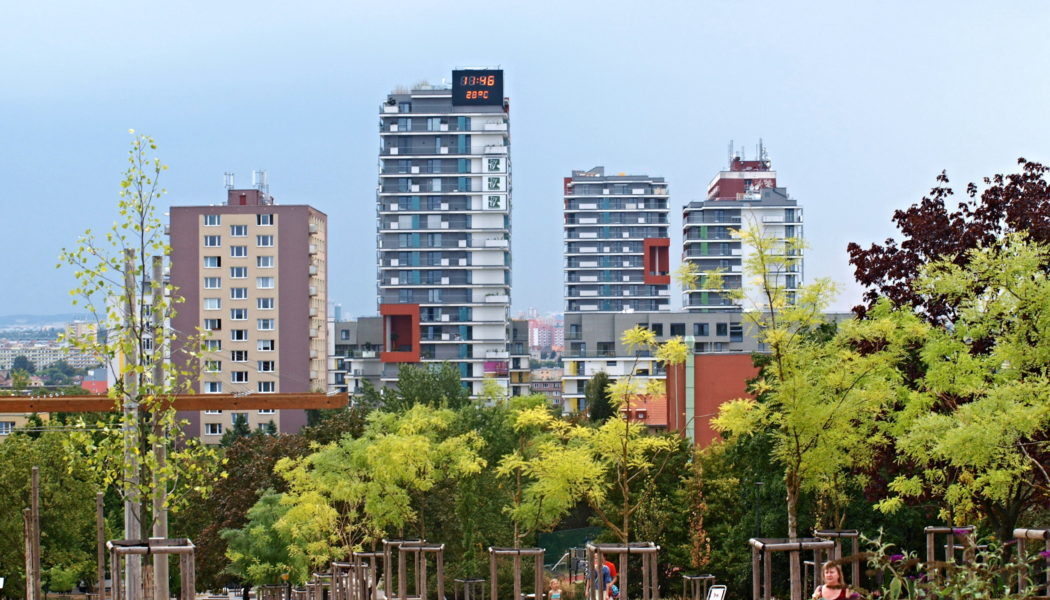

How MalešIcký Park Became a Place Full of Play and Education
Malešický Park was created on the Malešický hill in the mid 1960s along with the Malešice housing estate in the tenth district of Prague. It is the largest park in this district and one of the larger green areas in the city. After over 50 years of existence, revitalization plans were announced in 2008. However, to begin the implementation of the new park, citizens had to wait until 2011 when the City of Prague managed to obtain European Union funds. Ultimately, the revitalization was aimed at rejuvenating the degraded areas of the housing estate, which lost some of their original function and purpose. Additionally, the park was in a poor condition and wasn’t improving the quality of life of the local inhabitants. The main purpose of the park’s renovation was to create a modern,...Read More