


Blog


Is Atlantic Wharf Park a Sustainable Success Story?
Article by Paula Uzarek. Atlantic Wharf Park, by Halvorson Design Partnership, Boston, Massachusetts. Designing a space in a district with historic roots can give a landscape architect a series of sleepless nights. How does one create a fresh, new space while protecting and preserving the past? Should the designer take the risk and move beyond scheme, or just create a safe project? Can these two ways of thinking be combined? Atlantic Wharf in Boston, designed by Halvorson Design Partnership, takes a fresh look at a historic site and presents a solution that both preserves and improves the space. Atlantic Wharf Park Connection is Vital Located in a lively Boston district, Atlantic Wharf faces the Fort Point Channel, named after a fort that dates back to America’s colonial epoch. The channel...Read More
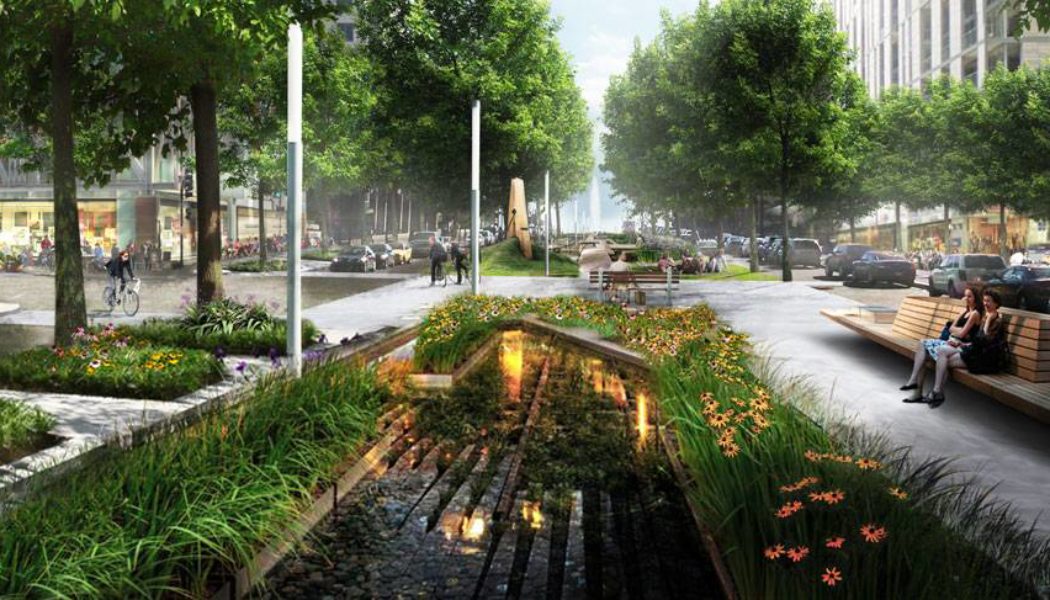

Changing the World, One Street at a Time With EcoDistricts
Article by Erin Tharp. Ecodistricts by ZGF ARCHITECTS LLP, in Southwest Washington, DC, United States of America. It could easily be argued that the word “sustainability” was the most talked about buzzword in the design world in 2015, and with good reason. Across the world there is an ongoing movement to create communities that are more eco-friendly, pedestrian friendly, and less reliant on non-renewable resources; or sustainable. But there may be a new buzzword on the horizon for 2016 and ZGF Architects can take credit for creating it. That word would be Ecodistrict. Ecodistricts According to ZGF, an Ecodistrict “is a place that relies on a strong design idea supported with enduring community stewardship at multiple scales. It requires the concerted action of government and grassroots eff...Read More


Can This Winning Design Revive Urban Connections?
Article by Farah Afza. Rail Corridor, by Tierra Design and Japanese firm Nikken Sekkei, in Singapore. Designers create space to create different moods for the users. It is the users’ experience which ultimately describes a space. The adjectives intriguing, dull, vibrant, serene, etc. are added only to describe a space based on the experiences of its users. A space however, well designed as it may be, will be functional and successful only when it can accommodate different sorts of activities. Therefore, accommodating various activities in a site is one of the toughest challenges faced by designers during design decisions and it should be of major concern when the design is for the urban environment. The introduction of well-thought-out activity nodes can definitely revive the urban connec...Read More


How to Transform an Old Military Area into a Peaceful Park
Article by Irmak Bilir. Green Road, a peaceful park by REDscape Landscape & Urbanism, Province of Utrecht, the Netherlands. Nobody would deny that no matter the results of a battle, a military area can be depressing. One of the best ways to transform such a site is to turn it into a park. But not an ordinary park — a park that shares its history with its visitors. Green Road does exactly that, in a project designed by REDscape, led by landscape architect Patrick Mc Cabe. A Breif History of Green Road Green Road is a large military area in the Province of Utrecht, the Netherlands, which has housed a former defensive trench and bunker system since 1918. The area was a defender of the River Lek for invasion from the east, and it was built for this purpose. It has forts, works, and a...Read More
3 Convincing Reasons to Collect Rainwater for Landscape Use
Smart people across the world have been using nature’s gifts for thousands of years. Rain, as you could probably tell, is one of those gifts. The first documented rainwater harvesting was in Ancient China . Should you finally clean your gutters and follow the example to collect rainwater for landscaping use as well? Most probably yes and here is some pretty good argumentation: Rainwater is free There’s no such thing as free lunch – that applies to most lunches, but not to the rain. Taking advantage of resources falling from the sky is the smartest thing you would ever do. Having a barrel or two at your yard will let you store some fresh rainwater goodness for later landscaping use. Bear in mind that the barrels will get filled very quickly during a heavy pour. Your plants will ...Read More


How The Stunning UAE Pavilion Takes Inspiration Form The Desert
Article by Miriam Judith González Bolívar. UAE Pavilion by Foster+Parters and WATG in the Expo Milan 2015. Have you ever noticed the desert landscape? What do you think you can find there? Usually when we talk about it, what comes first to our minds is austerity, tons of sand, rocks, the horizon, and the infrequent lushness of an oasis? However, the desert still has his beauty. Dunes make the desert appear to be dancing and make it a dynamic landscape. And this is how Foster+Partners take the desert as an inspiration to create the concept and design for the Pavilion of the United Arab Emirates in “Expo Milan Feeding the Planet, Energy for Life 2015”. Transmitting the principles of ancient cities, the pavilion takes one of the principal urbanistic planning from Romans design: Decumanus. Dec...Read More
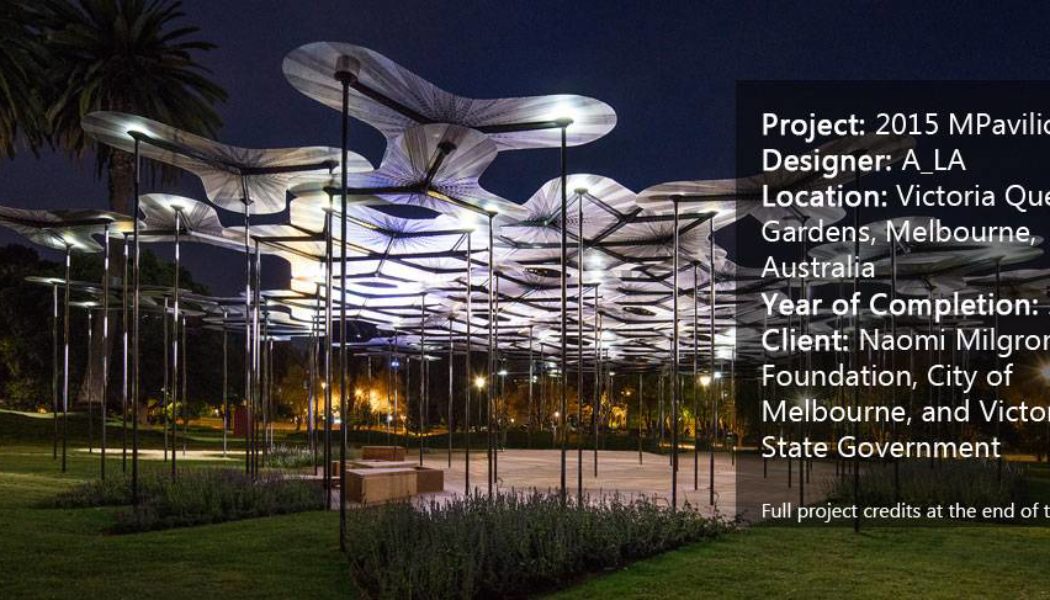

Is The 2015 MPavilion a Victory for Cultural Spaces?
Article by Elisa García Nieto 2015 MPavilion, by A_LA, in Victoria Queen’s Gardens, Melbourne, Australia. If there is a function we should expect from public space, it is its contribution to reinforcing social cohesion, providing specific places where citizens can meet and share their diverse experiences. Cultural programs amplify this, and as such are an important factor in designing the urban landscape. In this article, we talk about how to rethink cultural spaces by taking a look at 2015 MPavilion, a recent edition to Melbourne. The idea is quite practical: Each year, commissioners knock at the door of an outstanding team, challenging it to design a temporary pavilion. In 2015, it was the A_LA team’s turn to provide a place for community and cultural industry. RIBA award-winning archite...Read More
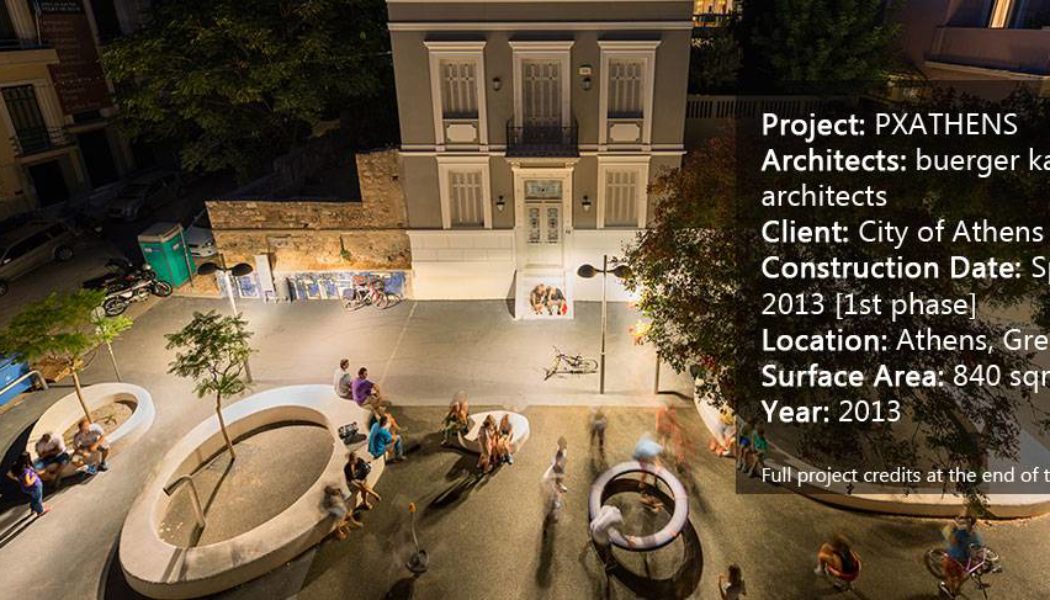

Can Innovative Urban Games Improve Space and The Mind?
Article by Alexandra Wilmet PXATHENS by Buerger Katsota Architects, in Athens, Greece. In the education of a child, the discovery and exploration of nature and the environment are key elements to developing creative capacity and imagination. It is essential that our children can enjoy diverse play areas where they can draw inspiration, develop their team spirit, and socialize with the outside world. Unfortunately, playgrounds are often similar to each other. They rarely fit into their environment and are sometimes dilapidated. It is with the aim to remedy this lack of character that the project PXATHENS is taking place in the Greek capital; to offer young and old creative playgrounds, safe and accessible to all. One Project, Seven Principles The idea to re-integrate the game into the stree...Read More


10 of The Best Tourist Spots for Landscape Architecture in Europe
Article by Sophie Thiel We take a closer look at landscape architecture in Europe that also makes for great tourist destinations. We all know Hyde Park in London or Place de la République in Paris, but there are so many other landscape architecture projects worth visiting in Europe. The aim of this article was not to create a compilation of the 10 best-known tourist destinations in Europe, but to surprise you with relatively unknown landscape architecture projects to visit during your next trip. This list expands upon a previous article by Michelle Biggs: 4 incredible Tourism Projects of Landscape Architecture. Our new list features 10 must-see landscape architecture projects in Europe. Future articles will share projects from every other continent. So please enjoy reading and start plann...Read More
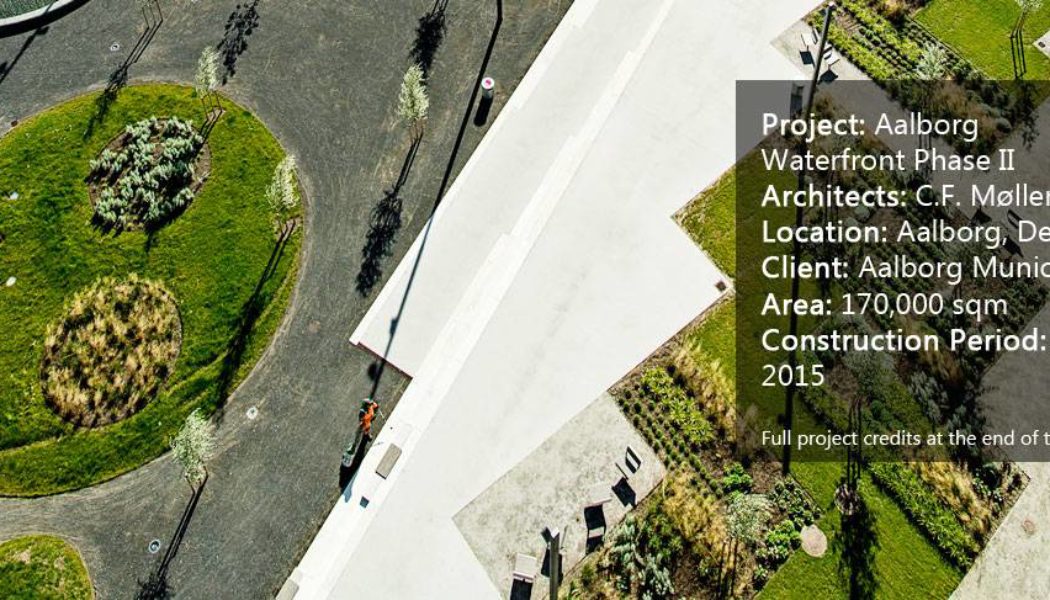

Waterfront in Denmark Becomes a Major Centerpiece
Article by Tahío Avila Aalborg Waterfront Phase II by C.F. Møller in Aalborg, Denmark. Aalborg is one of the most highly populated cities in Denmark. And despite the university city’s industrial heritage, Aalborg is concentrating on building a “cozy cosmopolitan atmosphere” along its waterfront, which recently has been transformed into a cultural quarter, with new university buildings, student housing, and a striking concrete music hall. Aalborg Waterfront Phase II The first phase of the project, begun in 2004 and completed in 2013, is a one-kilometer stretch of tree-lined, detailed boulevard for cyclists and pedestrians. It includes promenades with steps, recessed terraces, and urban gardens that facilitate activities such as markets, ball games, and sunbathing, while at the same time all...Read More


Turning the House Inside Out: A New Perspective on Residential Development
Article by Nick Shannon Funen Blok K, by NL Architects, in Amsterdam, The Netherlands. New housing developments around the world are becoming more sustainable, livable and innovative every day. The key to having a well-rounded project is in the marriage of the buildings and landscape into one continuous experience. People want to live in an area with access to and views of green space, and the field of landscape architecture is critical in designing this experience. However, we cannot do it alone. The building has to be designed with the landscape in mind, and they should both respond to one another. A great example of the blending of views and access to green space is Funen Blok K in Amsterdam by NL Architects. This article will explore why this project is successful, and how the building...Read More


How to Design a Child-Size Science Park Like a Playground
Article by Elisa A.M.Varetti Mary’s Garden, Children’s Museum of Sonoma County, by BASE Landscape Architecture, Santa Rosa, California, United States of America. Being a landscape architect can be extremely funny sometimes, especially when you are asked to design a child-oriented outdoor museum. Be careful; it doesn’t mean it’ll be an easy task, not at all. There are indeed different things to take care of, as our writer Velislava Valcheva reminds us in her article, 11 Things to Remember When Designing for Children. Children’s Museum of Sonoma County The Children’s Museum of Sonoma County by BASE Landscape, in Santa Rosa, California, is a rare example of a child-oriented design process in which kids satisfy their thirst for knowledge by having real fun. Thanks to a grant of $1.8 million gi...Read More