


Green Roofs for Healthy Cities – 10 Ways Green Roofs Can Help

Green Roofs for Healthy Cities – 10 Ways Green Roofs Can Help
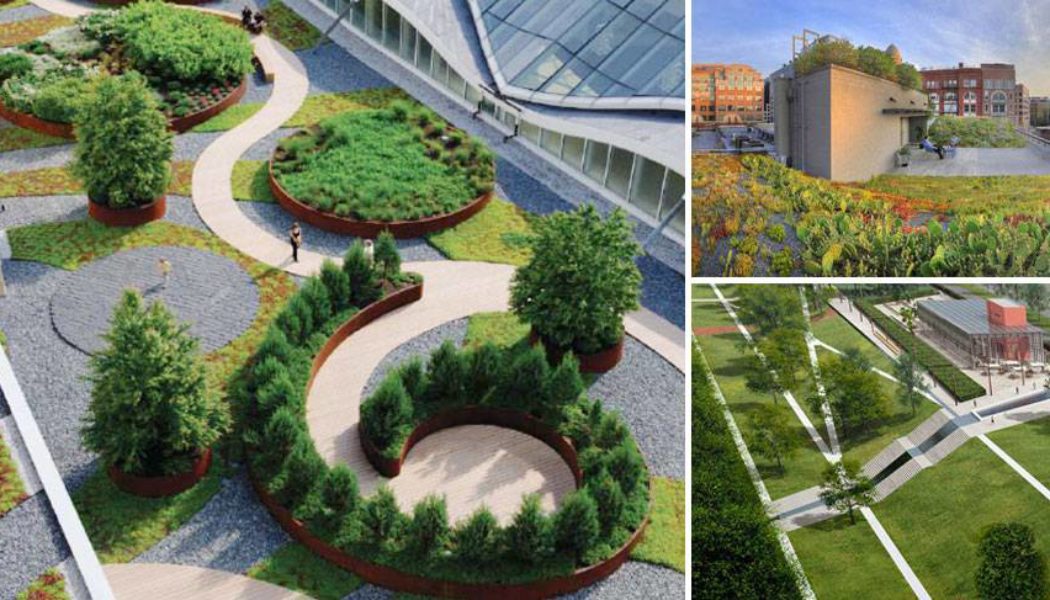
Article by Terka Acton We explore 10 brilliant projects and how they produced green roofs for healthy cities Picture a healthy city. What does it look and feel like? Odds are that you’re thinking of somewhere bustling with commerce, education, and events – but also somewhere that’s cool and clean, with fresh air, attractive architecture, and public spaces that are green, open, and inviting to all. If this is your vision, your instincts are accurate – and green roofs have become an important part of the strategy for achieving cities that include all of these elements. As well as protecting buildings and adding character to the urban environment, green roofs can help to manage rainfall and create diverse new habitats for plants, wildlife, and people. And as we face a future with fewer wild, ...Read More

Residential Complex Explores the Concept of Shared Open Space
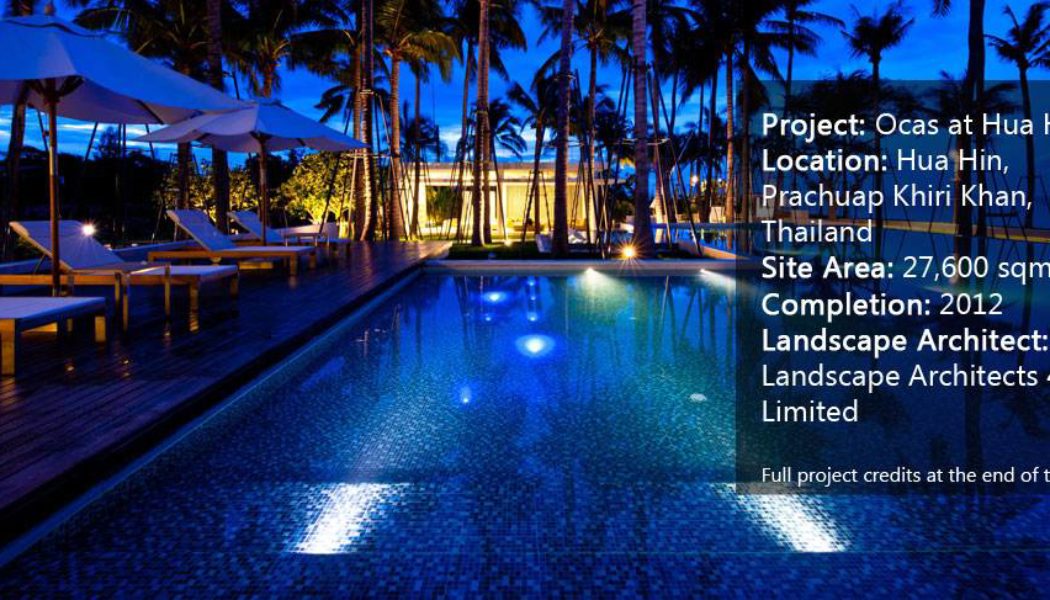
Article by Pooja Wahane A review of the shared open space under the project name of Ocas at Hua Hin, by Landscape Architects 49 Limited, in Hua Hin, Prachuap Khiri Khan, Thailand. Located in the beach resort town of Hua Hin, the Ocas condominium complex is spread over a sprawling 6.8 acres, revealing something previously unseen every time you look. Ocas has been worked into a unique space that maintains its own value. It has the highest percentage of common-use grounds per unit in all of Hua-Hin. Taking a stroll through this luxurious complex is like walking into a dream, with its infinity-edged swimming pool, lush green landscapes leading to the stunning beachfront, and absolute privacy. The Unique Concept of Private Vacation Villas Ocas is a three-story condominium complex comprised of...Read More


How to use Water in Landscape Design – The 5 Best Projects That Show You How
Aritcle by Nick Shannon We explore 5 projects that show you how to use water in landscape design. We use water every day, and in so many ways. It is such a ubiquitous resource, but we often don’t think twice about using it or how it is handled within hidden infrastructure. In the landscape, water is what sustains life and civilization. We need it to survive and thrive, and access to healthy, potable water is a pressing concern that the field of landscape architecture can really impact. Water needs to be addressed and to be regarded as a precious resource, as well as an opportunity to create sustainable landscapes that function well and are designed for humans, wildlife, and the environment. Here are 5 extraordinary projects that will inspire you to think about the many different ways to u...Read More


How Darling Quarter is Unifying the City of Sydney
Article by Nour Adel Darling Quarter, Sydney, NSW, Australia, by ASPECT Studios, in Sydney, NSW, Australia ASPECT Studios has completed a transformation of the public domain of Darling Harbour South, one of Australia’s most visited destinations. This public domain project now known as Darling Quarter was commissioned by the Sydney Harbour Foreshore Authority (SHFA) and Lend Lease. It is a major 1.5 hectare place-making project for Sydney with a retail terrace, public park, two 6-star commercial buildings and an innovative children’s playground which acts as its centrepiece. At over 4000m2, the playground is the largest in the Sydney Central Business District and with its interactive water play facilities, this civic space has become a regional attraction for Sydney. “The time is not far of...Read More

Five Recommended Reads for the Summer
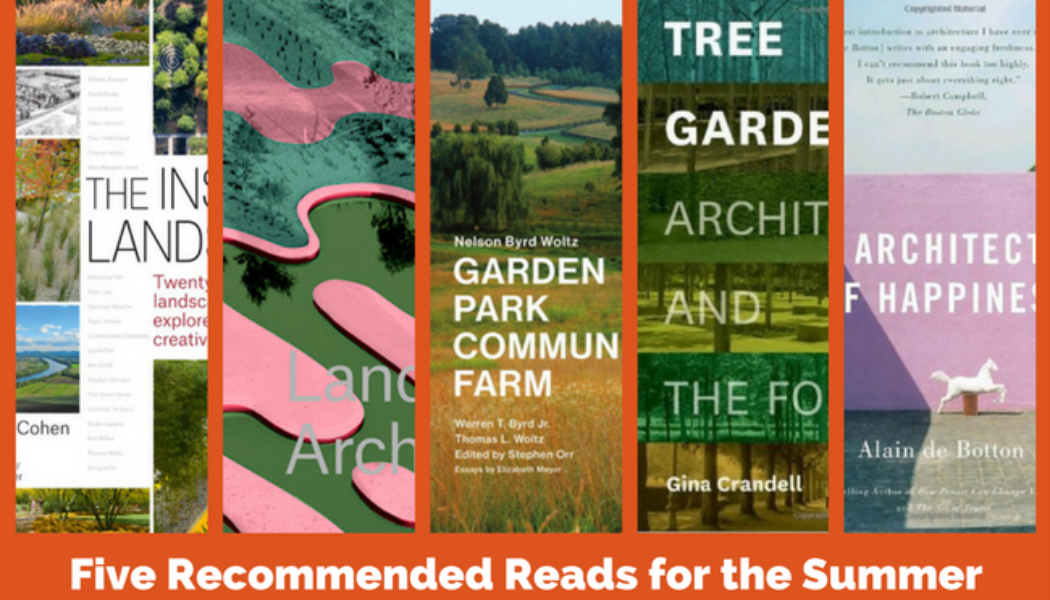
It’s summer and that can mean a slowing down of creative interchanges in the classroom or at local professional events. Sometimes Dallas and other cities across the US seem to be in a kind of lull with the summer heat and the lessened activity compared to spring and fall. A stack of lighter books on hand will help keep that creative spark alive into the fall. While these are not novels for summer beach reading, the following five books will keep your designer mind sharp and your curiosity intrigued. In August, another set of five recommendations will finish out the summer. The Inspired Landscape: Twenty-One Leading Landscape Architects Explore the Creative Process by Susan Cohen This book comprises case studies of creative inspiration behind a project for twenty-one renowned landscape arch...Read More

Waldheim and Desimini’s Cartographic Grounds: Projecting the Landscape Imaginary
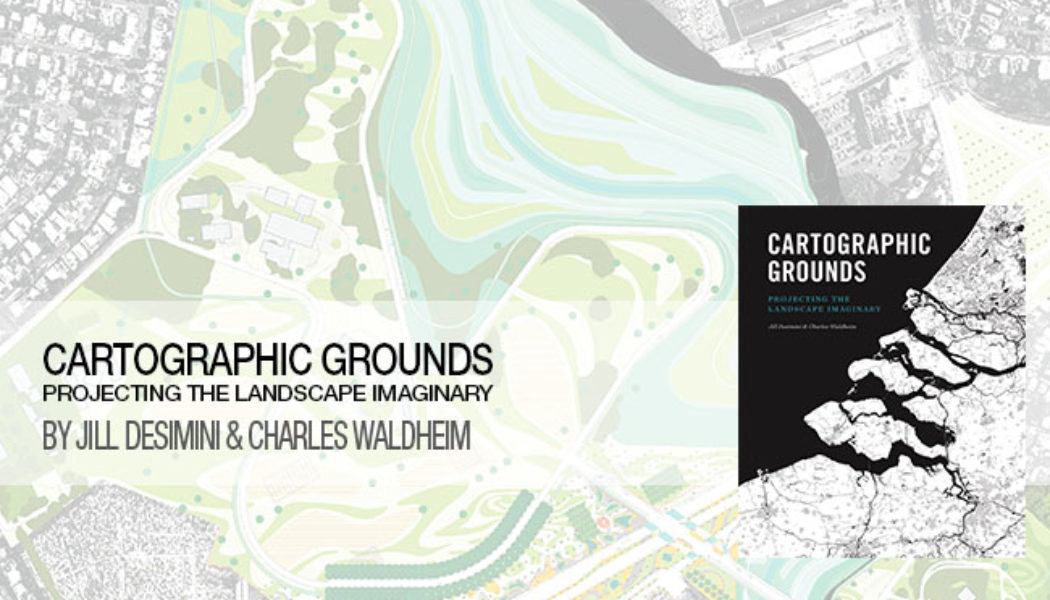
Most people’s interaction with maps is on their phone these days and will continue to be for the foreseeable future. However, the landscape architect knows that mapping is one of the keys to both speculative design and its representation. A map “merges spatial precision and cultural imagination.” With data being increasingly ubiquitous, the transformation of maps into artistic visualizations has increasingly become a greater part of the design process. At the same time, data can be a crutch that eliminates “speculation and agency, while supporting a methodology that looks for projects to emerge out of an illusory objectivity.” Cartographic Grounds: Projecting the Landscape Imaginary explores the varied methods of geographic representation and the intricacies ...Read More

Green Roof Benefits – 20 Reasons to Have a Green Roof
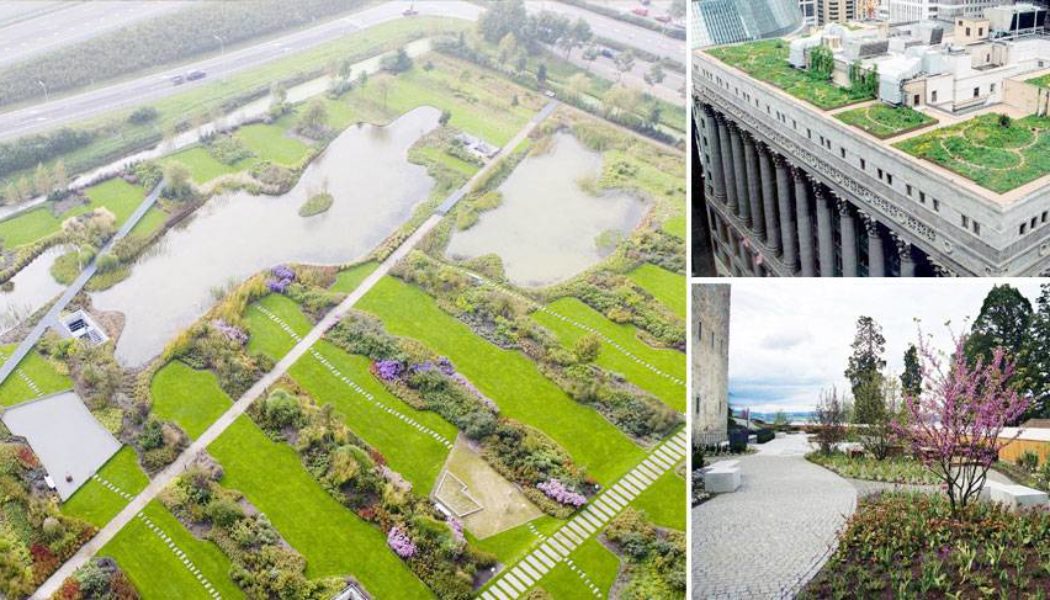
Article by Erisa Nesimi In this article we explore green roof benefits, looking at 20 reasons why you should have a green roof. If I am to define green roofs, I would like to describe them as: ‘tools to reinvent our cities’. Also known by the term “living roofs”, they stand for a counteraction to the fast urbanization of our cities. As a result of urbanization and technology, we are left with cities which are often non- enjoyable environments. Sometimes considered as a pile of concrete (concrete jungles), we have the duty to come up with ways to make our cities great again. Why green roofs? What are their benefits? I’m quite sure that a lot of you out there are very tired of hearing such a cliché phrase again and again; “we should have more green roofs”. Nevertheless, is this just a buzzwo...Read More


10 Projects that Show Us Amazing Ways to Design with Varying Levels
Article by Carlos Cortés Why is designing with varying levels a challenge for the user and the landscape architect? – 10 10 projects that show us how to design with varying levels. Playing with the varying levels of a landscape invites users to experience and discover what each point of the site has to offer. It promotes a more conscious visit of the place through its vistas, spots, and of course the overall big picture. Nonetheless, for designers and landscape architects, it’s a challenge to know when and how to play with levels. This is because every project is unique and responds to different conditions. Let’s take a look at 10 projects that show us amazing ways to design with varying levels. 10. Where the River Runs, by Penda, inside the 10th China International Garden Expo, Wuha...Read More


How to Transform a Historic Courtyard into a Useable Space for the 21st Century
Article by Moreira Filho Leyteire Courtyard Project, “Opération Campus” at Victorie Campus of Bordeaux University, France, by Debarre Duplantiers Associés Architects, Landscape Architects and Urban Designers. An iron gate opens at Bordeaux University, inviting entrance, offering pieces of green and benches for sitting. Inside the campus, you may notice how important and special this place is: islands of heat – so commons nowadays – are relieved by the freshness of this courtyard. Leyteire Courtyard takes place at “Opération Campus” at Victorie Campus of Bordeaux University, France, in a big block among Leyteire, Broca, Candale and Gintrac streets, in front of Victorie’s Square. This picturesque plaza in the historical Bordeaux downtown deserves a design like Debarre Duplantiers...Read More


Design Like You Care: 10 of the Best People-Oriented Designs
Article by Erisa Nesimi We explore 10 projects that were made successful by their focus on being people-oriented designs. Design is a discipline that, regardless of its subject, is closely related to people, because they are at the end of the chain. Designs that listen to the end users are being implemented in projects all over the world and have been very successful. I strongly think that they are the key to better living conditions and healthier lives. Therefore, I want to share with you some great examples of landscape designs that focus on people’s needs, raising awareness on social sustainability. As Jan Gehl, an important figure in urban design, has stated: “Only architecture that considers human scale and interactions is successful architecture.” People-Oriented Designs Here are 10 ...Read More

The Necessity of Advocacy: Discussing the Politics of Landscape Architecture
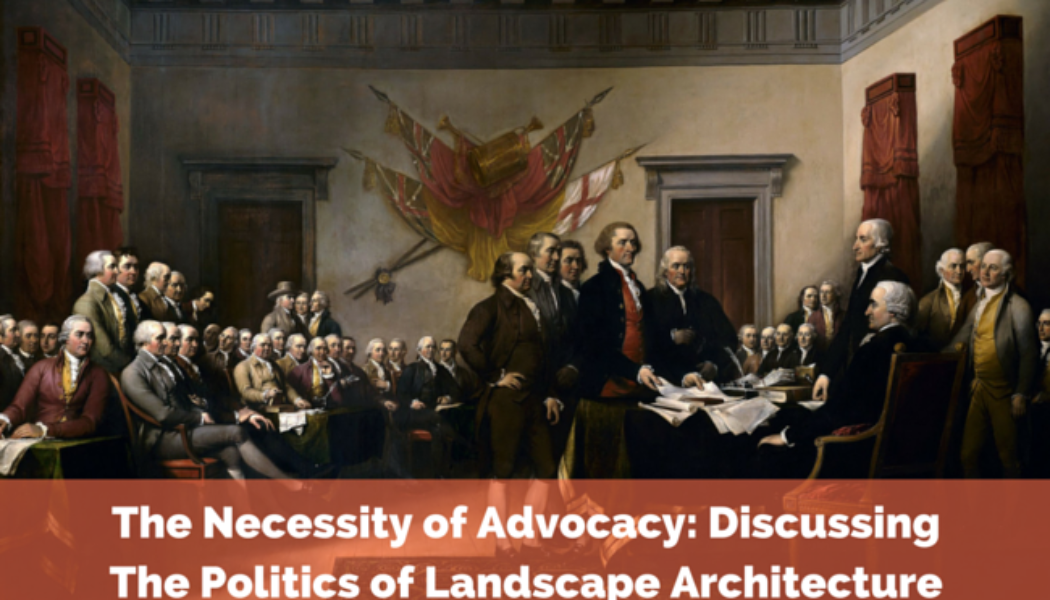
“When people think about what influences elected officials, nine times out of ten their first thought is money… Clearly, skepticism reigns supreme when it comes to our views of how to influence a policymaker.” – Stephanie Vance, “Citizens in Action” Despite being “for the people, by the people,” our representative democracy can seem distant. It can appear inaccessible and elitist, particularly when sensationalized by the “yellow journalism” of contemporary news media. Lobbying, and by extension advocacy, further brings to mind a hidden element of governance. Because of that, they are both practically four letter words. While this presidential election cycle has brought to the forefront the concept of politicians being “bought” by powerful lobbies, simply viewing government as a trade...Read More

10 Awesome YouTube Tutorials to Master Hand Rendering
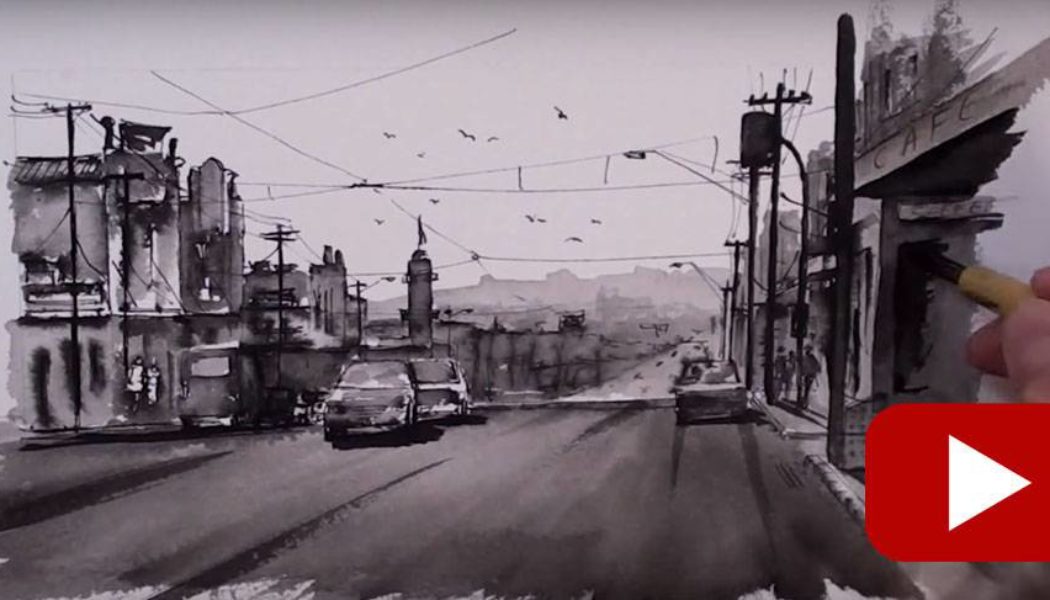
Article by Farah Afza Jurekh We explore 10 awesome YouTube tutorials to master hand drawing. Hand drawings are simply the visual translation of the thoughts of our creative minds. In architecture, hand drawing is one of the most powerful and essential tools. The sketches and drawings of architects should be able to speak, obviously metaphorically; it means that they should be able to communicate with our clients. It must be a medium to express and convey our thoughts and ideas. Now, if you are a beginner, I will suggest that you read this wonderful article; The Complete Beginners Guide to Improving Your Hand Drawing by my colleague Carlos Cortés. For those who have already read this helpful article, assuming that you are now a pro in hand drawing, you need to give your masterpiece life wh...Read More