


Why Humans Do Not Make The Best Architects


Why Humans Do Not Make The Best Architects
What can we learn from nature’s natural architects to inspire our built environment. We humans like to think of ourselves as the best architects and engineers on the planet, but for millions of years animals have been constructing their own low carbon cost-effective homes from what they find around them in their natural environment. In this article we look at what we can learn from the world’s natural builders through three of the best examples of animal architects. Arguably the best builders in the (natural) world are termites. The mounds termites build are HUGE for their size. The collective homes of these social animals can reach 7.5 m (25 feet) in height, and up to 12 m (40 feet) in diameter. Given that the average termite is 1 cm (0.4 inches) long, that’s pretty inc...Read More


Amazing Urban Revitalization: The Creative Power of Collaborative Design
Masonic Amphitheatre and Smith Creek Pedestrian Bridge, by design/build LAB, Clifton Forge, Virginia, USA. Revitalization, renaissance, resurrection: All of these words are used to describe the same thing — a process of physical and spiritual renewal. Too often, these are empty words. But sometimes someone comes along and makes them real. This is a story about that someone(s) – students who collaborated with a local community and industry to design and build an architectural work that is not only charitable, but educational in its essence. This story wouldn’t be possible without design/build LAB, a project-based experiential learning program that successfully killed two birds with one stone: The program supported the urban redevelopment of the distressed community in the town of Clif...Read More

The Many Fascinating Water Features of Central Park of Hunnan Axis in China
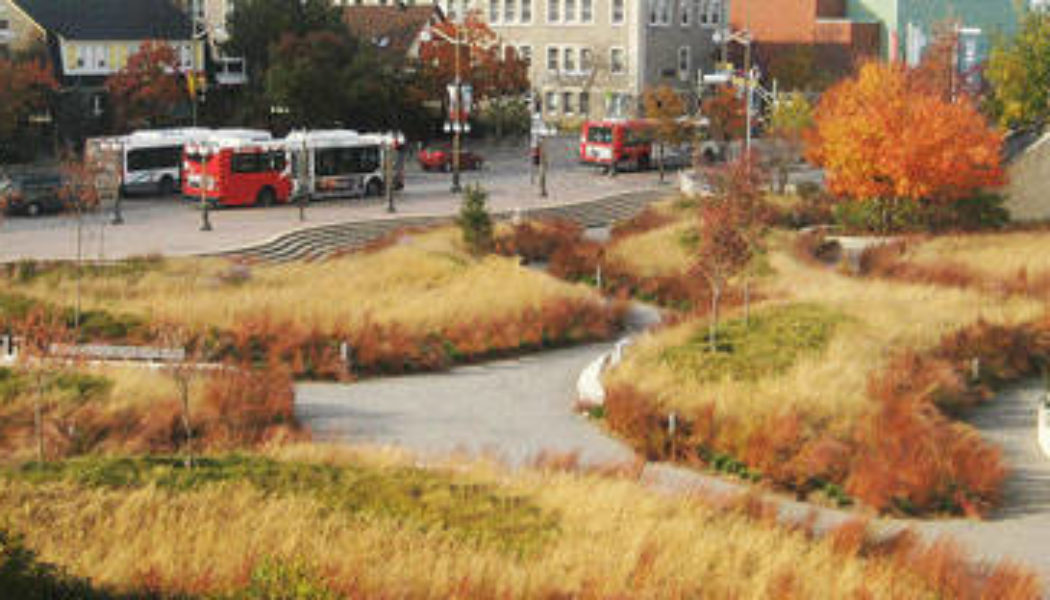
Central Park of Hunnan Axis, By Niek Roozen Loosvan Vliet, with: Urhahn Urban Design and Landscape Institute Shenyang, Shenyang, China China is making huge efforts to improve its relationship with water — our most precious resource. This is due to its historical importance to the country’s development, as we have seen in the article Is China Transforming its Relationship with Water? A Look at the Aiyi River Landscape Park, . In Hunnan Axis Central Park, it is no different – water is beautifully represented throughout the park, sometimes portrayed as calm and serene in the form of ponds, or as vigorous and lively in the form of water jets. The truth is, this dynamic element can create stunning aesthetic results in the urban scene (and even energize wealth luck to the surrounding nei...Read More

How to Preserve Nature, While Creating an Environment for People
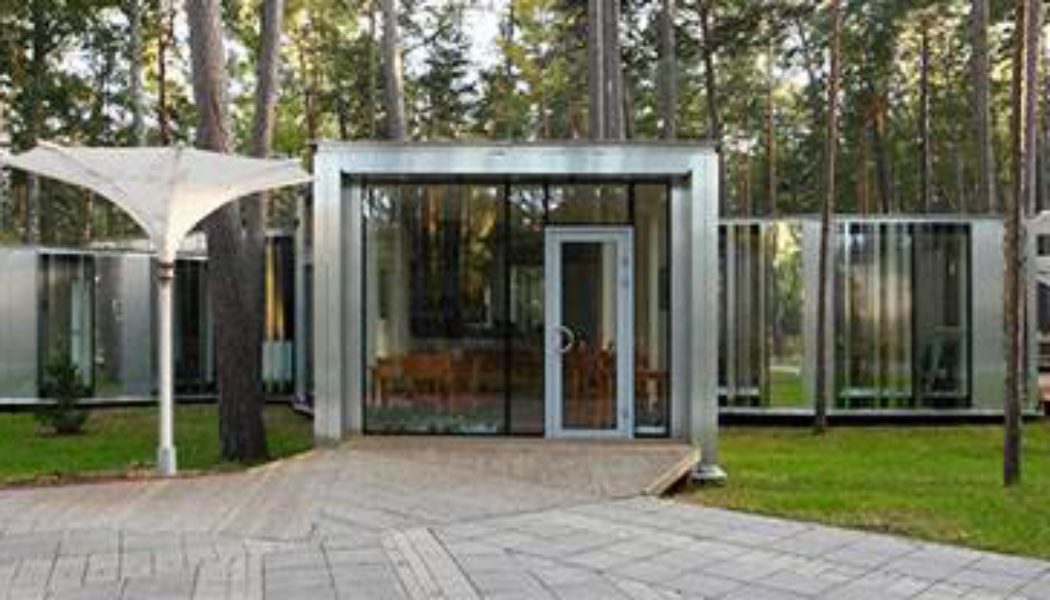
Dzintari Forest Park, Substance SIA, Jurmala, Latvia. Jurmala is a Latvian city situated close to the country’s capital, Riga. It is also one of the largest resorts in the entire Baltic region, well known for its mineral springs and sulphurous and medicinal waters. In an effort to increase the appeal of the city, a program for the reconstruction of Dzintari Forest Park was developed between 2007 and 2010. The program was requested by the Jurmala City Council and was designed by Substance SIA. The architects responsible for the project were Arnis Dimins and Brigita Barbale. The actual building was handled by Taders SIA. The project turned out to be a success, demonstrating that nature can be preserved while creating an active environment for people. What was the before picture of Dzintari F...Read More

Award Winning Office Campus Design at The Cox Enterprises Gardens by HGOR
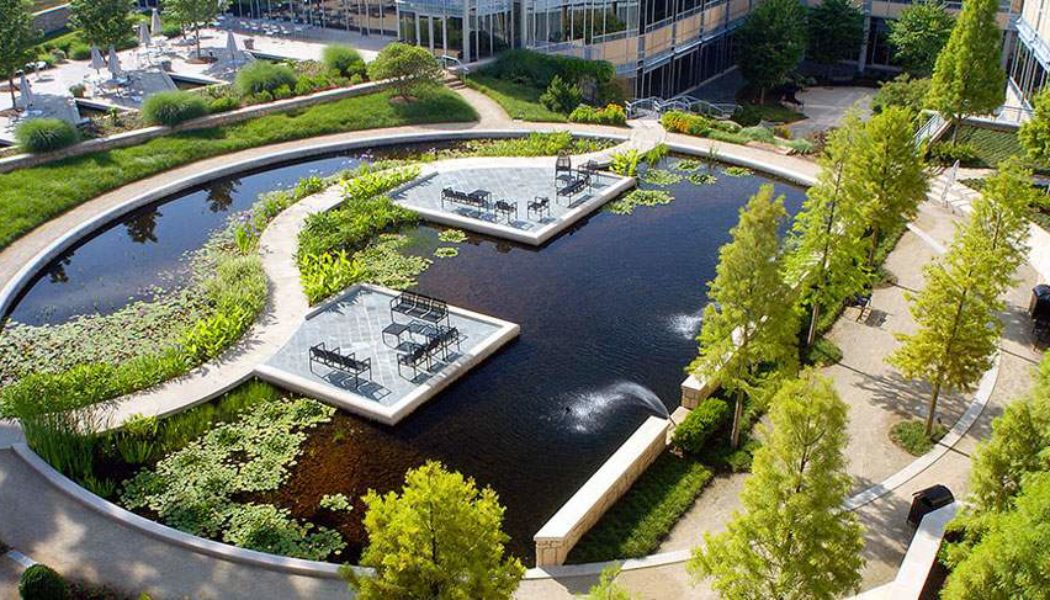
The Cox Enterprises Gardens, by HGOR, Atlanta, Georgia, USA. While some people may have to commute after work hours to access outdoor green areas, others are already benefitting from the integration of their offices with green space. The park-like gardens in the surroundings of some business buildings are attractive spaces, but they have a high initial investment, which discourages their creation. However, some very successful cases — such as the Cox Enterprises Gardens — may encourage other companies to adhere to this practice, benefitting not only the workers that will use the gardens, but also the neighborhoods that will share a healthier and more aesthetic environment. When the HGOR design team was chosen to plan Cox Enterprises’ new headquarters in the Dunwoody neighborho...Read More


PVWatts Calculator is Making it Easy for Landscape Architects to Estimate Site-Specific Solar Production
Renewable energy production is a key part of creating sustainable landscapes. Even at the site scale, harnessing geothermal, wind, and solar energy are powerful strategies for reducing society’s dependency on fossil fuels. When dealing with photovoltaic installations on the residential level, a designer needs tools that allow him or her to make quick, conceptual decisions and provide the client with tangible, data-driven expectations. That’s where PVWatts Calculator comes in. Managed by the National Renewable Energy Laboratory (NREL), the web-based tool provides baseline estimates for output levels and costs (both installation and production) of photovoltaic (PV) systems. It utilizes precise geographic location and correlating weather data to estimate the amount of solar e...Read More

Reinterpreting Nature in Design: Teikyo Heisei University Nakano Campus
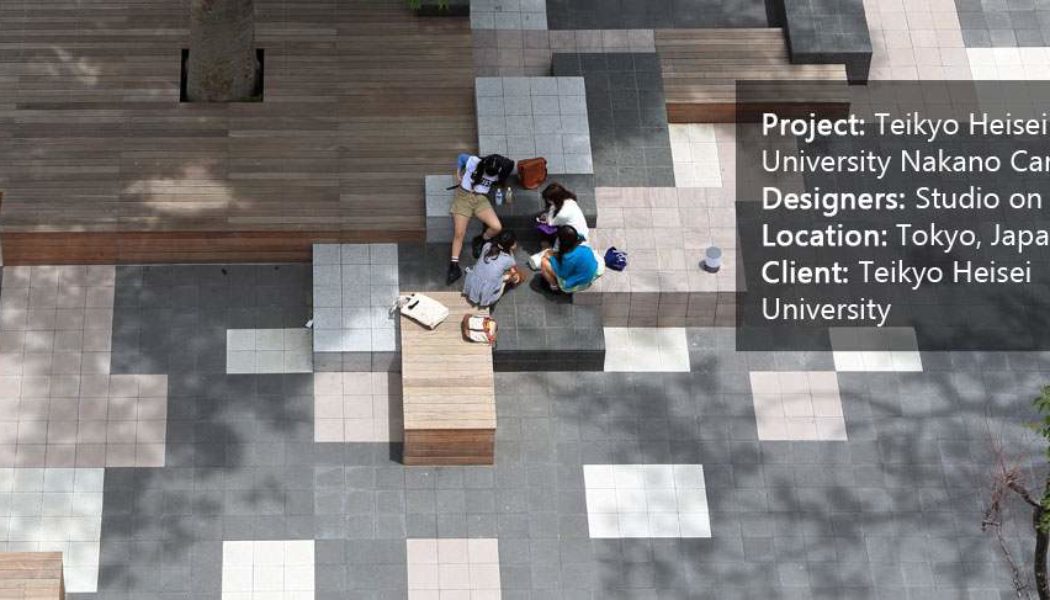
Teikyo Heisei University Nakano Campus, by Studio on Site (Hiroki Hasegawa), Tokyo, Japan There is a certain type of landscape where people just feel good, without realizing the reason for that. Teikyo Heisei University Nakano Campus is undoubtedly one of those exceptional places. A place which has something more to offer. A feeling, a sensation, a perfect harmony. The secret to achieving such an effect is partly revealed in the philosophy of Studio On Site. “Although our work covers a wide range, we always emphasize the “experience of a place” and consider how a given activity will come to be positioned in society and on the specific site. We believe that landscape design is not due to the structure of the new form but a given activity always has something to do with the change in shape o...Read More

Hunter’s Point South Park Leads The Way in Green Innovation
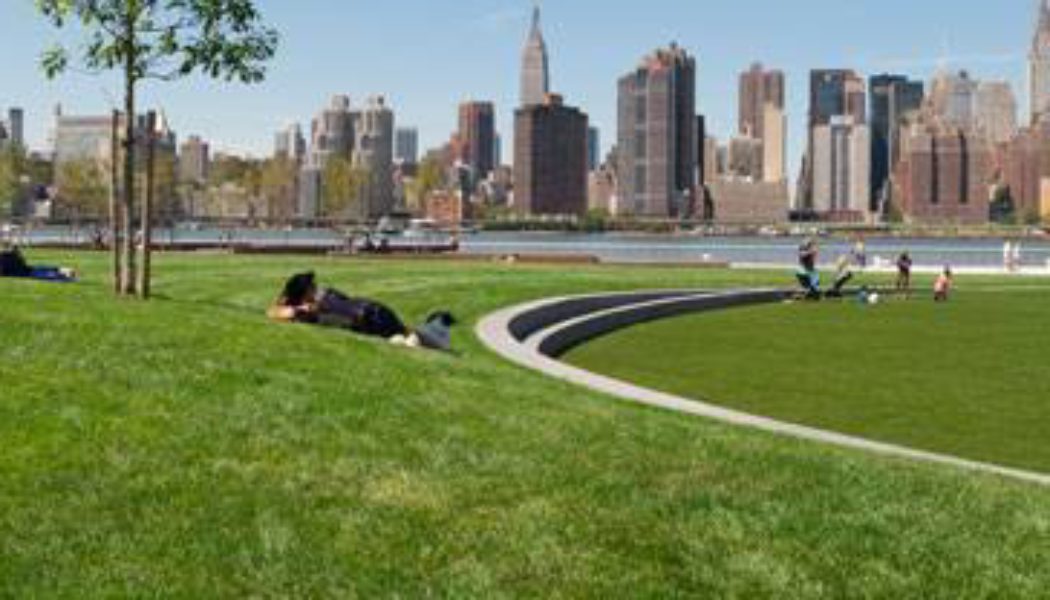
Hunter’s Point South Park in New York City by ARUP, Thomas Balsley Associates, and Weiss / Manfredi. The first chapter of Hunter’s Point South Park story was closely connected with the industrial past of Queens neighborhood, in New York City. Years after abandoning East River infrastructure, the area was not integrated within the new blossoming wider urban context. Fortunately, waterfronts are places with an incredible urban and economic potential, so redesign projects always knock on the door. In this case, the idea of a public park was included in a larger masterplan providing residences, retail and a public school in a whole 30 acres post-industrial area. Great designers from ARUP, Thomas Balsley Associates, and Weiss / Manfredi took the challenge to realize a truly green la...Read More


Creative Outdoor Gym in a Modern Community Park
The Pulse Park, by Cebra, Kildebjerg Ry, Denmark. Kildebjerg Ry, Denmark, is an attractive area for living because of its natural environment, which encourages residents to practice all kinds of sports activities. Ry, where the residential development Kildebjerg Ry is located, is part of the Skanderborg municipality in Jutland, the peninsula that juts out in Northern Europe to form the mainland part of Denmark. The town, with a population of only 5,731, is located in central Denmark along the Guden River and surrounded by a spectacular chain of lakes. When the community expressed its wish to develop a system of leisure and sport activities, Cebra Architecture, a Danish design practice founded in 2001 and based in Aarhus, was asked to design the concept of a community activity project. The ...Read More


7 Google Hacks for Landscape Architects That Will Have You Googling like a Pro
Learn how to Google beyond the basics with these Google Hacks and enhance your ability to perform as a landscape architect. The Google search engine has become ubiquitous in modern life. As much as 77% of all internet searches are performed using Google, with Statista placing last months figures at 1.17 Billion worldwide Google users! No doubt Google is a powerful search engine, but do you use it to its full potential? Here I share with you some of the Google hacks I’ve learned over the years that have helped me, in my work as a landscape architect. Google Hacks 1. Calculating and converting This is a really simple and easy Google hack for landscape architects. If you want to quantify the amount of mulch you will need for any given area, simply type the equation into Google. For ex...Read More


Three Things to Consider When Purchasing a Garden Shed
Utilising an outdoor space or garden can be an excellent solution to a number of problems. Garden sheds are versatile outdoor equipment that are specifically designed to deliver beauty, durability, and strength. Whether you want to indulge in a new gardening hobby or store your old tools, consider these three factors before you buy a shed. The finest material and the highest quality Wooden sheds are the most common and traditional, but the exact type of wood will make a difference to a shed’s upkeep and longevity. Cedar wood sheds are the most resistant to rot, but you could buy a pine one for half the price, so think carefully about your budget. In contrast, purchasing a plastic or metal version will remove the problem of rot entirely. However, metal sheds are susceptible to condensation,...Read More

How Beirut’s Zeytouneh Square is Reuniting a Divided Urban Community
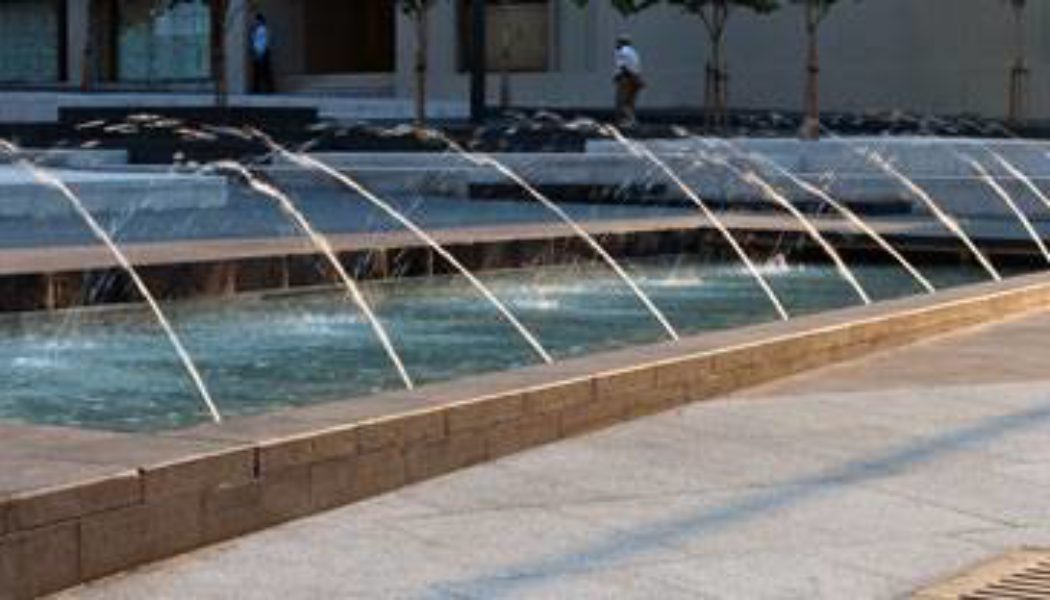
Zeytouneh Square, by Gustafson Porter, in Beirut, Lebanon. Lebanon’s capital, Beirut, is an ancient city that predates even recorded history. In the 1960s, it was considered one of the world’s most vibrant and diverse cities — a center for arts, culture, and tourism. But in 1975, Lebanon was plunged into a civil war that devastated the nation, tearing communities apart, both literally and figuratively. This civil war came to an end in 1990, but the country is still piecing together communities ruined by a war whose aftermath continues to resonate in daily life. Zeytouneh Square Rebuilding Beirut’s infrastructure and identity with public space Today, Beirut is a city at a crossroads. The destruction of the capital was immeasurable. With so much of the city’s physical infrastructure de...Read More