


Blog
Hand Drawing Tutorial: Drawing With Watercolors
Color in landscape architectural drawing is a tool for emphasizing important elements of the image, structuring or improving understanding. An architectural drawing does not try to catch the actual natural colors or the atmosphere the way a painting does, but uses color rather in an abstract way. There are different techniques to paint with watercolors that range from wet to dry papers, brushes and different techniques of mixing colors. In this video I’m showing a fast way to color drawings. Often we do not have much time for field sketches and in these cases we paint differently with watercolors than we would in a studio. We mostly paint using wet paint on dry paper. I start by drawing a line basis of the image with some textures, that i’m about to color. The farm is the centr...Read More
4 Best Places for Urban Agriculture in the United States
Our Land8 Urban Agriculture series is finally coming to a close, and for the last article in the six-part series we visit some of the latest and greatest places for urban agriculture in the United States. Click through to see all! Gotham Greens — New York, NY These pioneers of commercial rooftop agriculture are expanding at a phenomenal rate. Their first farm, a 15,000 square foot greenhouse on top of a warehouse in Brooklyn built in 2010, was the first of its kind in the country. Last year, they opened their second facility, a 20,000 square foot greenhouse on top of a Whole Foods Market, which is capable of producing over 200 tons of fresh greens and hydroponic tomatoes each year. Once their most recent project in Queens comes into production later this year, the three sites will be churn...Read More


6 Reasons Why Our Future Depends On Landscape Architecture
What does our future on planet earth hold for us? It’s a question asked all to0 often, and one that isn’t easy to answer. The landscape provides the fundamental support system for life on earth. With the seven billion people and counting that populate planet earth; landscape architecture plays a climacteric role in the shaping of both rural and urban environments. As landscape architects, both present and future, we are primed with the prowess needed to tackle the copious challenges that our planet faces, both present and future. Here are 6 reasons why our future depends on landscape architecture. 1. Food security The health and sustainability of the global food system is under serious threat, being touted as the greatest problem in our existence. This is in large part due to t...Read More

Sketchy Saturday | 022
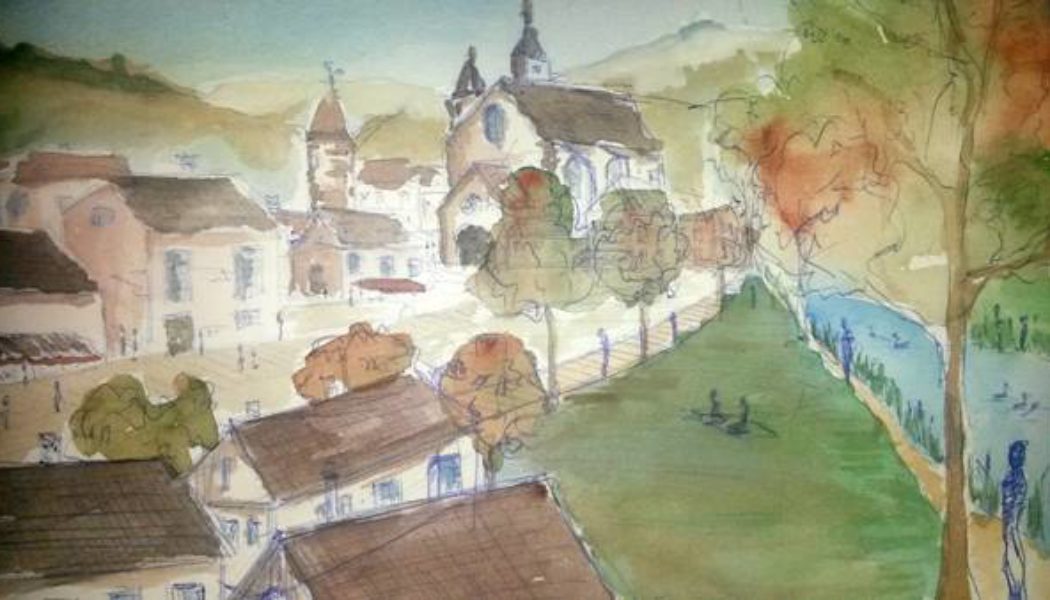
Sketchy Saturday is always one of our weekly highlights as we get to see how you see the world, and how you are using that perception to explore and discover your environment and your drawing talent. This week we featured some incredibly captivating sketches from the classical styles to the more surreal images of the imagination, showing that not all the landscapes we explore are physical,the most interesting of all may not only begin in the mind, but also reside there, until you are brave enough to put pen to paper and make it manifest. 10. Patrick O’Keeffe Patrick created an incredibly isolated experience, that is full of planting, people and energy, the artist really captured the movement of the space by accentuating the slope however with the lush semi mature trees, one may be dr...Read More

The Tricky Business of Zoning for Urban Agriculture
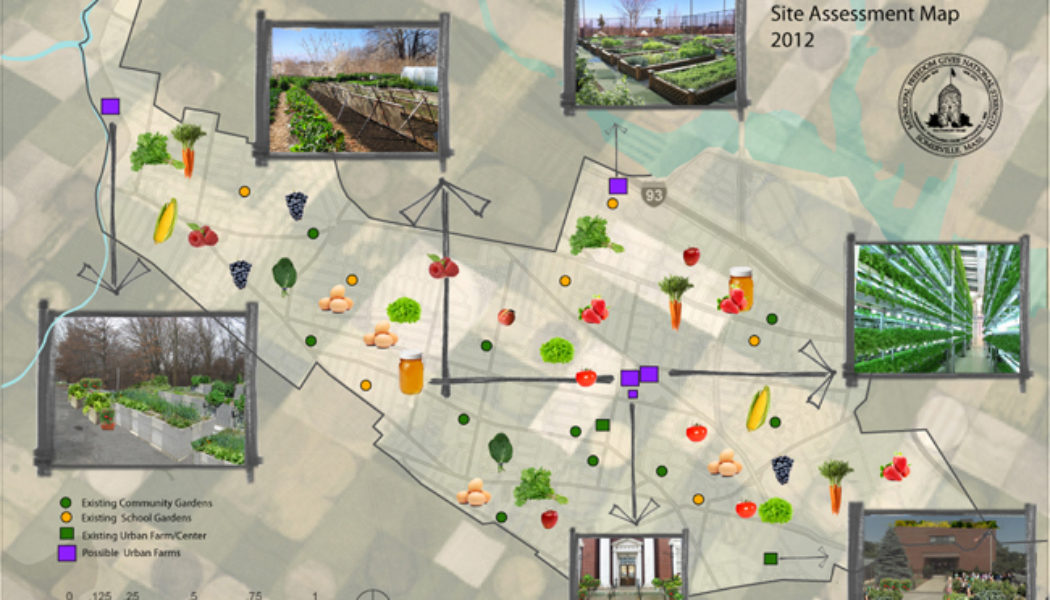
Urban agriculture is a conundrum for municipal planning agencies. The ‘Euclidean’ approach to zoning that has guided the growth of cities over the last century delineates incompatible land uses that, if not separated, could cause annoyances, health hazards and loss of real estate value. Zoning could, for example, prevent a factory from being placed in the middle of a residential neighborhood. This type of zoning has also dictated that agricultural activities be confined to specific areas, generally on the outskirts of cities, to prevent the unpleasant sights, sounds and smells that are associated with certain types of farming operations such as concentrated feed lots or chicken houses. Many people are shocked to discover just how restrictive zoning ordinances can be in regard to food produ...Read More

The Challenges of Urban Agriculture: Contamination, Economics, and Management
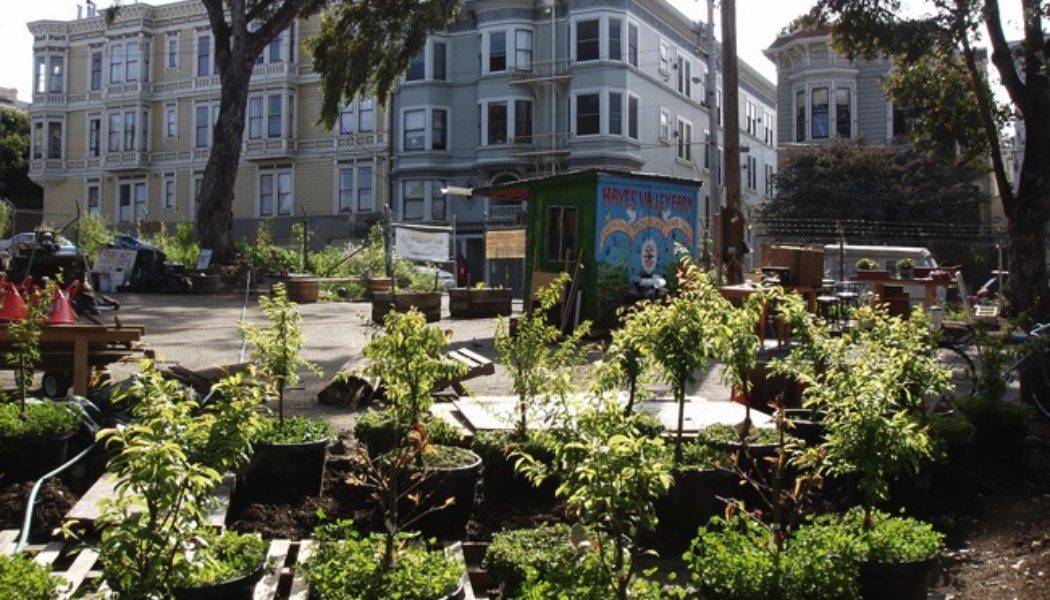
In many ways, urban growers have the odds stacked against them, especially when compared to rural farmers. Yet, there are increasingly more examples of successful urban farming. Much of this is due to the contributions of landscape architects, who have much to offer in guiding urban agriculture towards a strong civic institution. In this post today, however, we will identify the main challenges to urban agriculture and how to remedy them. Soil Contamination One of the first steps needed to assess a site’s potential for food production is to have a soil test conducted. Farmers do this to determine what sort of soil amendments are needed for a particular crop, but in an urban context, the first concern is whether or not the soil is safe for food production. Toxic metals that are taken up int...Read More

Food-Producing Landscapes: Principles of Design
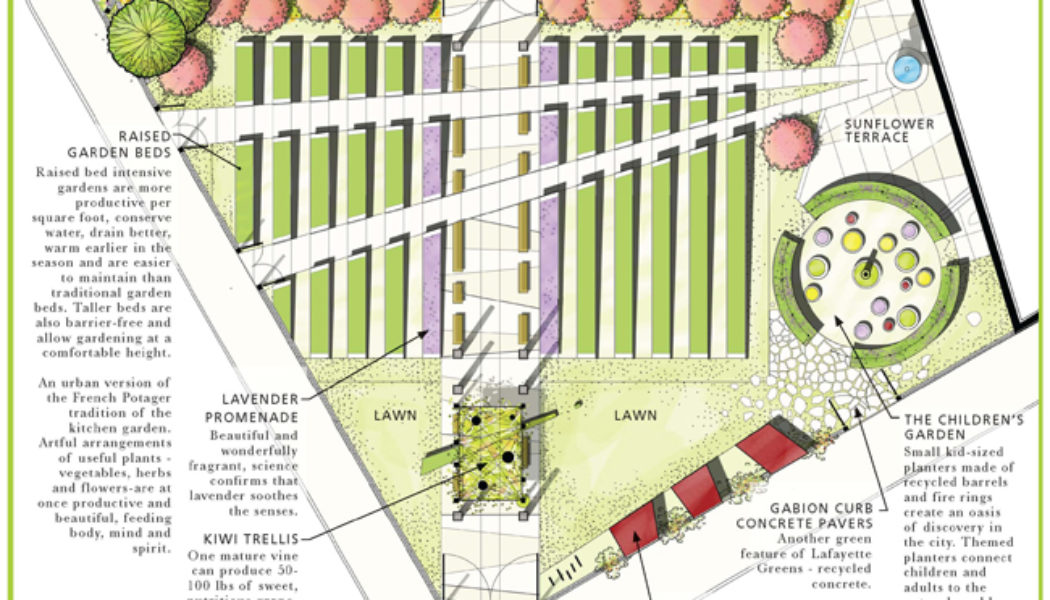
Food producing landscapes are more controversial than your typical landscape project. As mentioned in a previous post, urban gardens often trigger a sense of environmental stewardship from people, but successful design is key to public acceptance. Urban agriculture is an umbrella term for the many different contexts of food production that occur outside the typical context of rural farms — food gardens for residential properties, community gardens and market scale farms to name a few — each of which has very different user needs. However, a common set of principles can help guide the design process for any of them. Aesthetics 1) Use hardscape features to create aesthetic definition. The clean lines of paths, patios, fences, raised beds, retaining walls, arbors, trellises and pergolas ...Read More


The Beauty of Food: Gardens As Placemakers
According to a recent study by the National Gardening Association, more than 1 in 3 American households now grow a portion of the food they consume — a 17 percent increase over the last 5 years alone. For the 18 to 34 age group, the statistics show a staggering 63 percent increase in food gardening in the same time period. The popularity of food gardening has led the practice out of the realm of a backyard hobby, and into the popular public realm, where it is now an important subject for landscape architects to attend to. Food gardening has become a marketing phenomenon that benefits the profession, but it also gets at the root of what landscape architecture is about: stewarding the relationship between humans and the environment. Architect and urban planner Andres Duany has described food...Read More


Why Landscape Architects Stopped Specifying Edible Plants (And Why They Have Started Again)
In the 150 years that landscape architecture has been formally recognized as a profession, there has existed a gulf of separation between our discipline and agriculture. Even though plants, soil, and people are fundamental to each field, the former focuses on aesthetics and the structural functions of human settlements (drainage, access and circulation, integration with the built environment, etc.), while the latter is centered on the process of cultivating edible species for consumption. Recently, however, there are signs of integration between the two disciplines and landscape architects are now being challenged to adopt new methods to mitigate the discord between them. Lafayette Greens Community Garden in Detroit, MI via Land8 In many ways, environments designed by landscape architects ...Read More


Beauty on a Budget: Landscape Architects EMF Transform Urban Wasteland into Barcelona Pocket Park
What kind of public space could you create with less than $4 per square foot ($40 per square meter)? In the wake of the economic crisis, Spanish landscape architects EMF were given a total budget of 40,000 Euros ($54,000) to temporarily transform 1,330 square meters (~14,300 square feet) of derelict urban space in Barcelona. Aerial photo and before shot via Ajuntament de Barcelona Located in the Eixample district of Barcelona, the neglected pocket of space had been identified as an area for future development. Due to the economic crisis, however, development of the site was temporarily suspended. The area became an unsightly storage facility for waste materials from adjacent construction sites. The city council therefore sought a temporary solution for this ephemeral wasteland. Twenty perc...Read More
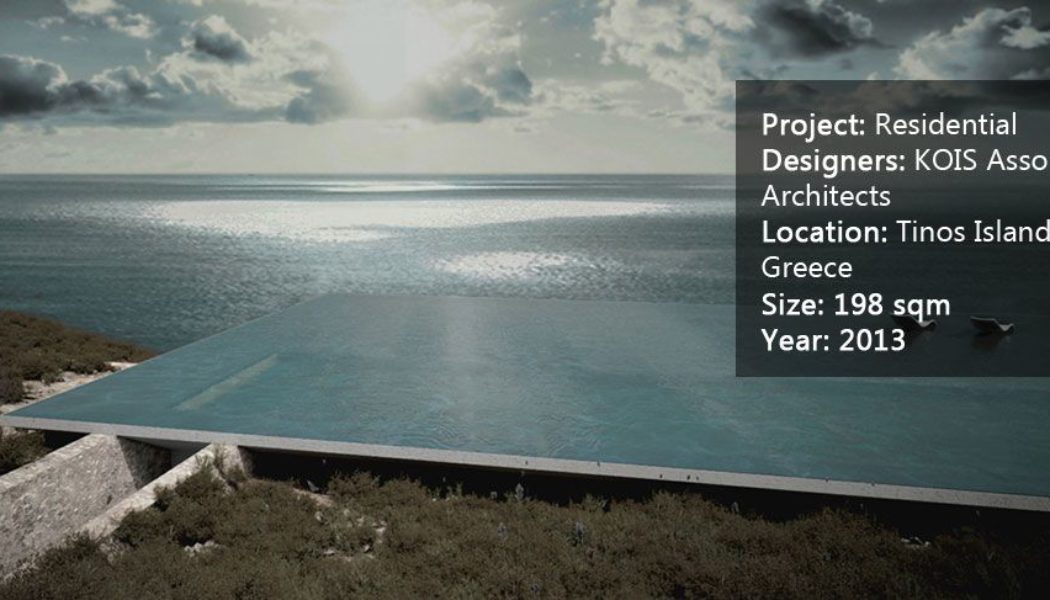

Rooftop Infinity Pool with Awesome Views
Mirage – Tinos Island, Greece – KOIS Associated Architects Talk about taking a rooftop pool to a new level: The pool at the Mirage residence doesn’t just sit on the roof; instead, it IS the roof. Even before viewing the pool, one can garner a vision of what it might look like by reading the introduction on the Kois Associated Architects website. Stelios Kois and his Grecian firm practice a style of architecture that “embodies (Kois’) taste for a purity of style which seems to combine physical and the spiritual serenity. His works testify to the coherence of this aesthetic vision, but also demonstrate his ability to reveal its spatial essence by structuring the visitor’s experience of it.” Kois describes his firm’s work as an antithesis and as diverse. And the pool at Mirage truly embraces ...Read More
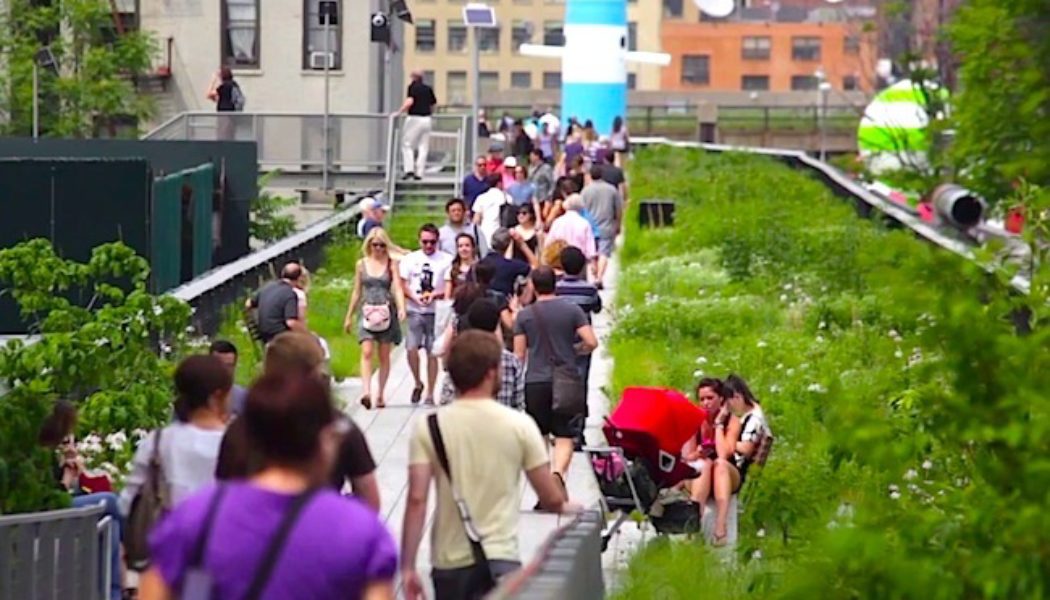

Filmtastic Fridays: High Line Phase Two
Ever since the High Line opened its doors in 2009, the elevated park has continued to inspire similar urban transformations from Philadelphia’s Rail Park to D.C.’s elevated bridge competition. Five years later, the High Line continues to enjoy its iconic status worldwide. While we anxiously await the completion of the High Line’s third section slated to open later this year, we’ll spend today revisiting the High Line’s second section that opened in 2011. Produced for the July 2011 Issue of Architect Magazine by Arbuckle Industries, this short film splices beautifully shot scenes of the park with behind-the-scenes interviews with the High Line’s leading designers and organizers. High Line Phase Two from arbuckle industries on Vimeo. Missed last week’...Read More