


Blog


Four Leading Landscape Architecture Firms Selected to Tackle DC’s First Elevated Park
Washington D.C.’s 11th Street Bridge Project Jury recently selected four outstanding design teams to develop designs for the city’s first elevated park. With some of the top landscape architecture firms at the helm, these teams will develop a concept to creatively reclaim an unused bridge spanning the Anacostia River between the Capitol Hill and Anacostia neighborhoods. The four teams, which are made up of landscape architects, architects and structural engineers, each received $25,000 to create full renderings and plans to be delivered by September. The teams are: • Balmori Associates / Cooper, Robertson & Partners / Guy Nordenson Associates • OLIN / OMA / Arup • Stoss Landscape Urbanism / Höweler + Yoon Architecture / Robert Silman Associates • ...Read More
Filmtastic Fridays: Solar-Powered Water Wheel Cleans Up Baltimore’s Harbor Trash
Cities all around the world struggle with trash-clogged waterways, but Baltimore, MD may be the first to combat the issue in style with a massive solar-powered Water Wheel. Anchored at the point where the Jones Falls watershed empties out to the Inner Harbor, this sustainable trash collector can remove a staggering 50,000 pounds of trash in a single day. The Water Wheel, which is powered by 30 solar panels and the water current, was created as part of the Healthy Harbor Initiative to make Baltimore City’s waters swimmable by 2020. From the description: “Stormwater runoff carries trash and debris from the County and City and deposits it in the Harbor. The Solar Powered Water Wheel Trash Interceptor includes a floating dumpster and a trash-loading conveyor system powered by water...Read More


Comparing and Contrasting Landscape Architecture in Brazil and New Zealand
In my home country of Brazil, landscape architecture is considered part of a five-year architecture degree and not as a separate discipline. In fact, landscape architecture is usually just the subject of two or three courses covered over two or three semesters. This means that in Brazil, we usually don’t have the opportunity to learn the many aspects of landscape architecture, such as planting, ecology, biodiversity and so forth. Because of this learning structure and my understanding of landscape architecture before moving to New Zealand, I have been predominantly against the idea of separating landscape architecture from architecture. My views, however, have since changed. In New Zealand, landscape architects have largely different skills from architects. Here, architecture, archi...Read More
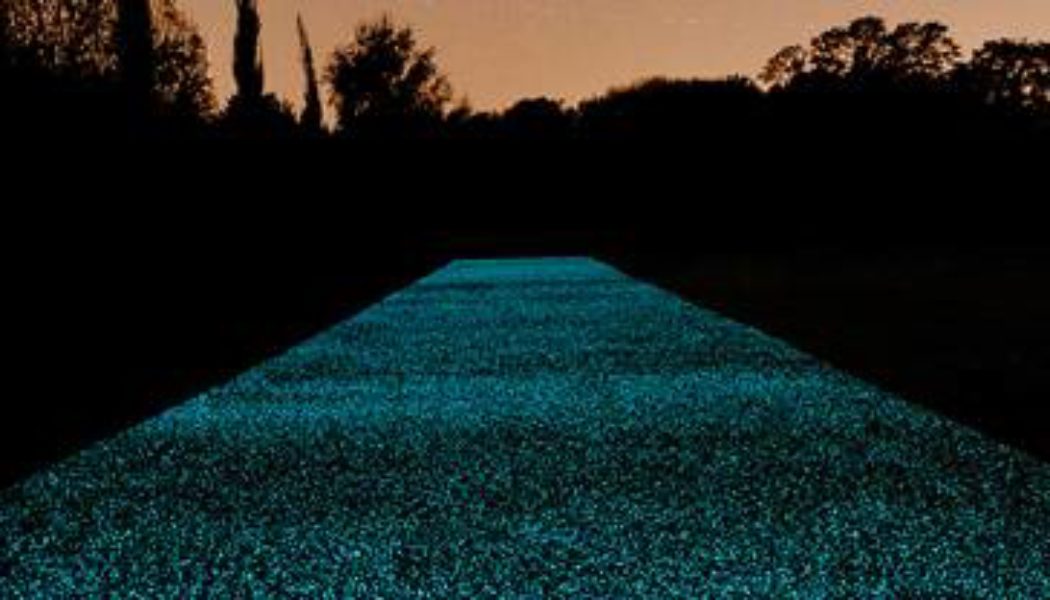

Incredible Glow in the Dark Pathways
Innovative glow in the dark pathways, changing the way we experience the landscape. Imagine riding a bicycle at night on an unlit path that seems to glow from within. What if this energy saving path could be installed in a matter of hours instead of days? How about using this new material for playgrounds, roofs, and paths? Does it sound too good to be true? Well, it’s not. This revolutionary surface, appropriately named Starpath, has been developed by Pro-Teq Surfacing in the UK and was originally tested on a footpath in Cambridge, England. The 1,614 square-foot path took 30 minutes to cover and was able to be used in less that four hours. How to create a Starpath Starpath is applied in three layers: first, a polyurethane base, then a coat of light-absorbing particles and finally a durable...Read More
10 Time-Saving SketchUp Tips for Landscape Architects
There are many ways in which you can boost the speed of your modeling to save oodles and oodles of time on your projects, the following links, tutorials, and tips and tricks are the basics (some of which you already know) that you can employ to help speed up your projects. Learning SketchUp is one of the easier things to do, however mastering the shortcuts and making the best use of your time and effort can take a little bit more effort. Lets go over the top ten things to remember. 1. K.I.S.S Acronym If you don’t know this one, Google it (we will get back to Google in a minute). I write it on the top of everything that I do, these are words to live by. 2. Components This one you should all already know. If you are going to use something over and over again in your model (like the windows I...Read More


Top 10 Websites for Learning Realistic Landscape Architecture Rendering Tips and Tricks
When I started teaching the University of Maryland’s landscape architecture digital drafting and mapping course, I scoured the web for the best resources and tutorials for my students. Since digital renderings have now become standard practice in landscape architecture, it’s important that students and professionals stay up-to-date with the latest and greatest time-saving tips and tricks. Below, I’ve curated a list of top ten websites that I’ve recommended to students over the years as the best web resources for realistic renderings. 10. PhongWith only a few tutorials, Phong makes our list because of the unique method he uses to create cut outs. You wont find this method anywhere else, but it has some dramatic effects. 9. ARCHIvitiminsArchivitimins’ main attra...Read More
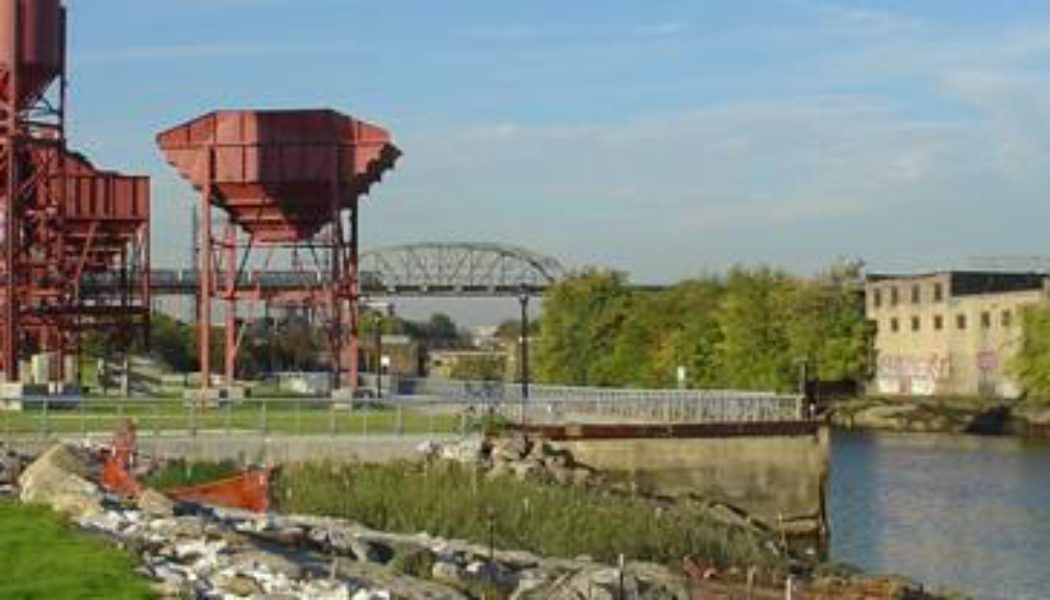

Community Turn Abandoned Industrial Site into Public Park
Community leaders bound together and take on the initiative to turn an old unused industrial site into a thriving public park. Along the banks of the Bronx River, there once was a concrete-mixing plant that operated for more than 40 years. By the mid-1980s, the plant had closed. In the late 1990s, the fate of the site was to be determined at a public auction. Fortunately, visionary community groups, leaders, and partnerships came together to make sure that the site became a public park. With concrete molds everywhere, old factory-like structures occupying much of the real estate, two to three feet of concrete covering the site, and 32,000 tons of soil contaminated with petroleum, it might have been difficult to embrace the land’s potential. But community groups did not give up. A group tha...Read More
SCAPE Landscape Architecture and Penn Design/OLIN Named Winners of Rebuild by Design Competition
Secretary Shaun Donovan of HUD just announced the six winning proposals of Rebuild by Design, a coastal resilience competition created in the wake of Hurricane Sandy. The winners, which include landscape architecture firms SCAPE and PennDesign/OLIN, will receive $920 million in funding to realize the proposals. The year-long competition, which was named one of CNN’s 10 Best Ideas of 2013, was created out of President Barack Obama’s Hurricane Sandy Task Force. The six projects are located in New York, New Jersey, and Long Island. “Living Breakwaters” by SCAPE / Landscape Architecture Staten Island, New York — $60 Million SCAPE brings their famous concept of “oyster-tecture” to their winning “Living Breakwaters” proposal. Located in State...Read More


EDRA Announces Six Exemplary Winners of the 2014 Great Places Awards
The Environmental Design Research Association recently announced the winners of its 16th annual Great Places Award. This year, six exemplary projects in landscape architecture, architecture, planning, and urban design were recognized for their interdisciplinary approach blending human-centered and sustainable design with environmental research and expertise. The winners of the 2014 Great Places Awards were displayed at EDRA’s recently held 45th annual conference in New Orleans, Louisiana. Image credit: Claude Cormier et Associés “Sugar Beach” by Claude Cormier et Associés | Toronto, Canada 2014 Place Design Award Landscape architecture firm Claude Cormier et Associés transformed a former desolate parking lot into Sugar Beach, a thriving sugar-themed park. Located on the e...Read More


Luxurious Small Urban Garden Getaway
Designer Amir Schlezinger creates a stylish garden at Regent’s Park. When I first arrived to look at the space, the living room had just been extended into the garden by the client, creating an opportunity to connect the two spaces and adding a roof terrace on top. The site was a dark dumping yard, with large surrounding trees overhanging, sloping topography and an ugly fence all around. As the interior was in place when I first visited, I was able to take inspiration from a few key elements that led to quite an instinctive response. The first idea was to recreate the shape of the indoor fireplace with 2 benches featuring a void. The benches are a focal point from the living space and offer ambient lighting. The second feature is the granite waterfall, which is offset to the right si...Read More


Ireland’s Biggest Garden Exhibition!
LAN writer Lisa Tierney went to Bloom 2014 to find out what all the fuss was about. This past bank holiday weekend, Dublin’s Phoenix Park hosted the 8th Annual Bloom Festival. It brought huge crowds, and I was lucky enough to experience the elusive Irish summer during the day I attended. It housed beautiful planting schemes with a stunning display of Irish crafts alongside. It was an incredible gathering for plant enthusiasts and an interesting day out for families. The site was filled with show gardens, food, Irish craft stands, and family favorites, all balanced to create an ideal atmosphere. The gardens were separated into four categories — concepts, large gardens, medium gardens, and small gardens. This gave different types of designers a chance to enter and gave the younger desi...Read More


Hand Drawing Tutorial: How to Create Depth in a Drawing
Drawing is a great tool for recording and analyzing spaces. Sometimes such a drawing also needs to capture the depth of space. I’m going to show you some tricks that will help you achieve this in a drawing. As usual, I begin the drawing with an outline of all the elements in the image. In a many layered drawing like this, it is important to distinguish between front and back layers for the sake of understanding the image. By graphically differentiating the layers we create the illusion of depth. One way of achieving this is to add more textures and detail up front and reduce them in more distant layers. I draw roof tiles on the front buildings, windows, tree branches and other detail such as texture of the raised within the gardens. In the back layers, I use less and less detail, and...Read More