
Landscape Architecture for Landscape Architects › Forums › Search › Search Results for 'sections'
-
AuthorSearch Results
-
October 26, 2013 at 4:54 am #153732
In reply to: LARE test: Who takes it and who decides not to?
 Denise WooleryParticipant
Hi,
I have been a landscape designer for 20 + years. I started taking the LARE in 2007. I passed, over the course of 4 years, 4 out of the 5 sections. The grading and drainage section I still have not passed, after 8 attempts. This is not only humiliating, but expensive. I consider myself to be an intelligent woman,and I do know how to do a grading and drainage plan, having worked for two important landscape architects, but it has been years since I was in school, and the grading and drainage section has had as low as a 20% pass rate in the past in California. That is unconscionable. And so the deck has been stacked against my passing that particular section. Not to mention the fact that I have terrible test anxiety, which did not help.
When the economy tanked, I stopped trying for financial reasons, not to mention the fact that I was extremely disenchanted by the whole process. And now, they have changed the format and I have no idea how to study for it.
Meanwhile, I continue to be successful in the field, and have discovered that the city and the county that I live in could care less whether I am licensed or not. I just have to sign each sheet of my plan packet, not do any details or grading and drainage, (civil engineers do this anyway for most projects, but I always check the plans and add my two cents), and be careful to call any elevations or details ‘conceptual only’. So, there is a way around licensure. I do wish I could finally pass it, but it has not really stopped me from continuing to be successful in my career.
I would love to talk to someone who has attempted the new format. Anyone out there?
October 18, 2013 at 12:39 am #153833In reply to: Design Software and system
 Roland BeinertParticipant
Revit, maybe, if you want something to that will produce plans, sections and 3-d at the same time. I’m just beginning to learn Revit myself, but it seems better than CAD. Here are the system requirements: http://usa.autodesk.com/adsk/servlet/ps/dl/item?siteID=123112&id=15385625&linkID=21208795
October 12, 2013 at 10:45 pm #153871In reply to: LARE: grading and drainage
 Matt Mathes PLAParticipant
Here’s a suggestion in the Chicago area:
Fall LARE Session in Chicago – Illinois Chapter ASLA
Saturday October 26, 2013
8:00 AM – 5:00 PMIIT College of Architecture
3360 S. State Street
Chicago, IL 60616
http://www.iit.edu/archIllinois Chapter ASLA Education Committee is pleased to announce two tracks for the Fall LARE sessions for Great Lakes region emerging professional needs. The Fall LARE session schedule includes an innovative format:
Sections 1 & 2 is a roundtable discussion 1PM to 3PM among candidates and emerging professionals who have been successful with LARE.
Section 3 is 8AM to Noon and Section 4 is 1PM to 5PM including mid session breaks.
The format includes vignette scenarios for drilling from slides, books and handouts for problem solving practice by candidates during the session. Content includes exam specifications covering site analysis and site planning for Section 3 and construction methods and materials, details as well as grading, drainage and storm water management in Section 4. Matt Mathes, ASLA, PLA will lead Section 3 & 4 sessions as a LARE subject matter author, a volunteer instructor since 1995, currently serving on the ASLA LARE Subcommittee and as the Water Conservation PPN Chair. Books used at the session by Professional Publications, Inc. include:
- LARE Review, Section C Vignettes: Site Design (LACV2), 2nd Edition
- LARE Review, Section E Vignettes: Grading, Drainage, and Stormwater Management (LAEV2), 2nd Edition
For more information, pricing options and registration, go to: http://il-asla.org/meetinginfo.php?id=99&ts=1381513395
October 11, 2013 at 7:19 pm #154031 Jason T. RadiceParticipant
It isn’t necessarily that they are dumb (though that does happen). From my personal experience in interacting with lots of engineers, architects, and LAs on site issues, there is STILL a general misunderstanding or plain ingnorance of the ADA regulations. Some of it is unscrupulous contractors as I recently reported to a local mall who had some concrete work done. Sure, an architect will be able to rattle of the dimensional requirements of a compliant restroom, but once outside the building envelope they just don’t know. I’ve even had a senior civil engineer say “what’s ADA?” after I brought up that and entire proposed main street section of a residential development was terrifically out of compliance. Mind you, the design guidelines have been in effect since 1992.The same holds true for the International Building Code sections with engineers and especially LAs. The area between the inside of the buiding and the curb is like a no man’s land. Which is subject to both the IBC as well as ADA (IBC references ADA through ANSI specs.). The whole thing is still a huge mess, the design guidelines have always been outdated and clear as mud (equivalent facilitation clause anybody?) and really only enforced through litigation in the courts rather than being part of a building inspection to get a certificate of occupancy.
It is also a matter of having a deep understanding of the materials you specify, and how they are to be installed, and then actually inspecting the installation. As I had mentioned previously in the ‘answer’ portion, many are suckered in by advertisements claiming ‘ADA Approved’ (which cannot be, the ADA does not approve anything), or that they are compliant. Many even put up results from private testing done on the materials. You have to know what you are looking at. While the product may be fine in one form, in this case the concrete paver version of this same paver, or for one specific type of installation as I had mentioned with a gravel product being tested with fines rather than how most will use it, with pea gravel. But in another application or material type, it isn’t.
That is partly my goal with posting this series…to get my fellow LAs to get used to looking at these issues and really start paying attention to the very fine details.
Anonymous
InactiveAgain, the method I described, for better or worse, is how to do the rendering through Sketchup. I agree, that hand-rendering is a cheaper, faster alternative that requires practice.
As I mentioned on previous threads, I work in physical site design and create subdivisions, master planned communities, and town centers. Many of my projects are 250-1,000 acres or larger. I am 32 y/o, but I still draw plenty of plans by hand since it is far faster to do curves, reverse curves, and compound curves than cranking it out quickly in AutoCAD. I agree that plenty of students and entry-level landscape designers are loosing valuable drawing skills, in my case elevation and plan graphics. ALL of the cross sections I see today in portfolio after portfolio are glossy Photoshop drawings with faded tree elevations and they are beautiful. But there are dozens if not hundreds of the same types of graphics, and I don’t see a “wow” factor anymore. I see very few if ANY portfolio samples that show subdivision designs, and certainly nothing more than 25-30 acres. All of the land use bubble diagrams have gradient fills, drop shadows, textures. Is that really needed? If I give you the job candidate a 100 acre tract, can you grab some pens and markers and hand-sketch a bubble diagram from scratch? Can you do a street pattern over 300 acres in pencil and then ink the lots by hand? Scratches head.
September 24, 2013 at 4:46 am #154111In reply to: CLARB LARE Scoring
 Angela WoodwardParticipant
The long wait time for the test results is a good thing which benefits the candidate. As the questions differ somewhat on each exam, CLARB’s testing guru’s examine the difficulty of the questions, the response patterns and ability of the candidates to answer the questions This time period is for CLARB’s experts to ensure the test questions and answers are correct, fair and accurately address the knowledge and tasks being tested.
Previous Non-digital LARE graphics sections would take double the time and then some to grade the exams. Practicing professionals graded the non-digital exams. As you know there is room for interpretation with humans.
September 20, 2013 at 11:47 pm #154143In reply to: What’s wrong with this picture? Part Deux
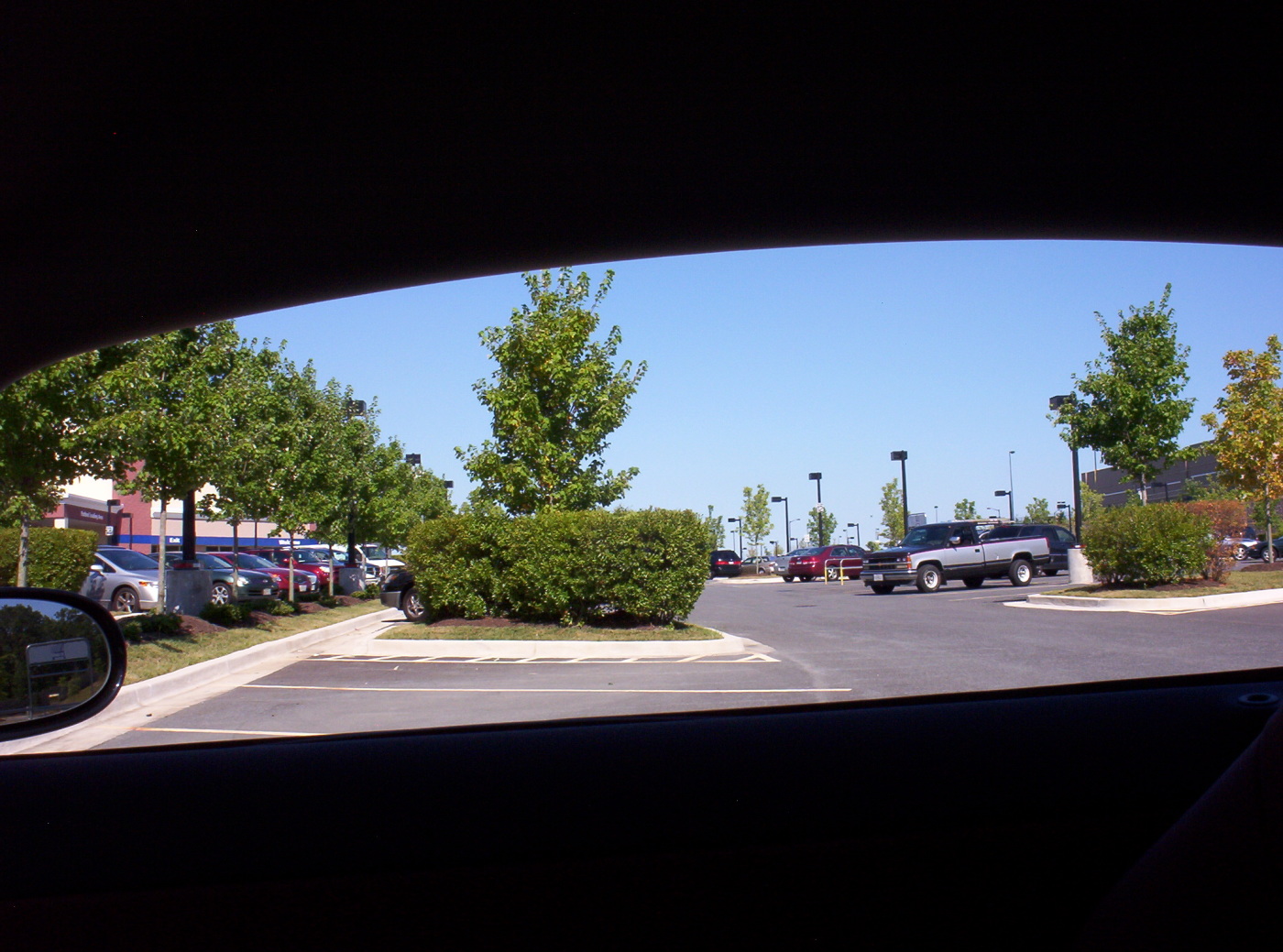
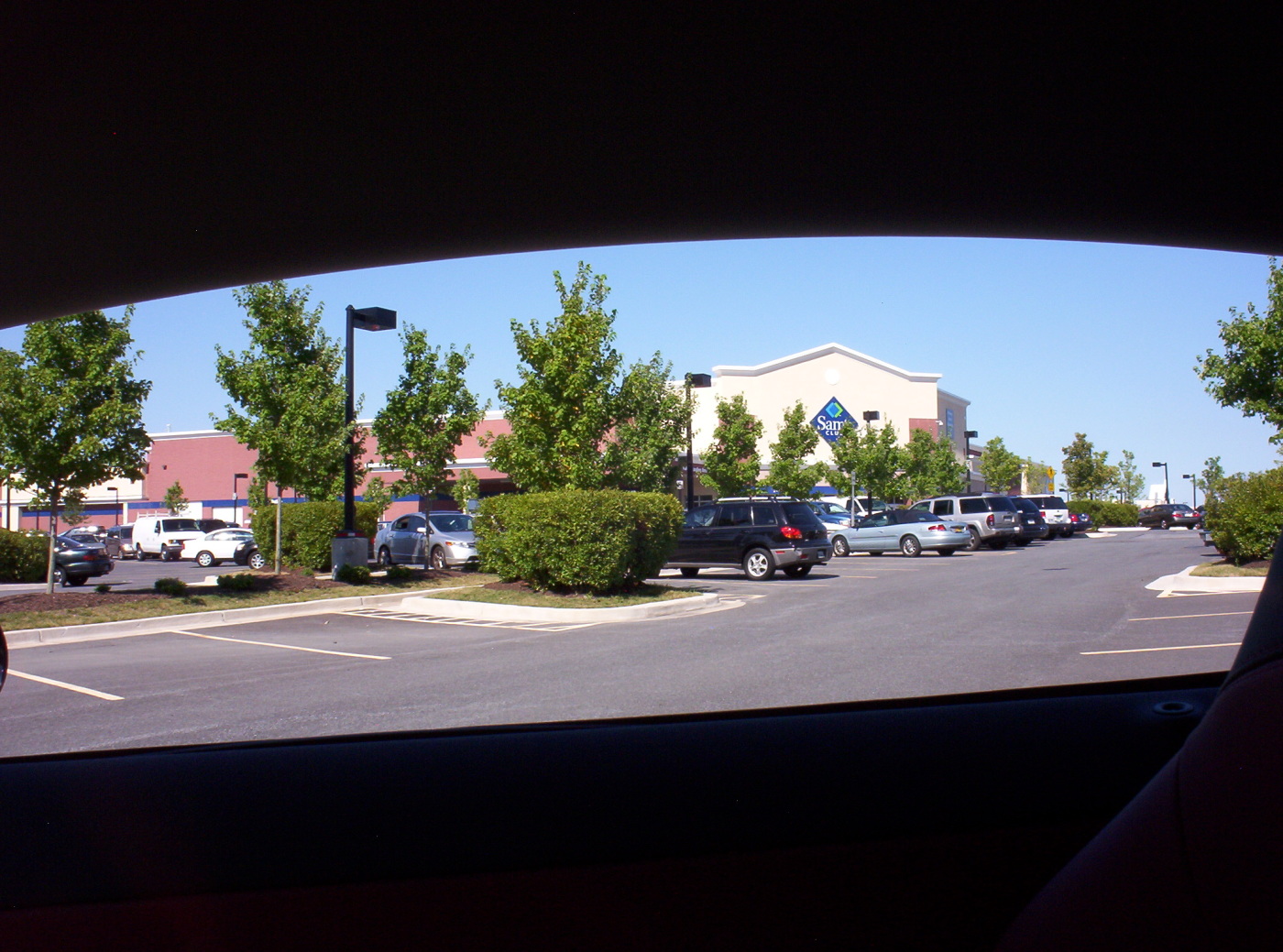
Jason T. RadiceParticipantAs I had stated, this was an easy one. The overgrown landscape creates an unnecessary danger in this retail parking lot by blocking visibility. You can’t see over these even if you have a BroTruck! It can also create a security issue, as you cannot see parts of this parking lot with cameras, and users cannot see across the lot or around these shrubs. In this area, interior parking lot visibility is important, as more and more robberies are occuring in retail parking lots, even in broad daylight. No landscape within the parking areas should really be over 3’ in height and at the end of parking islands or at intersections a total of 30” from pavement height to the top of plants should be installed. As well, trees should be pruned up so that the bottom branches are a minimum of 6’ off of the pavement. Thus, a clear ‘window of visibility’ is maintained.
This not only is a failure of maintenance, but of design. I agree that municipalities should require maintenance covenants for developments such as this as Andrew Garulay has touched upon, but maintenance isn’t always enough. The landscape designer should have known that this variety of Euonymus natively grows to 8’ or 12’ and instead simply selected a low shrub or ground cover that naturally meets the above criteria for the ends of the parking lot islands as David Cristiani identified.
I know the picture isn’t pretty because it’s not meant to be a catalog shot. This is a functional photo simply to show the issue. As well, many of you had identified a number of other potential issues in the photo. While some of them were really reaching, I applaud your analysis efforts being so in depth. It is hard to see things clearly from a photograph, but it is a great skill to have and develop. I guess the previous picture really got you looking!
For those of you who guessed correctly, congratulations. You deserve a cookie, so go buy yourself one. Watch for another ‘What’s wrong with this picture’ coming soon, and I’ll try to make it more difficult!
 September 16, 2013 at 1:47 am #154159
In reply to: LEED professional credentials
Jason T. RadiceParticipantNot entirely true, Henry. While not a huge priority among LAs, LEED can be a great asset to have on your resume. It not only is relevant to architects, but to PEs, MEP engineers, and yes, LAs. At the VERY least, LAs should know what it is comprised of and how they fit into the puzzle. Not every LA practice will need to have a LEED-AP, but many do.
The sections that LAs deal with not only have to do with the obvious water efficiency credits with regards to landscape, but also a great deal of site planning and selection, green roofs, permeability and runoff of the site.
While SSI is also important, LEED has a lot more sway and is more relevant in practice. More developers know what LEED is, and almost none have heard of SSI.
Benjamin, the big issue with becoming a LEED-AP will be trying to find a testing center where you can take the exam. It is not an online thing, and the tests are only given through a company called Prometric. Here is the GBCIs page to find a testing center:
https://securereg3.prometric.com/Dispatch.aspx
In the scheme of things, LEED is actually pretty cheap to get and maintain compared to an LA license and many of the other ratings out there, and they make it really easy to keep your CEUs up to date…and for FREE! I haven’t spent a dime or vast amounts of time maintaining the credential since I got it. I’d go for it if you don’t need to get a license first. I’ve been a LEED-AP BD+C since 2009 and plan on eventually going for a ND credential, and it has helped get interviews.
August 15, 2013 at 5:24 am #154850In reply to: Section 1 and 2 Study Material
 Ray FreemanParticipant
Northern California – LARE Prep Sections 1&2 – 2013
Date/Time:
October 26-27, 2013 8:30 am-6:00 pm
Description:
This workshop covers exam background, project management, contracts,
construction administration, construction law, inventory and analysis,
programming, ordinances and codes. 260 page syllabus. 200 practice questions.
Location:
LaQuinta Inn, 920 University Avenue, Berkeley, CA 94710
Instructor:
Ray Freeman ASLA, CPESC 413,
RLA CA 3722, MA 928, NC 356
Cost:
Through 10/12 $350; After 10/12: $375
Contact:
Freeman & Jewell Landscape Architecture
Phone Number: 510-528-0375
Email Address: Rayfreeman3@comcast.net
More information: Send e-mail to above address
August 8, 2013 at 5:45 am #154397In reply to: What skills do landscape architecture firms need?
 idaParticipant
I agree with all above.
You’ll be doing a lot of sections, plans, and putting together presentation packages for all phases of design. So you need to be able to follow direction well, and have the courage to jump right in and start making whatever they want you to do. That involves having the right technical skills (digital or hand depending on the office standard) and enough practice to know what works well and what doesn’t. Research the office you like, see what they do, and try to produce equal or better quality… if you think you’re work can belong on their website then you’ll be a good fit for that office. So while you’re in school make yourself very busy and keep practicing your skills till it becomes effortless. But don’t forget to live a little 😉
August 7, 2013 at 1:18 am #156365In reply to: LARE Reference Board on Pinterest
 Bri MorrisonParticipant
I saw something posted about how the scoring works for the new graphic sections, but it didn’t make any sense at all. Check out page 14 of the reference guide where there’s a diagram of a ruler: https://www.clarb.org/Candidates/Documents/LAREOrientationGuide.pdf
August 7, 2013 at 1:16 am #156366In reply to: LARE Reference Board on Pinterest
Bri MorrisonParticipantHey Urmila! I did pass Sections 1 and 2 when they were still called A and B. I actually read through many of the books listed in the “Suggested Reading” list on CLARB’s website and found them really useful, if not a little dry sometimes. I had several of the books from school and was able to find the rest at the library. Even if you skim a few chapters a week, they’re really good resources. Also, I used the PPI books that you can buy or sometimes find for free online. Taking practice tests are really helpful! Check out the EPA.gov website for some of the newer sustainable practice/best management practices info.
I don’t have anything to sell, but look for the Google Group and you can find stuff for free! Hope that helps. Good luck!
July 28, 2013 at 12:50 am #154440In reply to: pool construction details
 J. Robert (Bob) WainnerParticipant
Hey Alan, everyone. I have personally designed over (400) pool and pool amenity areas during my LA career. And, I have always included “Pool Construction Details” with my Contract Documents. So, when you read my comment below….understand that my years of experience with POOLS has taught me well.
But, I have to say…over the years, I have learned that even those as LAs, we were all taught to design “Pool Construction Details” and other construction items…..I have learned that you have to be CAUTIOUS……..”liability issues”.
First, I make SURE I full understand a particular State’s Pool Codes….the State Pool Codes over-ride all City & County Pool Codes.
Oh, I make sure my Pool Drawings show design intent…meet all CODES…..have the pool plaster, coping, depth markers, pool fencing, pool tile….all SAFETY issues covered. And rather than specifying pool pumps, etc…again, I show “design intent” on my Pool Plans….and have the Pool Builders determined the proper pool pump sizes, water sources/pressure, pipe sizes, etc.
When drawing up Pool Construction Details….again, I show “design intent” for the Pool Builders. So many problems/issues can come up with pool construction (after the fact)…..i.e., pool cracks, pool beams separating from the adjacent pool deck, pools can move, etc.
On my Pool Construction Plans, I place a NOTE that states: “The Structural Design of the Pool shall be by the project’s Structural Engineer”.
A Structural Eng. once advised me on a pool I had designed…..in reviewing my Preliminary Pool Plans…..he explained to me the pool was “too long”. It was over 100 feet long, curved style pool. He explained that you could NOT add enough rein. bars (even large ones) OR large enough pool beams to keep that pool from “cracking”. He recommended I re-design the pool to be in 2 or 3 sections – where the pool could be built to be “structurally sound”.
Another pool I designed in Dallas was located where I knew the soil was bad….very expansive clay soil. The pool was in a tight courtyard, with approx. 30 feet of grade change…the pool was to have 3 levels. I recommended to the Owner that he have his “Structural Engineer” design the pool beam and specify what was necessary to prevent the pool from moving. The “Structural Engineer” ended up adding (30) 24 inch dia. concrete piers that extended down from the pool beam….through the clay where those piers would rest on the rock layer located below the clay soil. It’s been over 20 yrs. and that pool has NOT moved. I just didn’t feel that I had the expertise OR that the Pool Builder knew enough to ensure this pool would NOT move. I guarantee you, that IF that Structural Engineer had not designed that pool beam (and added those concrete beams)…that pool would have MOVED…and it would have had to be jacked out and re-built…which would have been a nightmare logistically….major costs too!!! AND, had that pool MOVED, I promise you, that Owner’s Attorney would have been looking for ME.
So….no matter what type of Landscape Architectural Design Element it is you’re designing….(retaining walls, heavy duty arbors, pools, etc.)….I just think it’s WISE to be very cautious…and get a Structural Engineer involved…get them to approve the design details & add his/her Structural Eng. seal….and let them take on the “liability”.
July 18, 2013 at 7:09 pm #154704In reply to: To the Office of my Public Official: CLARB
J. Robert (Bob) WainnerParticipantOnce again…….I agree with you here, Craig.
#1……Unless a designer is officially “Licensed as a Landscape Architect” in one of the 50 States……that person can NOT use the TITLE “Landscape Architect”. Until you’re “licensed”, you’re a Landscape Designer.
#2…..Temp – you mentioned you have (10) yrs. of experience. And you’ve spent over $5,000.00 “trying” to PASS the LARE. I’m have a problem with this picture. What’s the problem???
#3…..Temp – I highly recommend you hire yourself a TUTOR….a Licensed Landscape Architect who has passed the LARE who would be willing to coach you through the sections you’re having problems with.
Now………………..I’m OUT. I seriously hoping I don’t see anymore comments about this discussion in my e-mail in box. GO STUDY!!!
July 17, 2013 at 7:58 pm #154713In reply to: To the Office of my Public Official: CLARB
J. Robert (Bob) WainnerParticipantCraig……….I have to AGREE with your assessment of this discussion. I seriously doubt that any one person OR group can do anything to change the way CLARB conducts their business OR sets of the L.A.R.E. examinations.
With all of the respect I may offer to the person who originated this discussion…..ALL of the time spent on discussing, complaining, etc. about CLARB and the L.A.R.E….could have been time better spent STUDYING for the L.A.R.E. sections you have not yet passed. FOCUS on preparing for the L.A.R.E…..complaining here on LAND8 isn’t getting you any closer to PASSING.
There are “boot camps” and some very well written books published about various sections of the L.A.R.E. exam. It’s sort of like when we were all back in College…..you have to just go along with the University system…play by THEIR rules…get the passing grades………and earn your diploma….and move on towards getting your LA license.
So……………can we end this discussion already? Time to hit the books and just go PASS the L.A.R.E.
Very Respectfully,
J. Robert (Bob) Wainner
-
AuthorSearch Results